

Every window in my house sits low enough to put the whole street at nose height. My own dog June has spent more mornings than I can count announcing the garbage truck, the neighbor's cat, and one specific squirrel. If yours treats the front window like a personal announcement booth, you know the routine: bark, sprint to the side window, bark again, look back to see if anyone is impressed. You have probably tried ignoring it, closing curtains, or yelling no. Sometimes that works. Often it does not, because the reason matters.
I am a dog trainer and I have worked in hundreds of living rooms. What I keep telling owners is that window barking is never one single problem. Sometimes it is movement, sometimes it is sound, sometimes it is boredom, and sometimes it is fear. The right answer starts with the right reason. Below are the ten honest reasons dogs bark at windows, what helps for each one, and where the automatic FAFAFROG bark collar really fits. FAFAFROG's collar detects barking by itself and answers with a beep and vibration, so it can be a useful habit breaker for some dogs, but it is not a fix for fear, and I will tell you when to skip it.
Match the tool to the reason
The first step is not buying anything. It is watching your dog long enough to know whether the bark is a habit or a worry. If it is a habit that loops through the day, the FAFAFROG collar can interrupt it while you teach a quieter alternative.
Amazon See the FAFAFROG on Amazon →They are wired to follow anything that moves
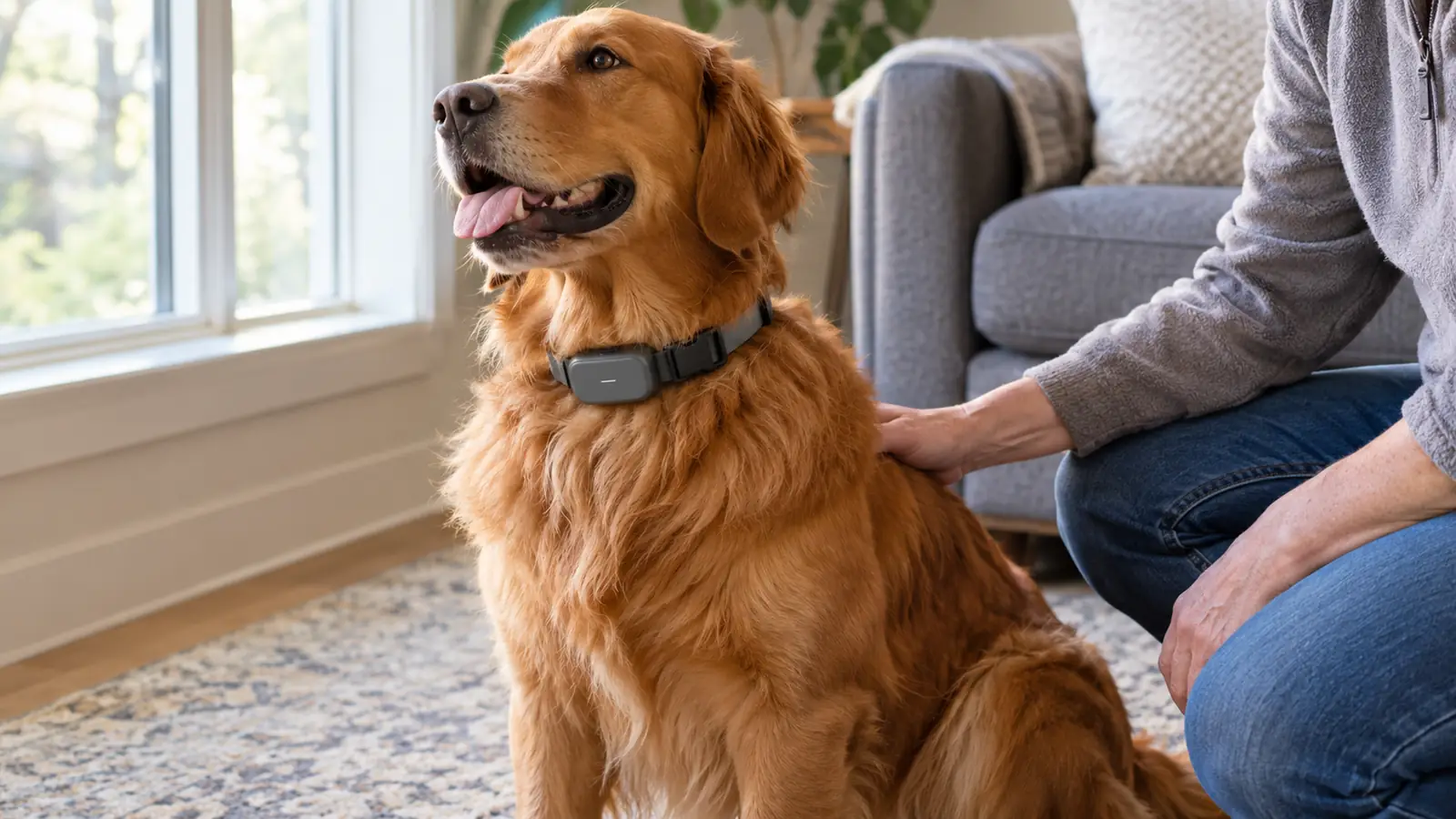
This is the most common cause I see. Dogs notice movement first. A bicycle, a rabbit, the mail carrier, even a shadow shifting in the wind can set off that inner chase. The fastest help is management: cover the window from the outside, pull the curtain at busy hours, or move the dog's bed away from the glass. Once there is less to watch, the barking often drops on its own. If your dog still barks at the tiny patch it can see, the FAFAFROG collar can interrupt that last habit, but it should never be your first move while the whole street is still on display.
They hear sounds before you do
A dog's ears pick up a delivery truck two blocks away, a neighbor's gate, or ice cracking in a gutter. What looks like random barking is often your dog answering something you never heard. Try white noise, a fan, or a radio at low volume for a week and watch what happens. If the barking drops, the cause was noise. The FAFAFROG collar is not built to filter sounds, it reads the vibration of the bark. That makes it useful for an old habit, but not for a fresh reaction to a trigger outside. Solve the sound first, then decide whether you need the collar at all.
They believe guarding the house is their job
Dogs who are territorial see the window as their patrol post. The bark says, I saw that first, stay away from my people. This behavior has a real job behind it, and you cannot simply erase it with a loud collar and expect confidence. What works is teaching a different job: go to your mat, come find me, or bring me a toy. Practice when the street is quiet so the behavior is strong before the garbage truck shows up. If the habit still runs the show after a few weeks, an automatic FAFAFROG collar can interrupt the bark and give you a moment to send your dog to the mat, but the mat needs to be taught first.
The window is a frustrating barrier
Some dogs bark because they can see a person or dog they want to greet and cannot get to them. The frustration comes out as a high pitched, yipping bark with quick tail wags. Letting them out to greet every single passerby backfires because it teaches them that barking works. Instead, move the dog farther back from the window, reward quiet, and slowly bring it closer. A vibration from an automatic FAFAFROG collar can pull a frustrated dog out of the loop for a second, but without teaching a better greeting you are only putting tape over a leak.
Barking is how they get your attention
If you look up, shush, or walk over to the window every time your dog barks, you have trained the bark. The dog discovers that noise makes the human appear, which is exactly what it wanted. The most effective fix is boring: when your dog barks at the window, stay still and do not look up. Wait for a pause of a few seconds, then quietly call the dog to you and reward the calm. Because an automatic FAFAFROG collar supplies the interruption instead of you, it can work when your natural reaction is the very thing feeding the behavior.

They are bored and the window is their TV
A dog that does not get enough sniffing, chewing, or running will find entertainment wherever it can, and the window is the cheapest show in the house. More exercise helps, but the best outlet is often nosework: scatter a few treats in the yard, use a puzzle feeder, or hide a toy for your dog to find. When the brain is tired, the window loses its audience. I rarely recommend a collar for a bored dog because you are treating the symptom instead of the schedule. If you do use a FAFAFROG collar for this one, pair it with the extra walks that remove the boredom, or you will be back at the window next week.
It has become a habit with no real trigger
This is the reason almost nobody expects. After enough repetitions, barking can happen before the dog even sees anything. The doorbell on a television show, a neighbor walking at the same time every day, or your dog's own excitement can switch it on. Habit barking has a rhythm and often happens while you are in the room. The FAFAFROG collar is best suited here because it can catch the bark at the start with a beep and vibration, before the full tantrum begins. Keep it on for short supervised sessions while you teach a settle, and take it off when you cannot watch.
They are barking because they are afraid
Fear barking sounds different. It often comes with the tail tucked, ears back, a crouched body, and some lip licking, and it may happen around thunderstorms, fireworks, unfamiliar visitors, or sudden yard noise. A collar that adds an unpleasant sensation does not help a scared dog. It can make the fear worse because the dog now associates the discomfort with whatever was already frightening. If this sounds like your dog, skip the bark collar entirely. Use management, safe spaces, and white noise, and talk to a veterinarian who can recommend a behavior plan that fits. FAFAFROG is not the tool for this reason, and no collar is.
They are sounding the alarm at real arrivals
Some dogs only bark when someone actually arrives: a delivery person, a guest, or your own car pulling in. That is alerting behavior with a social payoff, and you do not want to silence every alarm, just the one that goes on too long. Teach your dog to bark once and then come find you for a treat. If the barking continues past the warning, a collar that interrupts in the middle can draw a clear line between a short heads up and a five minute fanfare. Keep the FAFAFROG collar on its beep and vibration setting, and always remove it once your guest is inside.
Their breeding made them watchdogs
Herding and guardian breeds were selected to notice changes and tell the group. A shepherd or Lab mix may not be doing anything wrong, it is doing its genetic chore. You can explain this to yourself all day and your dog will still bark. What helps is giving the behavior a job that ends in a reward, like going to a mat and waiting until released. For a dog with strong genetics, consistency matters more than any gadget. The FAFAFROG collar can be a useful reminder for a bright dog that knows better but forgets in the moment, provided the rest of the routine is in place.
What I'd Skip
After years of watching owners try every gadget on the shelf, I would skip any collar that punishes a scared dog, any ultrasonic box that fires whenever the dog's voice raises, and any product that promises to work while you are not home. I would also skip a bark collar that you cannot adjust or remove quickly. The FAFAFROG model I recommend listens to the dog's bark, uses beep and vibration only, and comes off easily. It is not a cure. It is an interruption that gives you a beat to teach a better choice. If you are not home to supervise and reward the quiet, take the collar off and manage the window instead.
In ten years of shelter work, I have never seen a collar make a fearful dog quieter. It only makes the fear harder to see.
The Bottom Line
So, do you need a bark collar at all? Maybe not. Start with the view from the window, the white noise, and the exercise. If the barking happens during the hours you are home and you can supervise with a training tool, an automatic FAFAFROG collar can break the loop. If the dog is fearful, if the growling is guarding something valuable, or if you cannot be in the room while the collar is on, spend the money on training or a vet visit instead. A tool is only as good as the plan around it.
The collar I keep for habit barkers
The FAFAFROG answers to the bark, not to you, no remote required. That makes it a fit for the dog whose window barking has turned into a routine. It is not for fear, and it is not a babysitter. Use it during supervised training sessions, teach the quiet, and take the win when it comes.
Amazon See the FAFAFROG on Amazon →