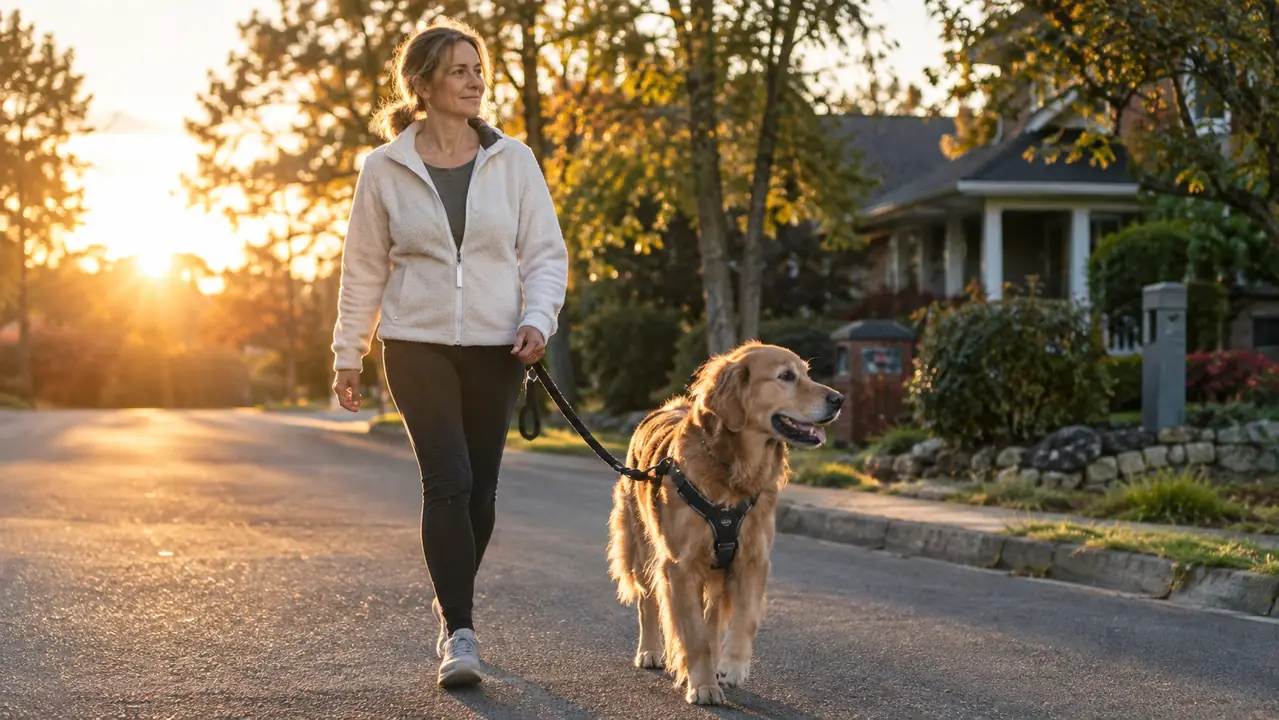
June used to walk me. That sounds like a joke, but it was the honest description of our first year together. She is a 62 pound shepherd and lab looking shelter mix with a good nose and firm opinions about every squirrel on the block. On a flat collar she pulled hard enough that I worried about her neck, and I will be honest with you, I worried about my shoulder too. I train dogs in people's homes for a living, which means I had no excuse for being dragged down the street by my own dog. Every walk was a small defeat. The morning I finally ordered the PetSafe Easy Walk, she had just choked herself into a coughing fit over a rabbit, and I had reached my limit.
It was not the first thing I tried. A head halter stopped the pulling but June hated it, pawed at her face for ten days straight, and I finally put it in a drawer. A back clip harness gave her something comfortable to pull against, and walks got worse. The Easy Walk was the third try, and six months later it is still the harness she wears. I am not here to tell you it fixed her, because it did not fix her on its own. I am here to tell you what it did do, what it did not do, and who should buy it, so you can make up your own mind.
The Quick Verdict
The PetSafe Easy Walk is a management tool, and an honest one. It reduces pulling while it is on, it is easy to fit, and it is gentle on the dog's neck and your shoulder. It will not teach a dog to walk politely on its own, and it does not fit every body type. For an ordinary dog that drags its owner down the street, it is the first harness I reach for.
Amazon Check Today's Price →If your dog drags you down the street, this is the harness I would start with
The Easy Walk hooks the leash at the front of the chest, so pulling turns the dog back toward you instead of dragging you forward. It fits in about ten minutes and works on most body types, and it is a modest price compared with a pulled muscle or a ruined walk. If that is the problem you live with every morning and evening, it is worth checking today's price on Amazon.
Amazon Check Today's Price on Amazon →How I've Used It
I have used the PetSafe Easy Walk on June nearly every day for six months. Most weeks that is two walks, one in the morning and a shorter one after supper, plus car rides and vet visits. In that same six months I have also fitted it on client dogs, because a decent part of my job is helping people see whether a piece of gear is going to solve their actual problem. This is not a first impression. It comes from roughly four hundred walks.
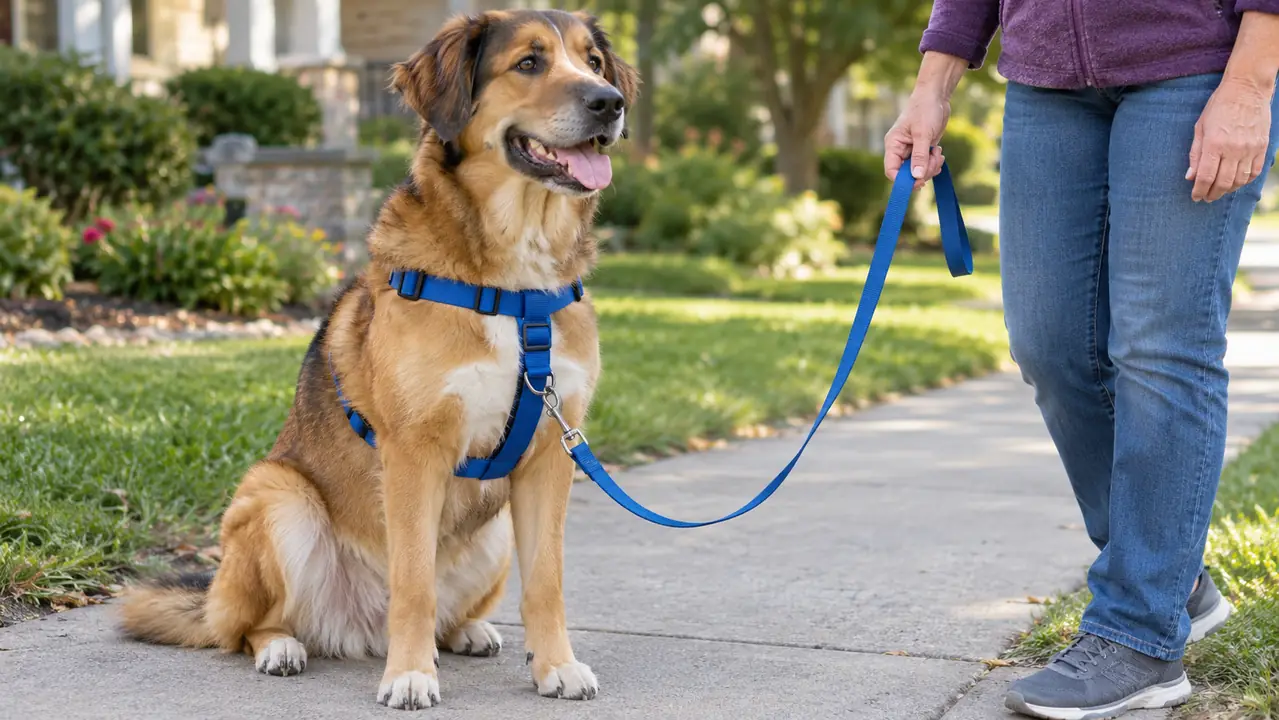
June wears a large. I measured her chest right behind her front legs, followed the sizing chart, and ended up with a fit that only needed two small adjustments in the first week and one more a month later, after the webbing relaxed. The strap across her chest sits low, not up on her throat. The martingale loop behind her front legs is snug enough that she cannot back out of it. Getting that fit right took about ten minutes, and it mattered more than any other single thing I did.
I also want to be clear about when the harness is not on her. It is on for walks and for the vet and for the rare car ride where she gets wound up. It is not on her in the house or in the yard. It hangs by the back door next to the leash, so the routine does not depend on me remembering anything at the last second.
Why the Front Clip Matters
Why the front clip matters is a matter of physics, not marketing. When the leash clips to the harness over the dog's back, the force arrives behind the dog's center of gravity, which is exactly the position a pulling dog likes. Move the clip to the front of the chest and the force arrives in front of that center of gravity. The dog leans forward and gets turned back toward you instead of moving forward. It uses the dog's own momentum to redirect her, and there is no pain, no startle, and nothing for her to figure out.
That is what it felt like with June. She would pull, the harness would turn her shoulders a little sideways, and her front feet would step across toward me. It took her a handful of repetitions to learn that pulling did not get her where she wanted to go. The pressure spreads across her chest instead of her neck, and it goes away the instant she stops pulling, which is the part that made the lesson stick.
Somewhere in the first month I noticed my right shoulder had stopped aching. June had also stopped the gagging cough she used to get when she hit the end of a flat collar. I stopped dreading walks, and that mattered as much as anything, because a dog reads your tension before you say a word. A calm handler makes a calmer dog, and the PetSafe Easy Walk let me be the calm handler.
What Six Months of Daily Walks Taught Me
Here is the honest ledger. Within the first week, June stopped pulling hard enough to choke herself, and walks stopped being a wrestling match. She began to check in with me, turning her head to see where I was, because she was not braced against the leash anymore. By the third week she was trotting beside me on a loose leash for full blocks on quiet mornings, which had not happened once in the prior year.
The moment that sold me happened early in the second month. A deer came out of the tree line about twenty yards ahead of us. June went from a loose leash to a full lunge in under a second. The harness did not stop her cold; nothing short of a wall does that. But it turned the lunge into a half circle, and I kept my feet. She ended up facing me, looking confused that the deer was no longer in front of her, and those few seconds gave us time to move away.
Month by month, the real change was training, not gear. A dog that is not strangling herself has attention left over to learn, and I used that room. We practiced 'look at me' at driveways and corners until it became the default. By month five she could cross the street calmly when she spotted the neighbor's dog. She still could not ignore another dog entirely, and I do not think a harness will ever give her that, but the walks became something I looked forward to instead of braced for.
I will also give you the honest low point. In month three we had a rainy stretch where walks got short and some days did not happen at all. When the weather cleared, June pulled on the first real walk as if she had never worn the harness. I had let the skill slide, and no piece of webbing was going to keep it sharp for me. We spent a week back at basics, and then she was fine again.
Where the Easy Walk Falls Short
The first drawback is fit. The chest strap has to sit in exactly the right place, and when it shifts, it can rub the tender skin behind the front legs. I took June on one long hot hike in July with the strap riding slightly high, and she came home with red marks under her armpits. They faded within a day. I have checked the strap position before every long walk since, and that has been the end of it.
The second drawback is that no single front clip works for every body shape. I have fitted this harness on client dogs with very deep chests, and it wanted to rotate to the side as they moved. Those dogs did better in a harness with a second attachment point. On June, who is built fairly moderate, the Easy Walk stays put. If you have a hound or another very deep chested dog, you may need to try it before you trust it.
The third limitation is the one I repeat to clients all the time. Gear manages behavior, it does not teach it. If a dog pulls because she is genuinely afraid of other dogs, this harness will make the walk more controllable, but it will not make the fear smaller. That dog needs a training plan and perhaps a veterinarian or a certified behavior consultant. I have watched people buy a front clip harness hoping it will substitute for that plan. It will not.
What Else I Tried Before This One
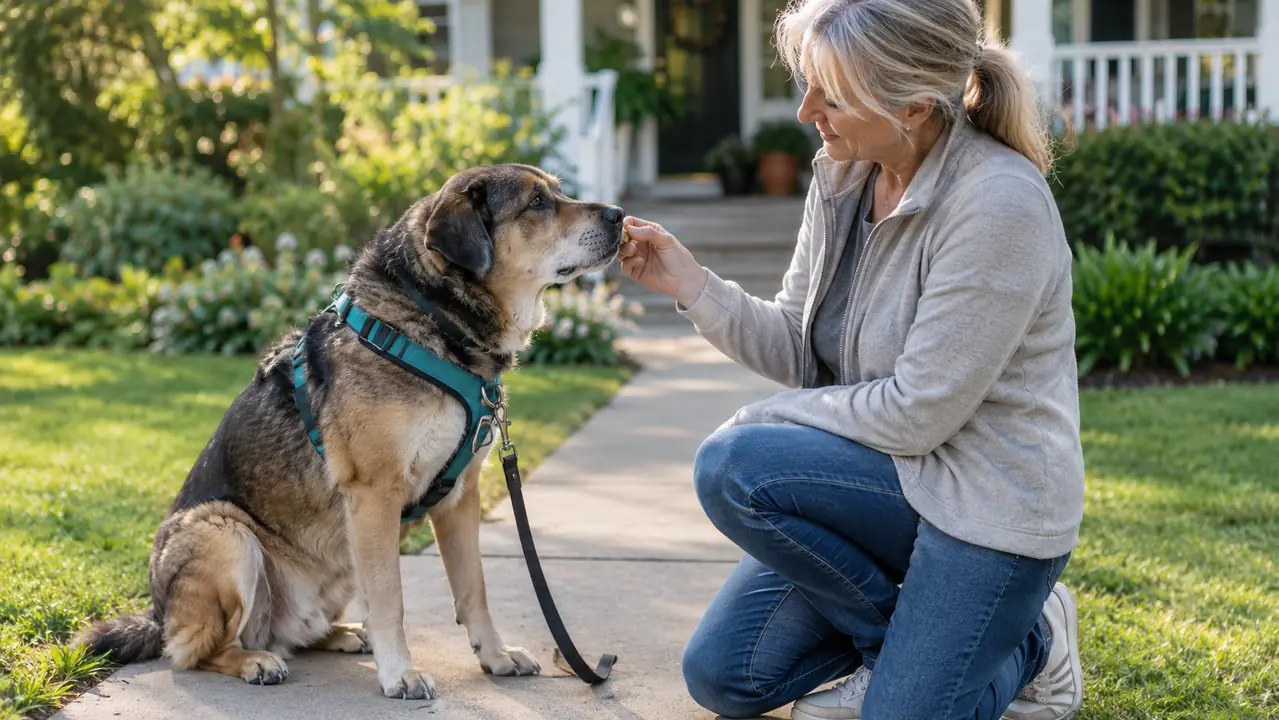
I tried two common alternatives before I ordered the Easy Walk. The first was a head halter, which fit around her muzzle and stopped the pulling instantly. It also made her miserable. She pawed at her face for ten straight days, and I finally decided that a tool a dog fights is a tool that will end up in a drawer. Then came a back clip harness. It gave her something comfortable to pull against, and I am fairly certain she pulled harder than she ever had on a flat collar.
Among the front clip options, the Easy Walk is not the only one, and I have fitted clients in a few others. Some feel softer because they have padded chest plates, but padding does not help steering, and more than one of them let a strong dog back out because the front strap alone did not tighten. The thing that keeps me reaching for the Easy Walk is the martingale loop. When June tries to reverse out of it, the loop tightens and she stays put. That feature matters more to me than any amount of padding.
What I Liked
- Front clip redirects pulling instead of just absorbing it
- Martingale loop behind the front legs keeps a determined dog from backing out
- Pressure spreads across the chest instead of the neck and throat
- Easy to put on once you have done it a few times
- Buckles and webbing have held up through six months of daily use
- Easy to rinse off when it gets muddy
Where It Falls Short
- Fit is fiddly, and a shifted strap can rub behind the front legs
- Does not teach loose leash walking by itself
- Can rotate on very deep chested dogs
- Straps relaxed a little in the first month and needed tightening
- Some dogs need a few days of walks to accept the steering feel
By the third week she was trotting beside me on a loose leash for full blocks on quiet mornings, which had not happened once in the prior year.
Who This Is For
This harness is for the dog that pulls on leash and is otherwise a perfectly normal dog. That description covers most of the dogs I meet, by the way. If walks have become a tug of war, if you keep the leash short so your dog cannot lunge, if you brace yourself every time you step out the door, or if you have a big dog and a shoulder that complains, the Easy Walk is a reasonable place to start. It is also a kinder choice for a young dog learning leash manners than a flat collar and a sharp correction.
It is also for an owner who will spend ten minutes on the fit and who understands that the harness is a tool in a plan. Pair it with a pocket of treats and two minutes of practice a day, and most dogs settle into the steering within two weeks. I have watched that happen in other people's living rooms, and I have watched it happen in my own front yard. The six month version of that plan is what I have described here.
Who Should Skip It
Skip this harness if your dog pulls because she is truly afraid. If the pulling comes with panic, wide eyes, and a tucked tail, the problem is the fear, and a front clip is only a handrail. Get a certified trainer or a veterinarian involved before you spend money on gear. Genuine leash reactivity needs a behavior plan, and I do not think it is fair to ask a harness to carry that weight alone.
Skip it also if you have a very deep chested dog, because you may fight the harness rotating more than you fight the pulling. And if you are honest with yourself that you want a tool to do the teaching for you, no harness will get you there. I have seen too many front clip harnesses end up in drawers next to the head halters, simply because the owner expected the gear to replace the work.
Give it one properly fitted week before you decide
The PetSafe Easy Walk is not a gimmick and not a cure. It is a well made tool that puts a hard pulling dog back within reach, and it has made my walks calmer for six months. Two weeks of consistent walks will tell you whether it is the right tool for your dog. Check today's price on Amazon.
Amazon Check Today's Price on Amazon →