
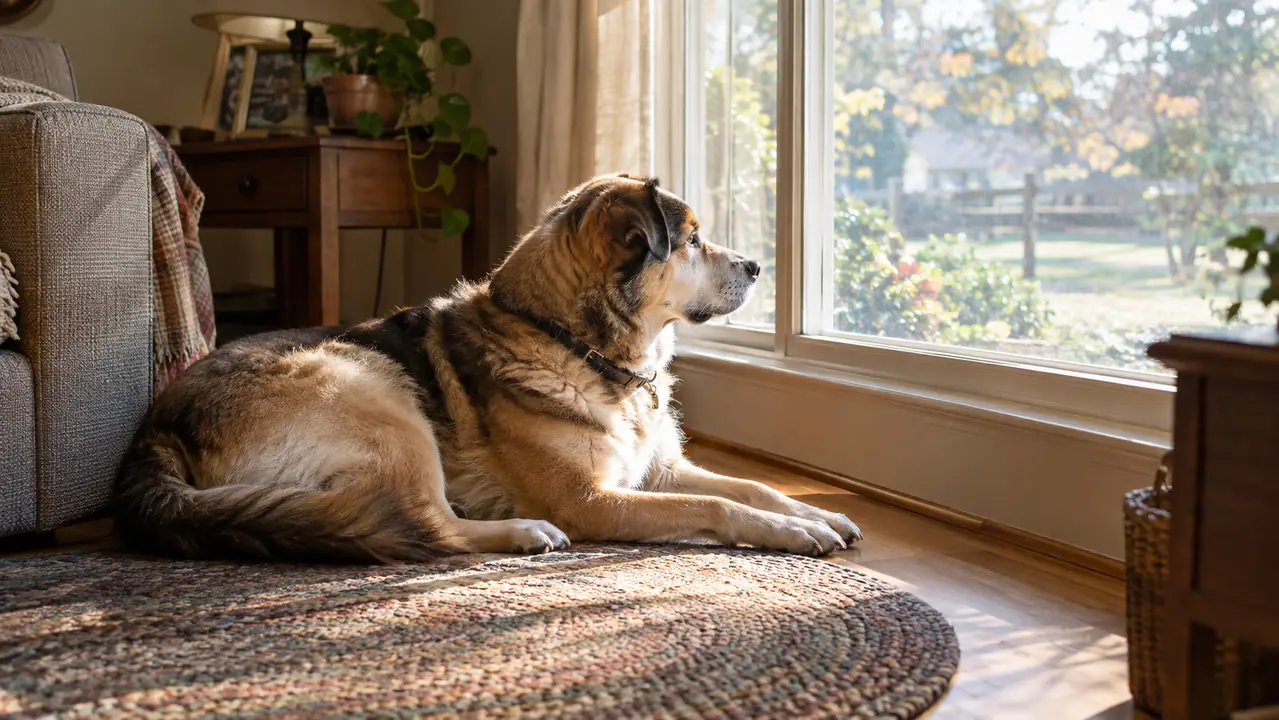
I train dogs in other people's living rooms for a living, so my own dog ought to be the calmest animal on the street. June is not. She is a four year old, 62 pound shepherd and lab looking mix from the shelter. In the house she is a dream. She is crate trained, she naps on the rug while I write my notes, and she would rather lean against my leg than chase trouble. Then the mail truck rounds the corner, or the UPS van idles at the stop sign, and every one of those 62 pounds turns into a four legged air horn. The neighbors know her voice. The whole block knows her voice.
This is the story of three months with the FAFAFROG Bark Collar. I bought it for that exact problem, which means this is not an enthusiastic first impression. I do not reach for a bark collar with most of my clients. With supervision, exercise, and a boring routine, most nuisance barking can be handled without hardware. But I also know what it is like to live with a window that faces the street and a dog who thinks she is the town crier. So I used the FAFAFROG collar on my own dog, kept notes for twelve weeks, and here is the honest picture.
The Quick Verdict
A solid automatic collar for one specific problem: window and door barking in an otherwise confident dog. It will not fix fear, boredom, or a dog who is already anxious. Use it as a tool and keep training around it.
Amazon Check Today's Price →Put the window on mute without putting the dog in a box
If your dog barks at everything outside the glass all morning, the FAFAFROG collar gives you a clear, hands free way to interrupt it. No remote to fumble with, no electric correction, just a beep and then a vibration when the barking continues. It quieted my window barker in about ten days. See if it does the same for yours.
Amazon Check Today's Price on Amazon →How I've Used It
June does not bark all day. She is quiet from about noon to nine, then she patrols the front window and announces every headlight. That pattern made the FAFAFROG collar easy to test. I used it only in the house, only during the high traffic hours, and only when I was there to watch what happened. It went on after breakfast and came off before lunch.
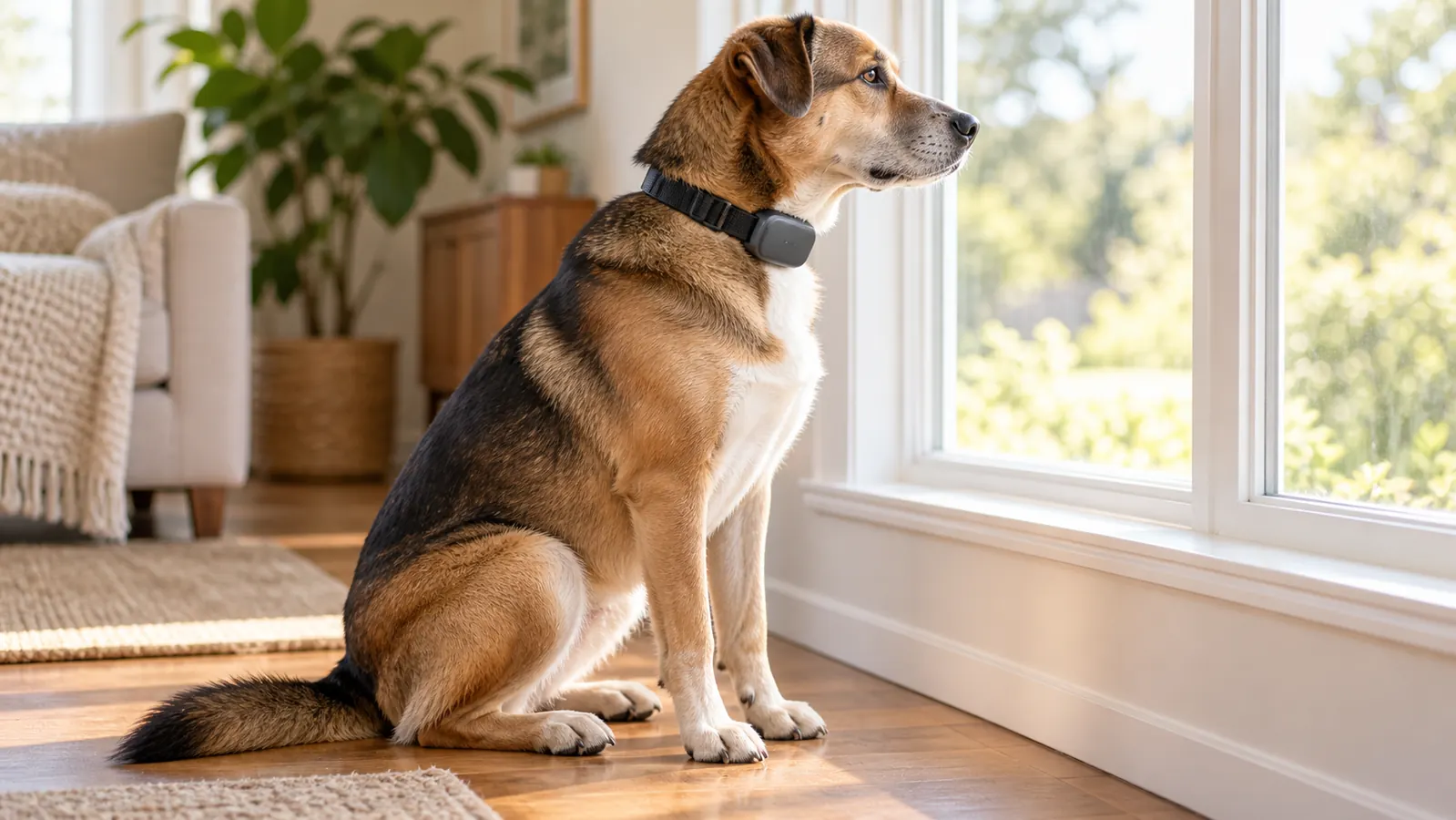
The FAFAFROG collar has no remote, which takes some getting used to if you have used other training collars. It sits on the dog and decides on its own when a bark is happening. When June barked, the collar made a beep. If she kept going, it added a light vibration. I never had to push a button. That timing matters, because the dog receives the message at the exact moment she is barking, not two seconds later when I finally find the remote in my pocket.
I used it the way I would use any training tool, which is to say I did not hand my dog over to the collar and walk away. The first time June felt that vibration she stopped mid bark, turned her head as if something had tapped her on the shoulder, and then looked back at me. It was confusion, not fear. She did not yelp, she did not tuck her tail, and she did not hide. She simply stopped.
I also followed a rule I give every client: the collar is the interruption and the treat is the lesson. I stayed close for the first week. Every time June broke off a bark, I called her name and tossed a small training treat on the rug. That links the quiet to something good instead of something scary. The collar makes the pause, and the reward makes the pause worth repeating. That piece is the part most people skip, and it is the piece that made the difference for us.
What the FAFAFROG collar is, and what it is not
Let me put the FAFAFROG collar in the right category, because a lot of the online talk about it is muddy. This is an automatic bark collar, not a remote training collar and not an e collar. There is no handheld transmitter, no button for me to press. There is also no electric correction. The response is beep and vibration. That distinction matters for a dog like June, who is sensitive and would fall apart if the tool hurt her.
Automatic also means the collar is the one making the decision. That is a benefit for anybody who has tried to time a correction from across the room and missed. It is also a limitation. A collar cannot tell why a dog is barking. It only knows that barking is happening. If the barking comes from frustration, boredom, fear, or territorial instinct, the human still has to solve the why part. The collar is not a substitute for that work.
What the FAFAFROG collar did for us was create a clean moment of pause. It did not make June love the mail truck. It did not teach her that the window is boring. It made her stop long enough to hear me, and then the reward based training did the rest. In my world that is the right division of labor between a tool and a training plan.
Where the quiet came from
To be honest, the collar alone did not quiet June. What it did was make my training timing look perfect. I did not have to be standing at the window with a treat pouch every time a truck went by. The collar handled the first interruption, and I handled what came after. After a few repetitions of bark, beep, vibration, pause, and reward, the whole pattern changed.
In the second week, June started reacting to the beep before the vibration ever came. She would be halfway to the window, hear the beep, and turn around to look for me. I have seen this with other dogs and other tools. It is the moment a signal becomes a cue. The full bark did not have to happen, because the beep was already the news.
By the end of the first month, I could leave the collar off for short stretches as a test. She still barked at the worst triggers, but she also came back to me faster when I called. By the end of the second month, the delivery truck that used to start a thirty second outburst barely got a single low woof. I cannot promise every dog will follow that exact timeline. June is easy in every other way, and her barking was moderate, maybe six or eight incidents a morning. This is not a dramatic rescue story about a truly frantic dog.
The third month is where I began to trust the quiet. Instead of watching from the kitchen, I worked at the table while June lay near the window. The collar stayed on, but I noticed she was rarely setting it off. Quiet windows became the new normal, and I will not pretend the old habit never shows up. When a loud motorcycle passes after dark, June still gives me one good hey. The difference is that it is one word instead of a paragraph, and she is easy to redirect.

Where it fell short for me
I will start with the biggest thing. A bark collar is a management tool, not a fix you can install and forget. If you put the FAFAFROG collar on a dog and walk away for three weeks, that dog will very likely learn to hate the collar, not to love the quiet. I see that with clients all the time. The collar ends up blamed for everything and then it ends up in a drawer. You have to use it as the beginning of a training plan, not the whole plan.
Second, the collar has to fit snugly enough to stay in place. June has a thick coat around her neck, and I spent a little time adjusting the strap and checking it. When it was too loose, it slid around. When it was too tight, she scratched at it. The fit is not hard to get right, but it is not a slip it on and forget it kind of product either.
Third, automatic sensors are not perfect. Over three months, there were three or four times when the collar beeped while June was not barking. I checked her each time and could not find an obvious trigger. It seemed to happen when the collar shifted on her fur. It was rare, but it happened, and if your dog is easily startled that could be a genuine problem.
Fourth, and this is the part I want to be plain about, the FAFAFROG collar is not the right tool for a dog who barks because she is afraid or because she is alone. If your dog paces, drools, scratches at the door, or loses her mind the second you leave, do not buy a bark collar. Talk to your veterinarian. The barking is the least important part of that problem, and a collar will only add stress to a dog who is already overwhelmed.
What I Liked
- Stops nuisance barking in the moment without a remote or an app
- Uses beep and vibration only, no electric correction
- Automatic timing is consistent, even when your attention is not
- Held up to three months of daily use and felt solid the whole time
- Easy to clean and easy to recharge
Where It Falls Short
- Only works if you are willing to supervise and train around it
- Occasionally beeps when the dog is not barking, usually after the fit shifts
- Wrong for fearful, anxious, or separation distressed dogs, and those dogs need a vet instead
- Has no remote, so you cannot use it as a general communication tool
After ten days, June was stopping herself at the beep, before the vibration ever arrived. That is when I stopped calling the FAFAFROG a gadget and started calling it a training helper.
Who This Is For
The FAFAFROG collar is for a dog like June. That means a dog who is basically confident, well exercised, and happy in her own home, but who has one specific outlet she cannot control. Window barking, door barking, barking at the fence line. The bark is predictable, the trigger comes from outside, and a human standing ten feet away can see the whole exchange. If that describes your dog, the FAFAFROG collar gave me the fastest clean results of any nuisance barking tool I have tried.
It is also for an owner who is willing to put in ten consistent days. You do not need to be a trainer, but you do need to be there for that first week, reward the pauses, and take the collar off when the session is over. If you are looking for something you can hand to the dog and walk away, this is not that product.
Who Should Skip It
Skip the FAFAFROG if your dog is barking because her brain is underworked. Boredom barking tends to come in long spells, often at the same time every day, and the dog will keep inventing reasons to bark even after the collar interrupts each one. The right fix is more walks, more sniffing, more puzzle toys, and a few afternoon nose games, not a collar.
Skip it if your dog is afraid of thunder, cars, unfamiliar people, or the moment you leave. These are not nuisance barking problems. They are fear problems, and the humane path goes through the veterinarian, a behavior professional, and a management plan that lowers the dog's stress instead of adding a correction. June is not that dog, but I have worked with plenty of dogs who were, and I would not put this collar on any of them.
Finally, skip it if no one is home during the day. An automatic collar should not be worn for eight unsupervised hours. It is doing real work every time it activates, and a dog needs a break from that work. If the window barking happens while you are at work, rearrange the room, block the view, add some background noise, or set up a camera so you can respond in real time. Keep the collar for the hours when you can actually be part of the training.
Want the same quiet window? Keep the collar and add the training
The FAFAFROG collar worked for June because it made the pause consistent and I made the quiet worth her while. If your dog is the confident window barker type, this is a fair tool at today's price. Check the listing on Amazon, read the instructions before you fit it, and give it two honest weeks.
Amazon Check Today's Price on Amazon →