
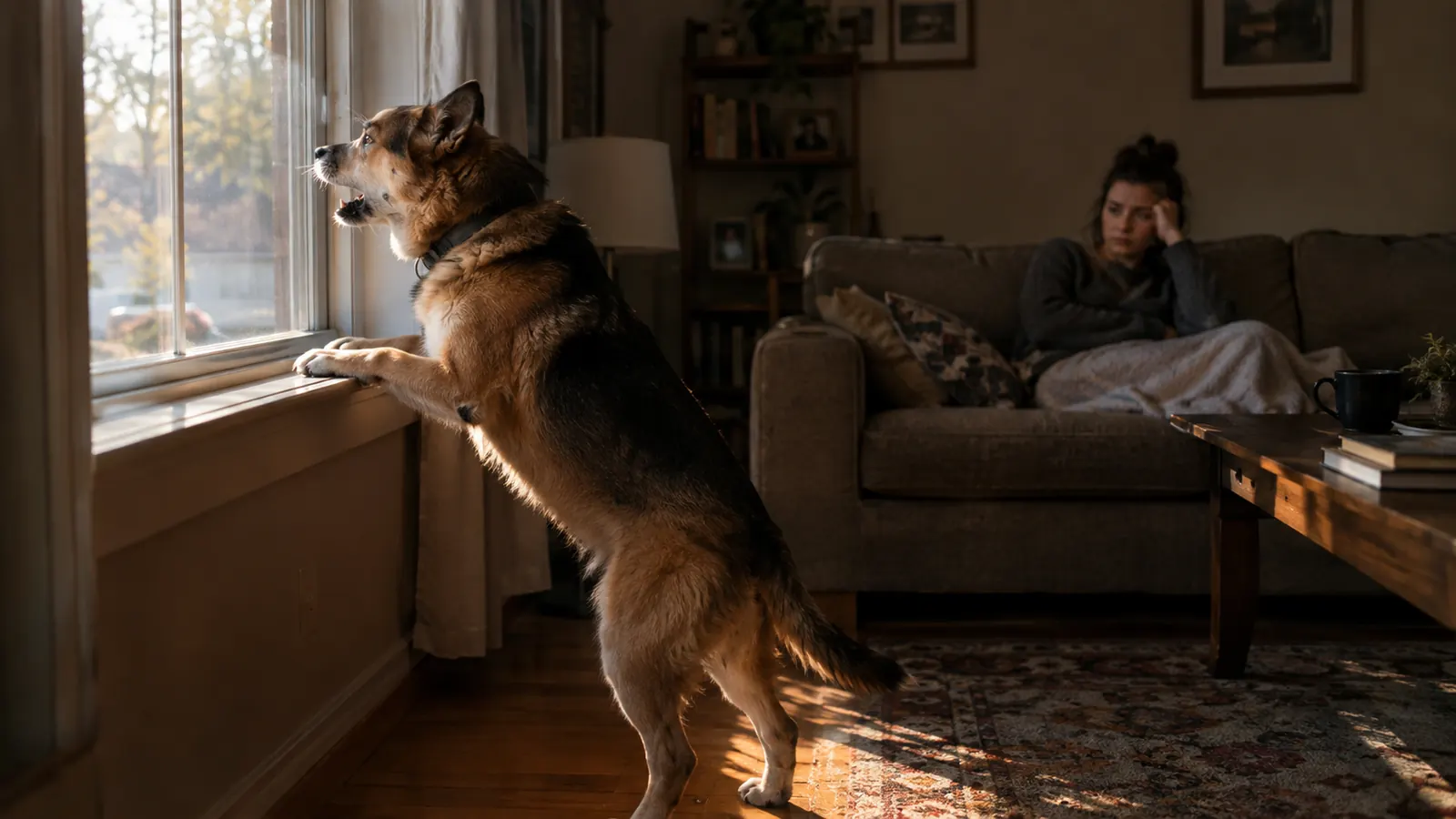
For two years, the hour before dinner in my living room had a soundtrack. A dog would appear on the sidewalk across the street, and June would launch herself at the window, barking like she was announcing an invasion. Toenails on the hardwood. A lunge at the glass. Me calling her name from the couch in the voice I use with other people's dogs. The voice that works on other people's dogs.
What finally quieted the window was not another training session. It was an automatic FAFAFROG bark collar, no remote and no shock, and I know exactly how that sounds coming from a trainer. The collar lives in the drawer next to the couch now. Most days we do not even open that drawer. But you deserve the whole story, because I was the most skeptical person I know.
I am Deb Prentiss. I train dogs in people's homes on the edge of Springfield, Missouri, and before I started charging for my time, I spent ten years volunteering in shelters. That is where I learned to distrust gadgets. I have a fenced half acre out back for recall work, a hatchback I drive to client visits, and a wire crate in the living room that June treats as her bedroom. She is a four-year-old shepherd-Lab shelter mix, 62 pounds, and in every room except the front one she is the easiest dog I have ever lived with.
June's window barking was the one thing I could not train out of her, and it took me longer than it should have to understand why. The barking worked. From June's point of view, every dog that walked past her window eventually left, and she had barked it away herself. That is what trainers call a self-rewarding behavior. No treat, no cue, no clever session was going to outcompete a habit that paid for itself every single afternoon.
So I did what I tell every client to do. I managed the environment. I closed the curtains, and June watched through the gap, which was somehow worse. I trained a settle cue until she could hold it for half an hour, but only while my eyes were on her. I added a long walk at the end of the day to take the edge off. Every piece helped a little. Every piece failed at the exact moment that mattered, dog on the sidewalk, June at the window, habit wins.
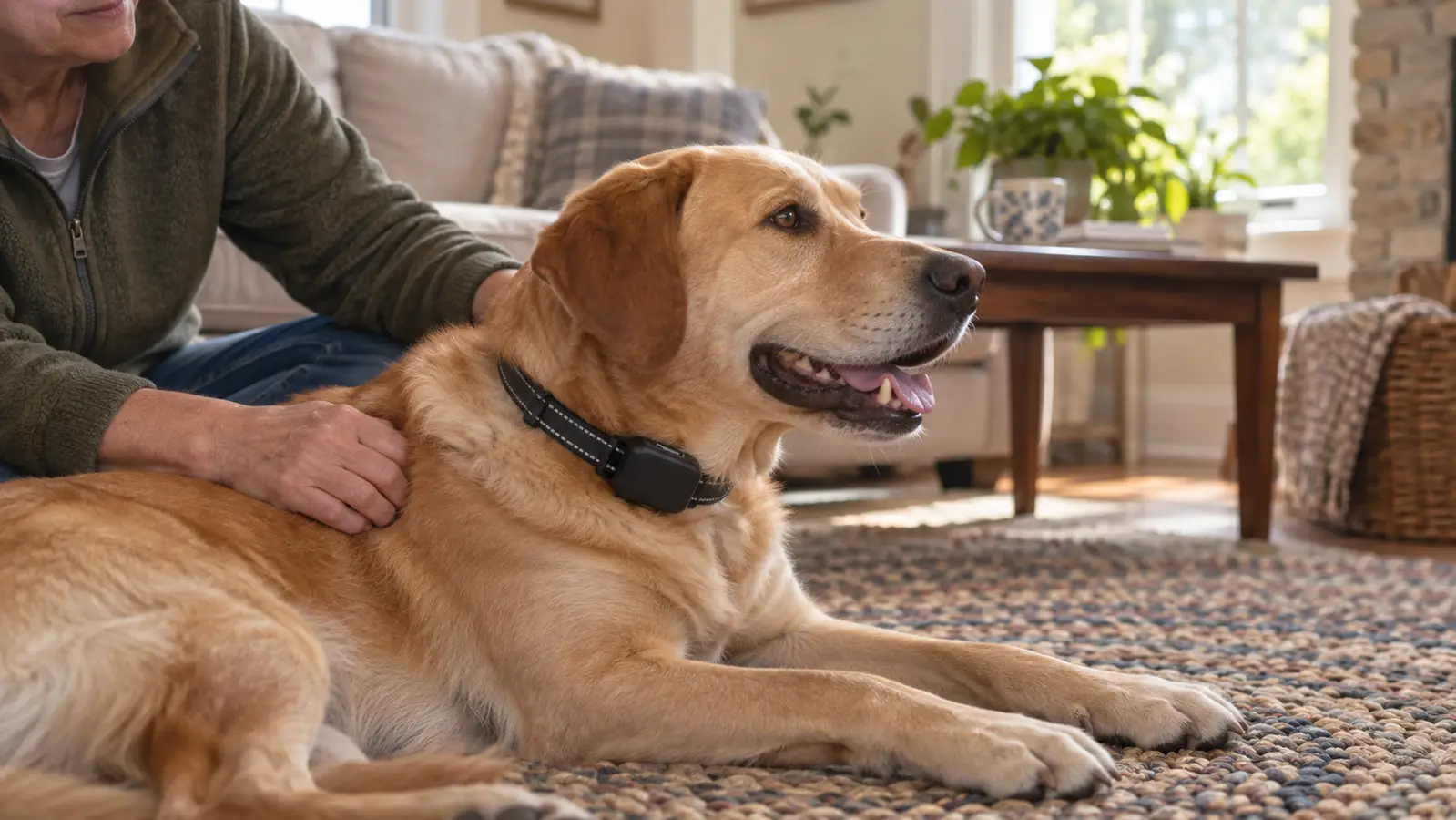
I will be plain about bark collars, because you deserve that. I have never liked the citronella spray kind. They smell, they coat a dog's neck in oil, and a hard-headed dog will simply bark until the cartridge runs out. And I will not use a shock collar on any animal in my care, so hear me when I say this is not one. The FAFAFROG collar detects the bark on its own and answers with a beep. If the barking continues, it follows with a vibration. That is the whole mechanism, beep then vibration, no remote, no button, no spray, and I still did not believe it would matter.
From June's point of view, every dog that walked past her window eventually left, and she had barked it away herself.
A reminder that arrives on time, every single time.
June's barking was too fast for me to interrupt from across the room. The automatic FAFAFROG collar is at her neck the moment a bark starts. It beeps, and only if the barking continues does it vibrate. No remote, no shock, no spray. It does not train the dog for you, but it shows up exactly when it needs to.
Amazon Check Today's Price on Amazon →What made me finally try it was a client. She had a dog who barked along the fence line all afternoon while she was at work, and she did not need a lecture on management from a trainer whose evenings were free. She needed something that worked when nobody was home to interrupt. That is what an automatic bark collar is for, a reminder that arrives at the moment of the bark. I suggested the FAFAFROG reluctantly and told her to pair it with a calm settle. She came back seven days later with a quieter dog and a story I did not fully believe. So I ordered one for June.
Here is the part I would want someone to tell me before I started. The collar does not do the job alone, and it should not have to. For the first week I stayed in the room with her. I put the FAFAFROG on June only during afternoon window hours, and the moment it beeped, I said her name, patted her mat, and rewarded the quiet. Within days the beep itself became her cue to stop. She would break off mid-bark, turn her head, and walk to her mat. Because she stopped, the vibration almost never had to follow.
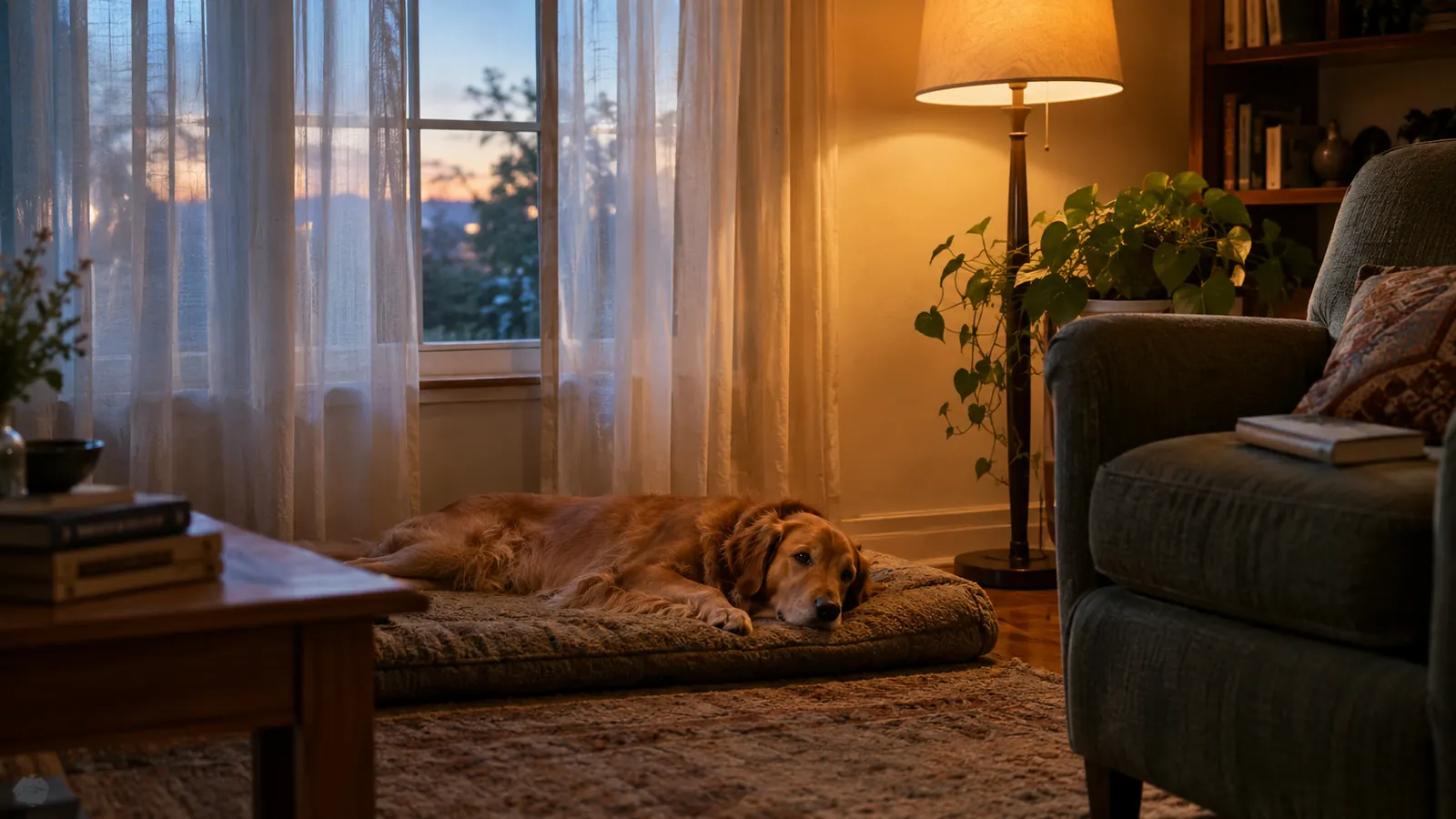
The moment I knew it had worked came in the third week. The couple three houses down walked their golden retriever past the window, and June watched from her mat. She watched him the whole way down the block. She did not get up, and she did not bark. I sat very still on the couch and pretended to read until my pulse settled. By the second month the collar had moved to the drawer. June still watches that window every evening, but she does it quietly, from her mat, and the hour before dinner is my favorite hour again.
Now let me tell you who should not buy this collar. If the barking comes from real panic at being left alone, that is separation distress, and the answer is your veterinarian, not a collar that vibrates. If the barking comes from fear of strangers, vibration will not calm the fear. And if you put the collar on and walk away without teaching the quiet behavior you want instead, you will get a confused dog, or a dog who saves her barking for when the collar is off. I have seen both in my years of home visits.
I also want to be honest that most dogs never need a bark collar. Most window barking fades with less window access, a proper settle cue, and a bit more exercise, and that path costs almost nothing. June was the exception. Her barking was too practiced to interrupt from across the room. The FAFAFROG worked because it could be at her neck at the exact second the bark began. It was not a punishment that taught her a lesson. It was a reminder that arrived on time, which is more than I could manage from the couch.
What I'd Tell You If We Were Sitting at My Kitchen Table
If you were here at my kitchen table, here is what I would say. Watch your dog honestly for one week. If the barking comes from fear, close the curtains and call your veterinarian. If it comes from excitement, start with the dull fixes, more walks, a settle mat, less window time, and give them three honest weeks. Only when the habit is still winning should you reach for a collar. And when you do, stay in the room for the first week. Let the beep become the cue for something good, and reward the quiet every single time. That is the whole thing. That is how the drawer beside my couch came to hold a FAFAFROG collar, and that is why the hour before dinner is quiet at my house now. If that is what you are after, this is a fair place to start.
The collar I keep in the drawer for the days June needs it.
Most dogs will never need this collar, and I told you who should skip it. But for the dog whose habits are too fast to interrupt, the automatic FAFAFROG sits at the neck, beeps at the moment of the bark, and vibrates only if the barking goes on. No remote, no shock, no spray. It is rechargeable, and it is the reason my evenings are quiet. Check today's price on Amazon and decide for yourself.
Amazon Check Today's Price on Amazon →