
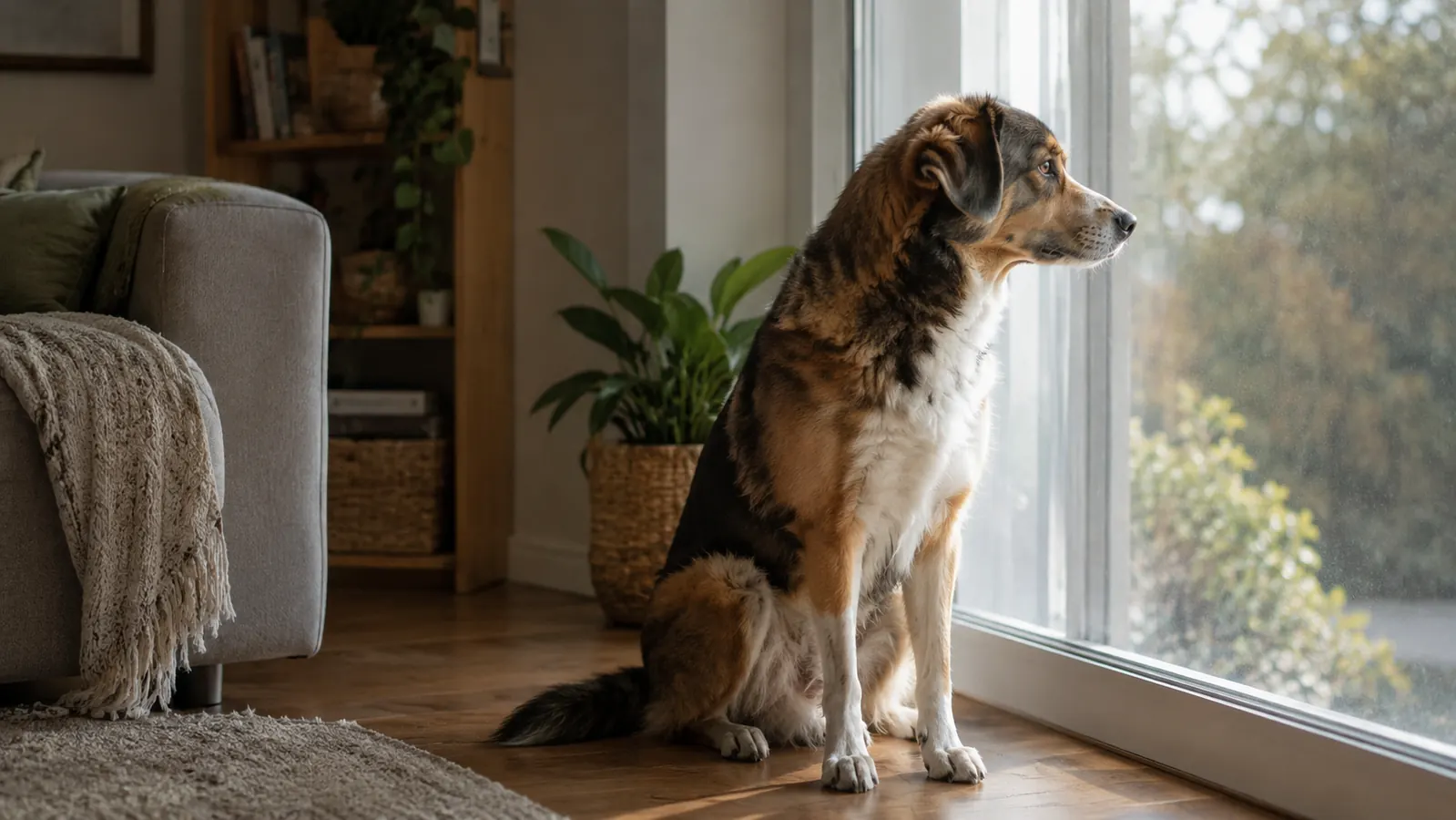
Does your dog turn the front window into a personal alarm system every time the mail carrier, a neighbor, or a bicycle rolls past? You have probably tried telling him to hush, raising your voice, or yanking him away from the glass. Maybe it worked for one quiet afternoon, and then the next walker ruined everything. I see this exact scene in client homes more often than almost any other complaint, and it is rarely about a dog who wants to misbehave. Window barking is a habit that pays for itself. The dog barks, and the thing outside goes away. That makes the window one of the hardest places to train calm, because the environment keeps handing out the reward.
Before you buy anything, hear the part that matters: the fix is not a gadget. The fix is making barking unproductive and quiet more rewarding, in that order. The plan below starts by blocking the view, then teaches your dog a settle mat, then brings in an automatic FAFAFROG bark collar for the weeks when the old habit is still strong. The FAFAFROG is a useful backup, not a shortcut. Think of it as one part of a routine you and your dog practice together, not as a machine that does the training for you.
The Backup Tool I Reach For Once the View Is Covered
FAFAFROG is an automatic bark collar that responds to the dog's own bark with a beep and then a vibration. There is no shock and no remote to press. It is the consistent interruption that helps keep the old habit from paying off while you teach a better one.
Amazon Check Today's Price on Amazon →Why the Order Matters
I have lost count of owners who bought a bark collar first, skipped the management, and then told me the collar does not work. A collar interrupts a bark that is already happening. It does not give the dog a better idea. If the window still rewards barking with a disappearing trigger, the dog will bark again, often right after the interruption ends. That is why the order matters. You want the dog to practice quiet, not practice barking with a beep attached.
The second reason order matters is timing. If you put a new collar on a dog who has been barking at the window for months, you are asking the collar to outwork a deeply practiced habit. It will lose. Cover the window, teach the settle mat, then let the collar do a smaller job. That narrower job is what makes the FAFAFROG so easy to phase out later.
Step 1: Block the View and Stop Letting the Habit Repeat
For the first five to seven days, your job is to make window barking impossible to practice. Close the curtains, put up removable privacy film, or hang a tension rod with a panel across the lower half of the glass. It does not need to look beautiful, and it does not need to stay forever. You are trying to break the loop where the dog sees a trigger, barks, and the trigger leaves. When that loop stops repeating, the excitement fades much faster than you expect.
A few practical details make this easier. Block the bottom half of the window, because that is where your dog can see out while sitting. Use something that is easy to remove later, so the window can return to normal once the training is solid. If your dog still stares at the gap between the curtain and the floor, close the drapes fully or shift the furniture away from the glass for the retraining week.
I know this step feels too simple to matter. People skip management and go straight to a collar, and then they wonder why the dog barks at the window with the collar on. The collar interrupts the bark, but the trip wire is still there. Cover the window for a week and you will already hear less barking by day three, before the collar has done much of anything.
Step 2: Teach Your Dog to Settle on a Mat
While the view is covered, teach your dog what to do instead of standing sentry. Take a bath mat or a folded blanket, lay it on the floor, and toss a treat onto it. The instant your dog steps on the mat, mark the moment with the word yes or a simple good, then toss another treat so he stays there. Repeat that until your dog goes to the mat on his own and lies down. My own dog, June, picked this up in three short sessions because dogs love anything that turns into a predictable game.
Once your dog lies down and stays, add a cue. Say the word mat just before you toss the treat. After a few days, he should walk to the mat on cue and settle there for a few seconds. Do this for five minutes, twice a day, away from the window first. You want the behavior to be automatic before you ever ask for it near the glass, because the living room window is a hard place to start.
The mat is not a punishment spot. Keep it in the room where the window barking happens, but start in a boring corner. If your dog gets up, simply lead him back and start again. There is no need for a stern voice. You are building a habit of calm, and calm comes from repetition, not from correction.
Step 3: Use the FAFAFROG as Backup When the Window Comes Back
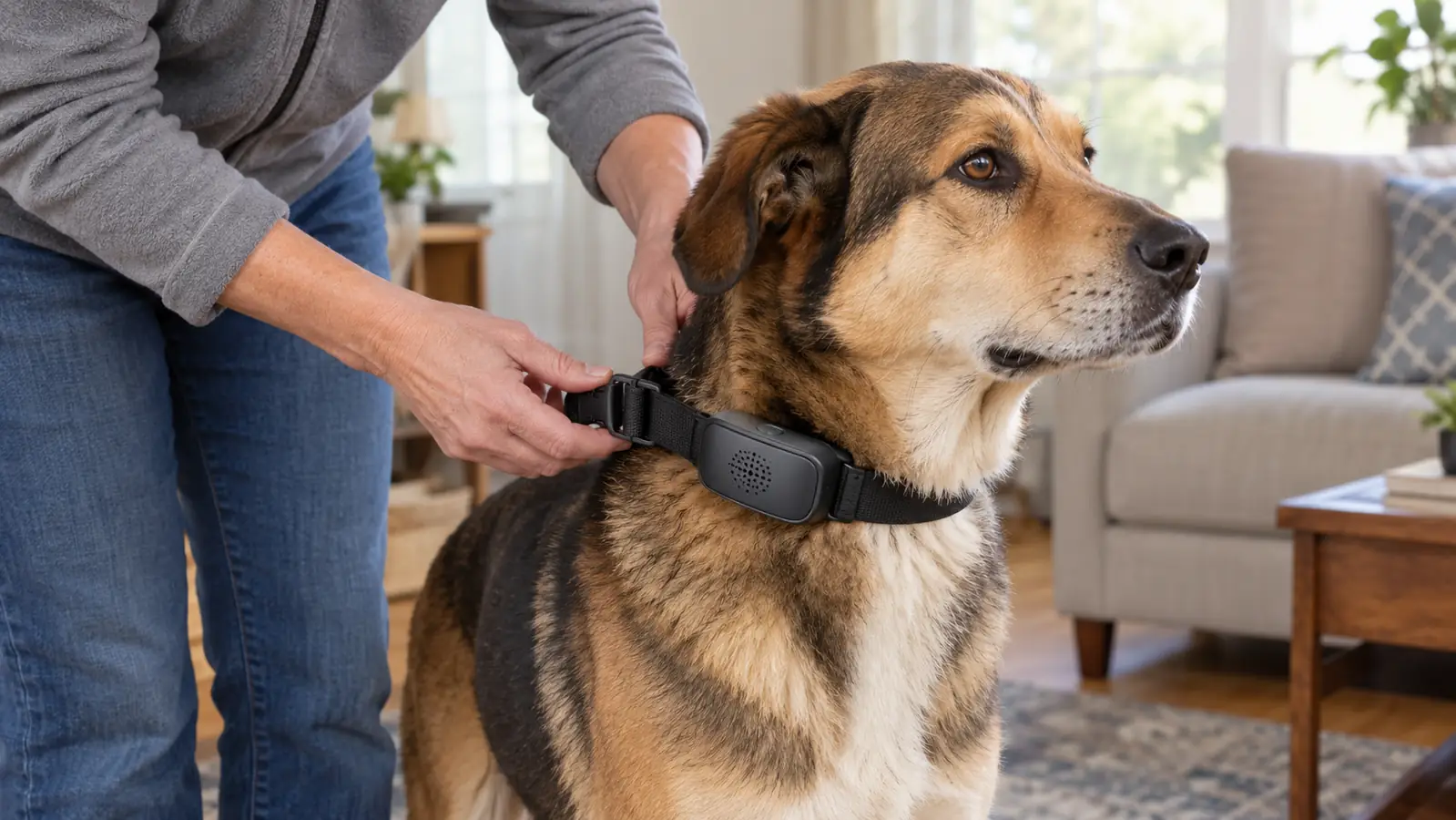
After a week of management and a few days of mat work, you can bring the window back into the routine. Choose a calm time of day, fit the FAFAFROG around your dog's neck, and check that you can slide two fingers under the strap. This collar works by itself. It is designed to detect the dog's own bark and respond with a beep first and a vibration if the barking continues. There is no shock and no remote for you to press. Your whole job during the session is to stay relaxed and let the collar do the interrupting.
I usually have clients use the FAFAFROG only during short practice sessions or during the high traffic parts of the day when the old barking is most likely. Open the curtain partway, sit nearby, and keep a few small treats in your pocket. When your dog sees a trigger and stays quiet, drop a treat on the mat. When he barks, let the collar interrupt him, then use the pause to call him to the mat and reward the quiet seconds that follow.
Do not leave the FAFAFROG on all day. It is a retraining aid for the window habit, not an all day punishment. Using it for a few focused sessions each day keeps the dog from getting used to the sensation and keeps you aware of what is actually happening at the window. It also means the collar stays paired with the exact moment of barking, which is what makes it effective.

Step 4: Reward the Quiet Moments and Build Duration
Now comes the part that does the lasting work. Watch for any moment your dog looks at the window and chooses not to bark. The instant that happens, say yes and drop a treat on the mat. If he sees a dog walk past and simply watches, that is a big win. Reward it like you just won the lottery. You are teaching him that the window is a place where quiet earns good things, while barking earns nothing but a beep and a vibration.
Mistakes will still happen, and that is fine. When your dog barks, do not yell. Yelling adds excitement and makes the window even more interesting. Let the FAFAFROG beep and vibrate, wait for the pause that follows, then calmly say mat and guide him back. The point is not to punish the dog into silence. It is to make barking a dead end and quiet a doorway to treats.
As the first week of practice goes by, raise your expectations slowly. Start with a person walking on the far side of the street, then a neighbor in the yard, then a dog passing close. If your dog handles the closer trigger, you are ready to leave the curtain fully open during practice times. Build duration too. A quiet look for two seconds becomes five seconds, then ten. Keep the sessions short and end on a success so the mat stays a happy place.
Step 5: Fade the Collar and Handle Relapses
After two or three weeks of mostly quiet practice, start using the FAFAFROG less. Maybe you only need it during the morning mail window or the after school rush. The next week, try a session without it and see what happens. If your dog stays calm, leave it off for longer stretches. The goal is a dog who can watch the world go by without needing equipment, and most dogs get there sooner than their owners expect.
Relapses happen, especially when the seasons change and a new set of triggers appear at the window. Do not treat a relapse as a failure. It is simply information that the training needs a little more time. Close the curtains again for a few days, put the FAFAFROG back on during the busiest hours, and go back to rewarding quiet looks. You are not starting over. You are just repeating a few steps that the dog already knows.
A realistic timeline looks like this: one week of blocked windows, one week of mat training, two to three weeks of practice with the collar, and then a gradual fade. Some dogs take longer, especially if the barking has gone on for years. Be patient with the dog and with yourself. A calm, consistent home routine beats any collar on its own, but a good collar used inside that routine can make the whole process noticeably faster.
What Else Helps
A tired dog is easier to train, but do not just add more walking. A long walk can actually increase alertness around the neighborhood. Instead, add mental work before the high traffic times. Ten minutes of nose work, a puzzle toy, or a short training session can take the edge off the watchfulness that drives window barking. If your dog has a predictable trigger time, do the mental work twenty minutes before that window starts.
Make the window boring in other ways too. Turn on a fan or white noise machine so your dog cannot hear every footstep outside. Move his bed away from the glass and put the settle mat in that spot instead. Some dogs bark because they feel responsible for the whole street. A regular routine that tells them when quiet time happens can do as much as any piece of equipment.
I also want to be clear about one important limit. If your dog barks frantically when you leave the house, paces, drools, or destroys the door frame, that is not window barking. That can be separation distress, and a bark collar is not the right tool for it. Those dogs deserve a checkup with a veterinarian and a behavior professional who can look at the whole picture. This article is about the bored, excited dog who watches the street, not the dog who panics when he is alone.
Every window barker I have worked with improved once the owner covered the glass for a week and taught the dog a settle mat. The FAFAFROG just keeps the old habit from paying off while that training sinks in.
Ready to Make the Window Boring Again?
The FAFAFROG automatic bark collar fits into step three of the plan above. Pair it with a blocked view and a settle mat, and you give your dog a real chance to learn a quieter habit.
Amazon Check Today's Price on Amazon →