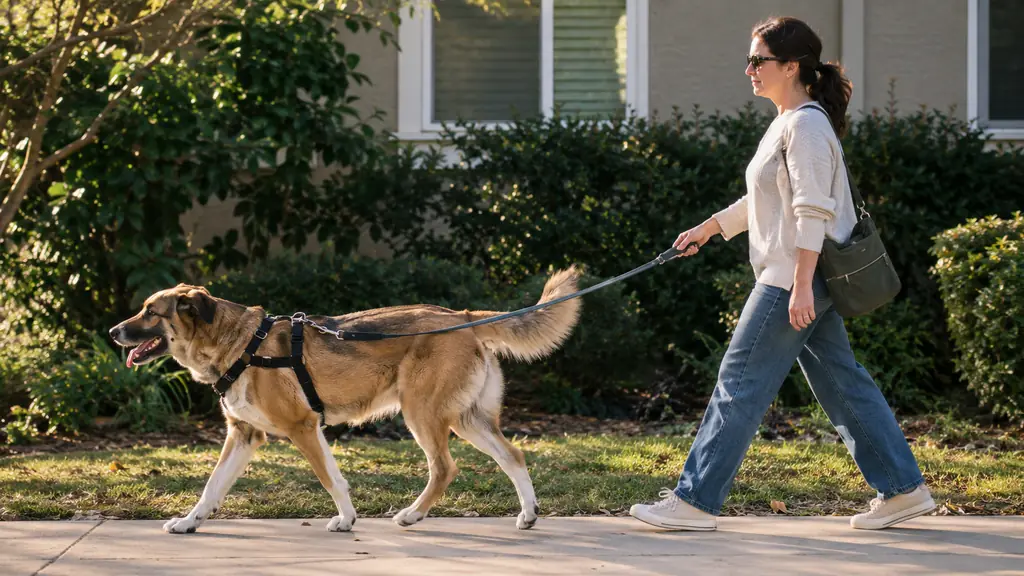
I meet dogs at the end of a lunging leash all the time. Usually the owner says they tried a collar and a head halter and a harness with the clip on top, and the dog still dragged them down the block. Here is what I tell them from my side of the fence: on most pullers, the clip placement is what matters. The PetSafe Easy Walk is a front-clip no-pull harness, and it is the tool I reach for first when a dog thinks the walk should lead with their nose.
No harness fixes a behavior by itself. If the dog has spent years learning that pulling works, the walking will not change overnight. But a front clip changes the physics of the next pull, and that gives you a chance to teach a better habit. I call it buying time for training.
If your dog pulls until they choke, this is the fix.
The PetSafe Easy Walk attaches at the chest, so pressure stays off the throat while you work on walking calmly. Check today's price on Amazon and read why the front clip beats a back clip for pullers.
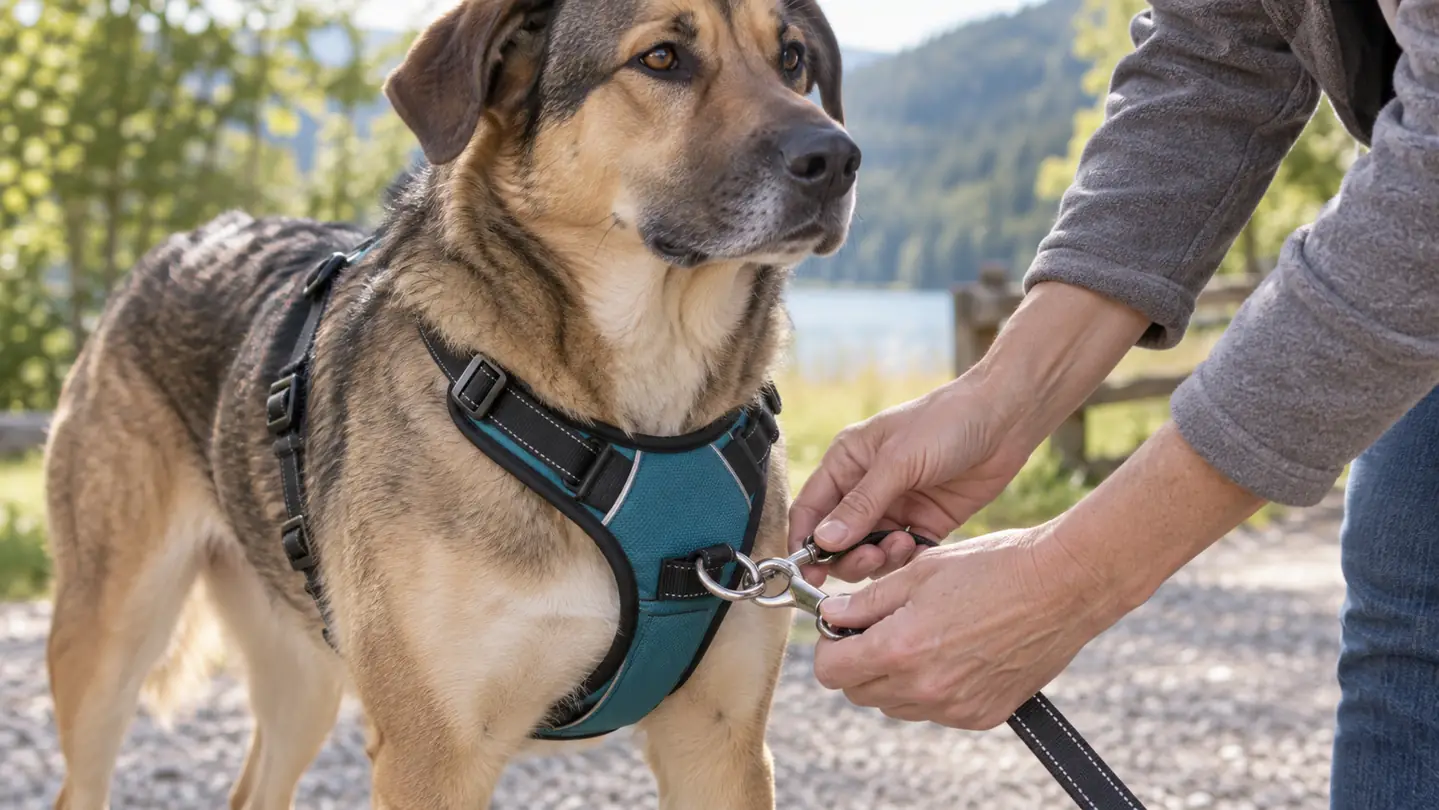
Amazon Check Today's Price on Amazon →Before I go through the list, one honest note. A front-clip harness only works if it is fitted well. The chest strap needs to sit in front of the dog's forelegs, and the belly strap should be snug enough that you cannot rotate the harness sideways. When I help clients try the PetSafe Easy Walk, I spend five minutes on fit before we close the front door. That makes the difference between a calm walk and a dog who spends the walk fighting the harness.
Ten reasons this harness earns a spot in my bag
It turns a lunge into a turn
With a back-clip harness or a flat collar, a dog who launches forward hits resistance right where they are pushing. With a front clip, the leash attaches at the center of the chest. The instant the dog puts weight on the line, the front of their body is guided sideways. The dog's own strength turns them, which is easier to manage and far less frustrating for both of you.
It takes the reward out of lunging
Dogs pull because pulling has been rewarded. If a dog leans into the collar and you keep moving, they learn that pressure means forward. With the front clip, pressure means turn. The dog winds up facing back toward you or off to the side, not the tree they wanted. After a few repeats, the old strategy stops being worth the trouble.
It protects the neck and trachea
The worst thing I see on a walk is a dog choking against a flat collar. Repeated pressure can irritate the trachea, and it teaches a dog to dig in harder because they cannot breathe past the collar. The front clip puts the leash attachment in front of the breastbone instead. That is kinder for dogs with a history of coughing, for older dogs, and for any dog in a training phase with frequent stops and starts.
It supports reward-based training instead of fighting it
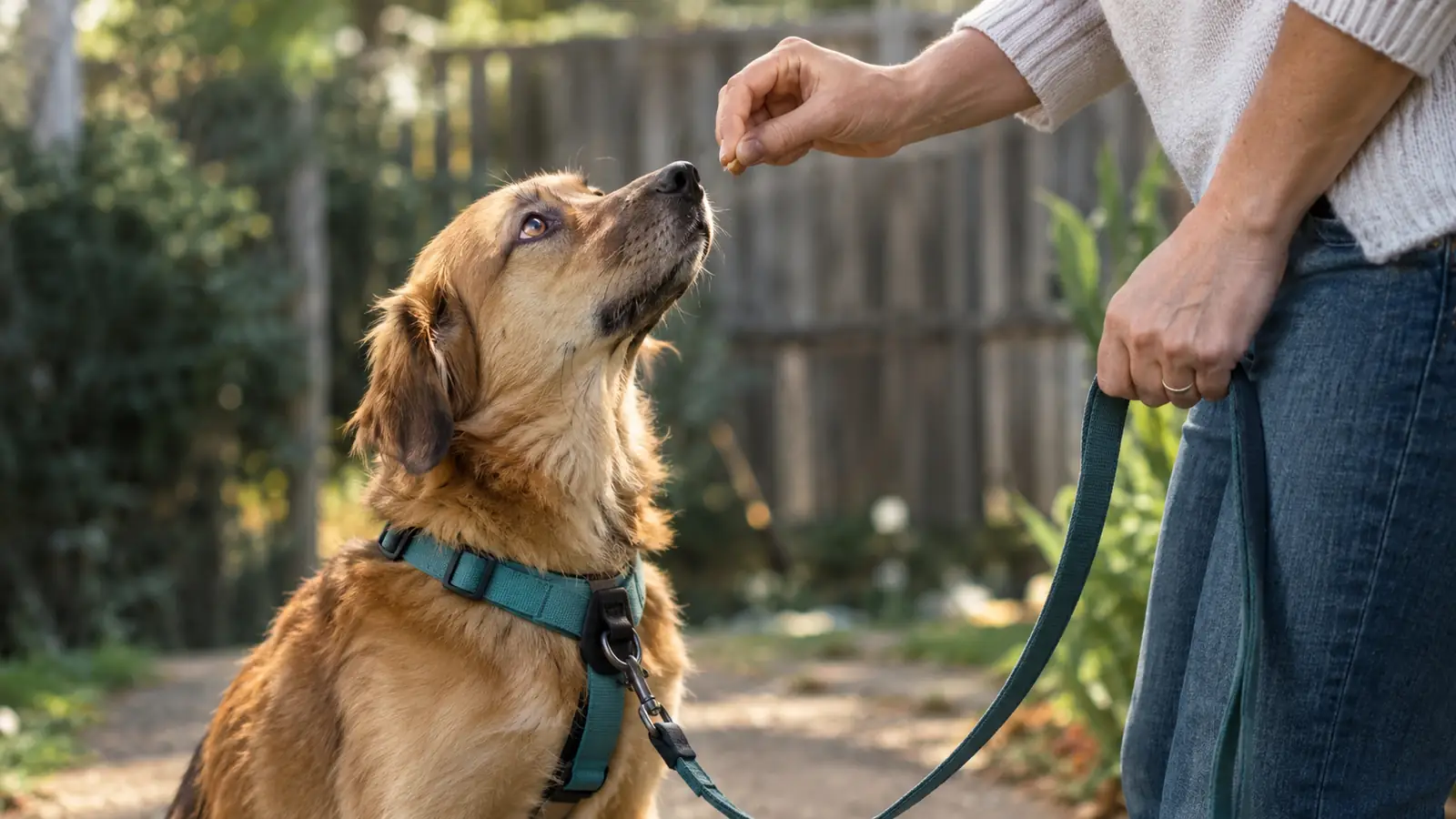
Because there is no choke and no painful correction, you can use rewards at the exact moment the dog offers a loose leash. I carry tiny treats on walks. When June glances back at me with a slack line, she gets a yes and a treat. The harness does not interfere with that because it does not hurt, startle, or scold. Training works better when the equipment does not muddy the message.
It works with the leash you already own
You do not need a special leash, a head halter, or a clicker system. Any standard leash clips to the front ring. That matters for clients on a budget and for rescue volunteers who have one leash in the car. Fewer moving pieces means you will actually walk, and walking is where training happens.
It makes walks easier on your shoulder and back
A forward lunge on a flat collar hits like a fast pull straight out of your shoulder. The front clip changes the direction of that pull, so you are not bracing against the dog's whole body weight in a straight line. If you already have achy shoulders or a lower back, this matters every single walk. Steady and manageable beats a tug of war.
It helps you redirect a reactive dog
If your dog barks or lunges at other dogs across the street, a front clip can help you redirect before the response becomes a scene. The leash attaches at the front, so a gentle sideways cue is enough to walk the dog in a wide arc away from the trigger. You still need training and distance, but you will not be standing helpless while the dog practices the wrong behavior.
It gives you a clear moment to reward the behavior you want
When pulling finally stops for one step, you need a way to tell the dog that this is the good thing. With the harness, I can release pressure the second the leash softens. I say yes out loud and offer a treat before the dog ever hits the end of the line. That exact timing teaches a dog to stay close, and the front clip makes the timing possible.
It keeps a new rescue day from feeling impossible
The first weeks home with a shelter dog are messy. The dog has no idea what you expect, and you are still learning what scares them. A front-clip harness lets you keep control without punishing mistakes. I recommended it to adopters during my shelter years because it gives a new handler physical control while leaving the dog free to relax, sniff, and learn.
It gets used, because it does not become a battle
No tool helps if it sits in the closet. If a harness pinches or slips, you will not use it. The PetSafe Easy Walk is the one owners keep on the hook near the door because it does what it promises and does not make the walk more complicated. The real reason it helps with pulling is that you will actually put it on.
Honest notes from years of walks
I can hear someone thinking, but what about a harness with the clip on the dog's back? A back clip is fine for a dog who walks politely, and it is a good place for a seat belt clip or a quiet walker. For a puller, it does the opposite of what you need. The dog leans into it, the harness pulls back, and you brace against the dog's whole body. The front clip swings the dog's front end toward you. Between the two, I will take the front clip every time.
If those ten reasons blur together, here is the short version. The front clip puts a gentle stop to a pull before it becomes a habit, keeps pressure off your dog's neck, and gives both of you a clean way to start again. Then you can train the behavior you actually want, which is a dog who walks beside you because they want to, not because they have to.
What I'd Skip
Skip it if your dog already walks politely on a flat collar, because there is no reason to add gear. Skip it if you are not willing to spend a few minutes fitting it and a few weeks teaching calm walking, because the harness is a training aid, not a quick fix. And skip it if you have concerns about a neck or breathing condition, because your veterinarian should choose walking gear with you. For everyone else with a strong, happy puller, this is where I start.
A front-clip harness does not hurt, does not punish, and it does not let pulling work.
Try it on a walk this week and watch what changes.
This is the harness I recommend to most clients who tell me their dog drags them down the block. Start with the PetSafe Easy Walk, give it a few weeks of treats and consistent walks, and see if your shoulder does not feel better. Check today's price on Amazon.
Amazon Check Today's Price on Amazon →