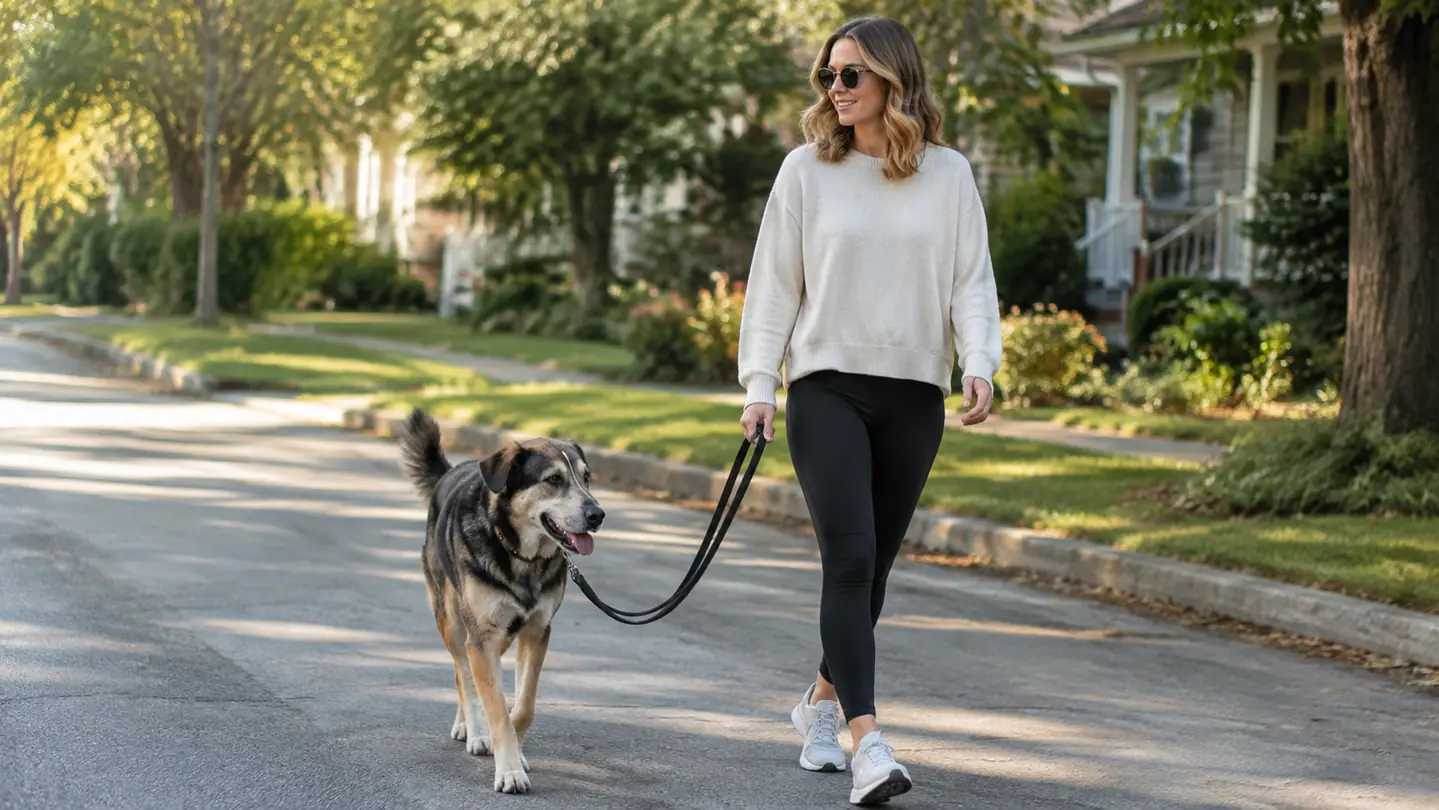
Last Tuesday at 7:10 in the morning, June heard a squirrel before I did. She planted her feet, launched herself across the sidewalk, and I did something I used to not be able to do: I let out the leash and kept walking. The front clip did its job. She pulled for maybe two steps, the harness turned her shoulders toward me, and then she stopped and looked back, as if to ask what had changed.
That is the only way I know to describe the PetSafe Easy Walk. It has not made June a perfectly loose-leash walker, and I would not tell you it has. A harness is management, not training. But it took away the part of our walk that made me want to stay home, and that is the part that matters if the alternative is no walk at all.
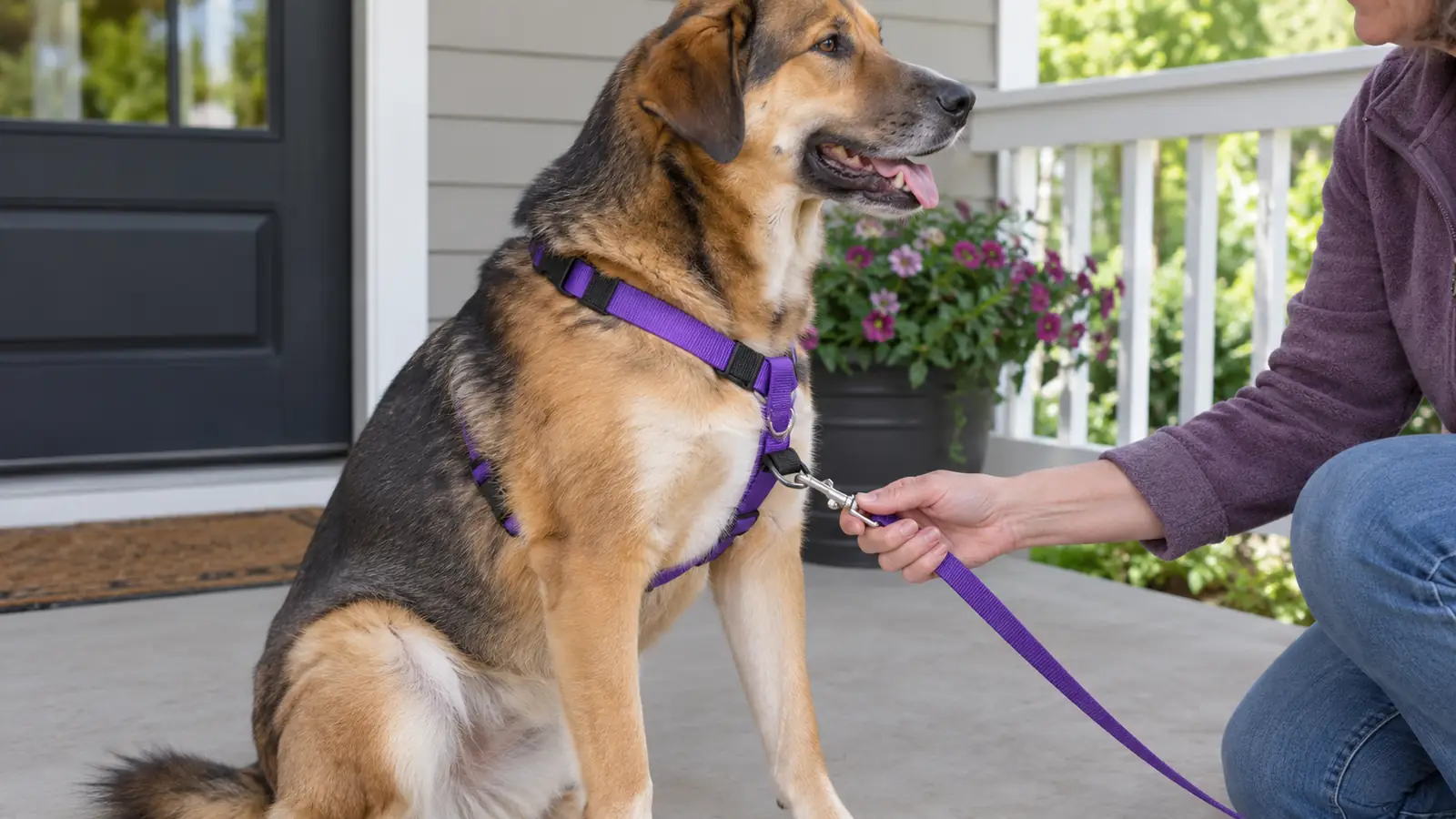
I spent ten years volunteering at the shelter before I trained dogs for a living, so I have a soft spot for the families that call me because they are tired of dreading the leash. Most of them have already bought one thing, often a back-clip harness that let the dog pull harder because the handle sat behind the shoulders and gave the dog more leverage. The PetSafe Easy Walk fastens in front of the chest, so the dog that pulls runs her own front legs toward the opposite side and has to slow down to stay straight.
My own dog is a four year old, 62 pound shepherd and lab looking shelter mix named June. She is polite inside, knows her stays, and is crate trained. Outside is another story: squirrels, bicycles, the neighbor's terrier, a leaf if it moves wrong. She does not lunge out of aggression, but she hits the end of a leash like a sled dog and, at her weight, she used to twist my shoulder before I could plant my feet.
The first time I used the Easy Walk, I expected a fight. I clipped it on while she was still on the porch, let her run around the fenced yard with it on, then fastened the leash to the front ring. Fitting took about six minutes, because there are two straps, one around the chest and one around the belly, and both need to sit snug without digging into her skin.
A walk that used to end in a sore shoulder ended at the stop sign with June checking back in to see what I wanted next.
Ready for a Walk That Does Not End in a Sore Shoulder?
The PetSafe Easy Walk is the front-clip design I fitted to my own dog. It reduces pulling while it is on and gives you a chance to teach the behavior that comes next.
Amazon Check Today's Price on Amazon →The PetSafe Easy Walk is not a head halter. I mention that because people confuse the two. A head halter goes around the muzzle, and it can be a very good tool, but a dog that hates things touching her face has to be introduced to it slowly. The Easy Walk is just a harness with the leash ring in the front, on the chest panel, instead of between the shoulder blades. Some dogs take to it in five minutes. Others need a few short sessions indoors where they get a treat for wearing it. June acted like the whole thing was an excuse for chest scratches and asked to have it put on.
For the first several days I paired the harness with a handful of cut-up hot dog and watched for the moment June chose not to pull. I am a trainer, so changing the behavior was always the goal. The harness only made that possible. It reduced the window where she got to move forward by pulling. Once pulling did not work anymore, she stopped rehearsing it, and I could reward the one second where she turned back toward me instead.
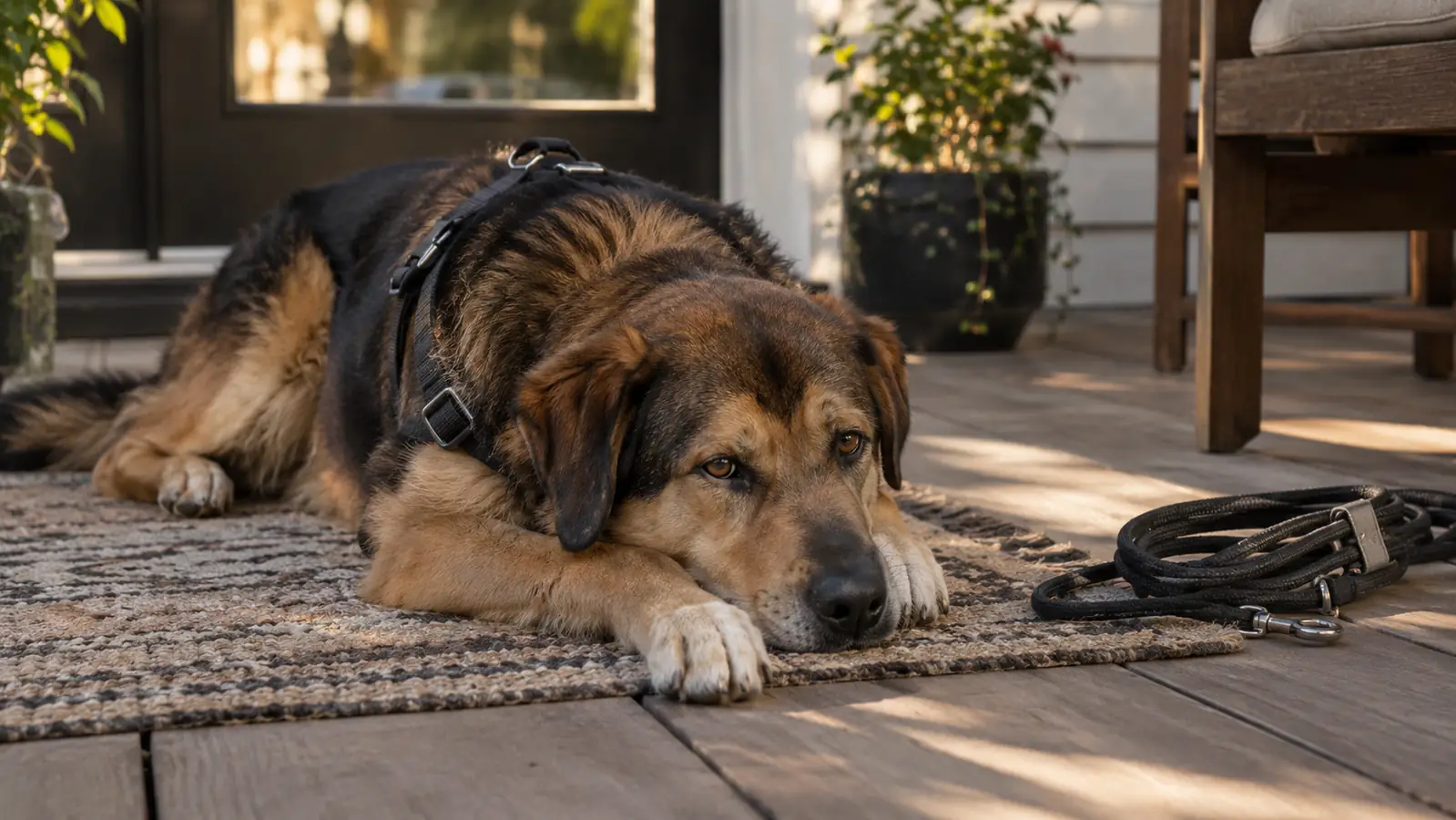
By day ten we tried the harder route, the one with the schoolyard fence and the terrier that races along it. June tensed, and she whined once, but she did not hit the end of the leash. Neither one of us came home with a sore shoulder, which used to be the part of the walk I dreaded.
I noticed another change that had nothing to do with preventing the pull. Because the front clip made pulling less useful, June started checking in with me. She did not suddenly do a perfect heel, and I would not expect that from her. But she glanced up, saw that I was still there, and made herself available for the next step. That check-in did not happen when I was being dragged across the street.
What I'd Tell You If We Were Sitting at My Kitchen Table
You do not need to turn your kitchen into a training studio to benefit from this harness. Start with your dog's chest girth and the size chart on the product page, not with the weight range alone. When the harness arrives, fit it while your dog is standing, and do a ten foot test inside before you leave the driveway. If it sits too loose or rubs, adjust or size down, because a harness that moves around is worse than no harness at all.
Here is the honest part I tell every owner who calls me: a harness is management, not a cure, and it is not necessary for every dog. If your dog only pulls when she is overexcited, I would start with treats and leash drills and leave the hardware in the drawer. The Easy Walk earns its place when pulling is making walks genuinely unpleasant. When the dog is heavier than you can comfortably hold, or a sore shoulder is making you cancel walks, or you have already tried a back-clip harness that made things worse, that is the moment to put the leash on the front ring and let the dog feel how much easier walking is when she is not fighting you.
After three weeks, the PetSafe Easy Walk holds the hook by my back door. We do not need it on every walk now. Some days we use the flat collar. But on the mornings when June is already watching the fence before we leave the porch, I reach for that harness. It is the difference between a walk I look forward to and a walk I used to cut short.
The Front-Clip Harness That Changed Our Morning Route
Serious pullers and sore shoulders are the reasons I recommend this harness before any other single piece of equipment. See today's price on Amazon and read current buyer reviews.
Amazon Check Today's Price on Amazon →