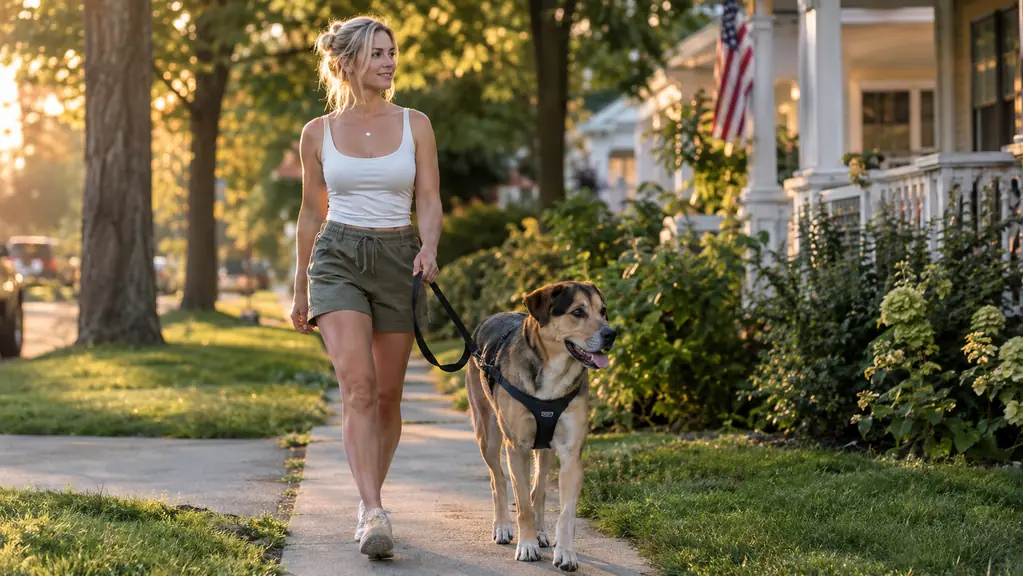
I am a dog trainer, and the most common problem people ask me to fix is pulling on the leash. By the time I arrive at a home, they have usually tried a couple of things already. Maybe they bought a retractable leash because it seemed easier. Maybe someone gave them a choke chain that only made the dog cough. Often they have a harness that clips on the back because the pet store clerk said it would be gentler than a collar. The PetSafe Easy Walk comes up in almost every one of those conversations, because people have heard that a front clip can stop a dog from pulling. Before you buy one, I want to walk you through what this harness really does, what it cannot do, and why a plain back-clip harness is sometimes the better tool.
The short answer is that the PetSafe Easy Walk changes where the leash attaches. The ring sits at the front of the chest, between the front legs, instead of on the back. When a dog pulls forward, that placement turns his shoulders slightly toward you. He cannot keep all four feet planted and lean into the pull the way he can with a back attachment. That is genuinely useful, but it is management, not training. It stops the behavior while the harness is on. It does not teach a dog to walk politely once you take it off. A back-clip harness, by contrast, has the leash ring over the shoulders. A dog can brace against it and drag you with the full strength of his body. For a calm dog that never pulls, that is irrelevant. For my own dog June, a 62 pound shepherd-Lab mix who used to drag me down the sidewalk, it was the difference between a miserable walk and a workable one.
| PetSafe Easy Walk (front clip) | Standard back-clip harness | |
|---|---|---|
| Leash attachment | Front ring on the chest, between the front legs. | Back ring between the shoulder blades. |
| What happens when the dog pulls | The front ring turns the chest to the side, so the dog ends up facing you instead of the horizon. | The dog can brace his whole body and pull against your hand. |
| Comfort for a dog that never pulls | Feels odd at first; some dogs stop and stare when they feel pressure on the chest. | Most dogs ignore it completely, with no pressure points when the dog walks normally. |
| Ease of putting on | Two buckles and a chest strap that has to sit in the right place. | Usually one buckle or a step in style with no strap to position under the belly. |
| Steering when the dog lunges | You can turn the dog's chest back toward you quickly. | No steering at all; you can only hold on. |
| Effect on the pulling habit | Stops the pull while it is on so the dog stops rehearsing the behavior. | Lets the dog keep pulling because the harness gives him something to brace against. |
| Best for | Dogs who need help while they learn loose leash walking. | Dogs who already walk politely and need an easy everyday harness. |
Where PetSafe Easy Walk Wins
I put the Easy Walk on June for the first time on a Tuesday afternoon in my living room, not outside where there were squirrels and cars. I gave her a bit of chicken every time she stood still while I buckled one strap and then the other. We did that three times before we even opened the door. When we finally started down the walk, she did what she always did: she leaned into the leash and tried to pull me toward the grass at the end of the block. The difference was immediate. The front ring turned her shoulders, so her pull redirected her own chest back toward me. She ended up facing my legs, confused for a second, and then she looked up. That is the moment I want every owner with a puller to see. She was not in pain and she was not being choked. She just could not get her body into that low, forward lean that made the back-clip harness so useless.
The effect is not magic and it is not instant. The first few walks with a front clip can feel awkward for both of you. But the reason I keep recommending it for pullers is that it stops the dog from practicing the wrong behavior. Every time a dog pulls on a back-clip harness and gets where he wants, he learns that pulling works. On the Easy Walk, when he pulls, he gets turned around and the walk stops. Over a week or two, that changes the equation. He starts trying other things, like walking beside you, because that is what gets the walk moving again. I saw this with a client dog last October, a young coonhound mix who had already pulled his owner into a park sign. On a back-clip harness he was impossible to walk. Within two sessions on the front clip, he was checking in with her regularly because pulling no longer got him anywhere.
The steering is another thing people do not think about until they need it. A few weeks ago I was walking June on the Easy Walk when a rabbit shot out of a hedge and ran right across the sidewalk in front of us. June bolted. If she had been on a back-clip harness, I would have had nothing to hold but a straight line at the end of a sled dog. Instead, I pulled the leash sideways, the front ring turned her chest, and she came back to my side before she ever hit the end of the leash. It was not perfect obedience. It was just good hardware giving me a chance to redirect her before she could take off.
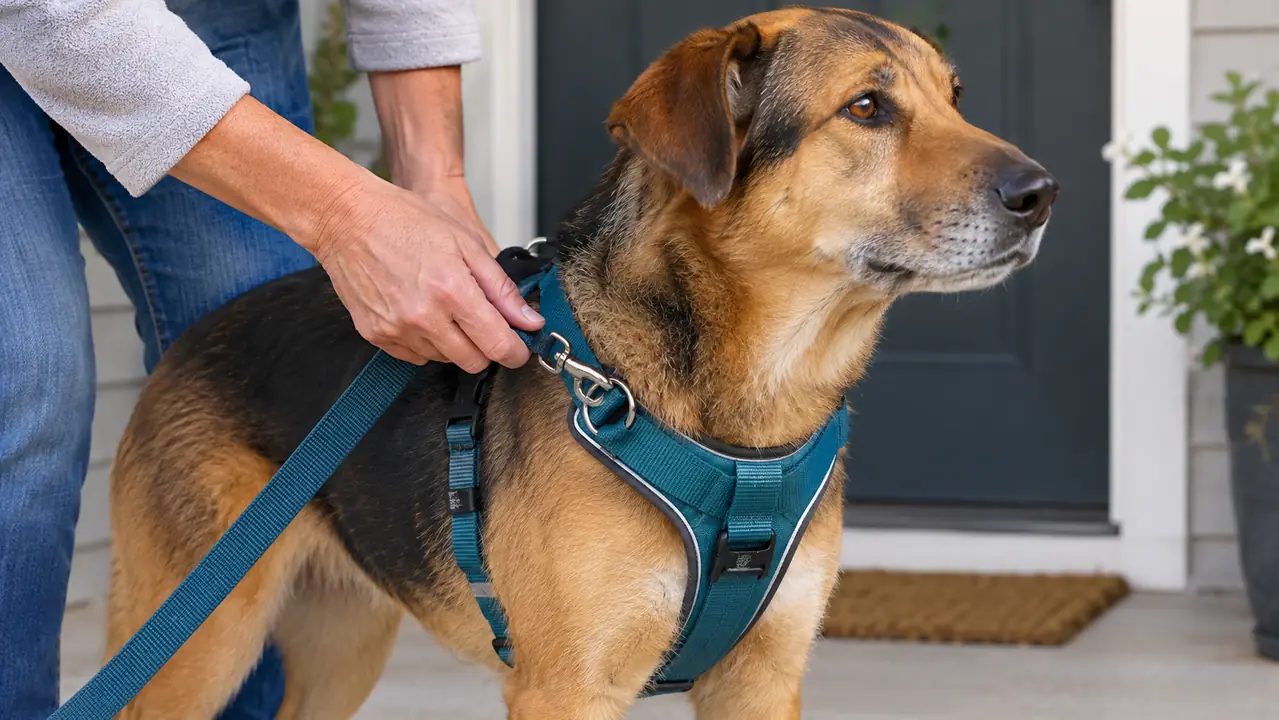
Let me also mention fit, because the Easy Walk only works if it fits. The front strap should sit low across the chest, and the buckle behind the front legs should be snug enough that you can fit two fingers flat under it. When I fit the harness on a dog, I take an extra minute to check both of those points. A front clip that hangs too loose can slip around and rub behind the front legs. A front clip that is too tight can make the dog stop and refuse to walk. That is not a failure of the product. It is a fitting issue, and it is fixable.
The last thing I want to say in favor of the Easy Walk is that it is a bridge to real training. I have seen owners use it for a few weeks, build up a loose leash habit, and then move back to a flat collar for short trips. The harness does not do the training, but it clears enough space for the training to happen. That is a bigger deal than it sounds, because most people who are being dragged down the street do not have the energy to also think about timing and treats. The front clip takes the crisis out of walks, and once the crisis is gone, learning can start.
Where a Back-Clip Harness Wins
If you have a calm dog, a back-clip harness is genuinely better. I am not just being polite. A dog that walks on a loose leash does not need the front attachment to turn his chest, because he is not pulling. The back-clip is easier to get on, has fewer straps to adjust, and does not press on the dog's chest at all. My neighbor walks a small terrier mix that has probably never pulled hard in her life. She has worn the same padded back-clip harness for years and she is perfectly happy. Putting a front clip on that dog would be adding complexity and potential rub points where there is no problem to solve.
Back-clip harnesses are also the right choice for a dog who is sensitive about things touching his chest or his armpits. Front-clip harnesses work by putting pressure on that area, and some dogs react to the feeling by planting all four feet and refusing to move. I worked with a miniature poodle who would freeze the second the front strap tightened, even though he never pulled. We switched him back to a back-clip and he trotted off happily. There was no training issue. He just did not like the sensation. For a dog like that, a front clip is the wrong tool, no matter how well it works for other dogs.
The other place a back-clip harness wins is the everyday errand where you do not need training at all. If you are walking from the car to the vet's office, or taking a well-behaved dog to a friend's house, the simplest harness is usually the best one. You do not need emergency steering for a dog who is never going to lunge. You need something comfortable that does not rub. A quality back-clip harness gives you that with less fuss.
But I also want to be blunt about what a back-clip harness cannot do. If your dog pulls hard enough to hurt your shoulder or your back, no amount of padding on a back-clip harness is going to fix it. The force of the pull still goes straight through you. The dog can lean into the harness with his whole body and the harness actually helps him do it. I have had owners tell me they bought a thicker, padded back harness because their dog was pulling, and all it did was make the pulling more comfortable for the dog. That is the exact opposite of what they needed.
Finally, if you have a puppy who is still learning to walk nicely, a basic back-clip harness is a fine starting point. It lets you attach the leash without putting pressure on the puppy's neck. You can teach loose leash walking without any steering gadget, because the puppy is light and still growing. Adding a front clip too early can teach a puppy to brace against pressure instead of learning to stay loose. Keep it simple in the beginning.
If your dog pulls on the leash, a front clip gives you a way to train instead of just holding on.
The PetSafe Easy Walk is the front-clip harness I keep for pulling. It stops the rehearsal of the pull while you teach loose leash walking.
Amazon Check Today's Price on Amazon →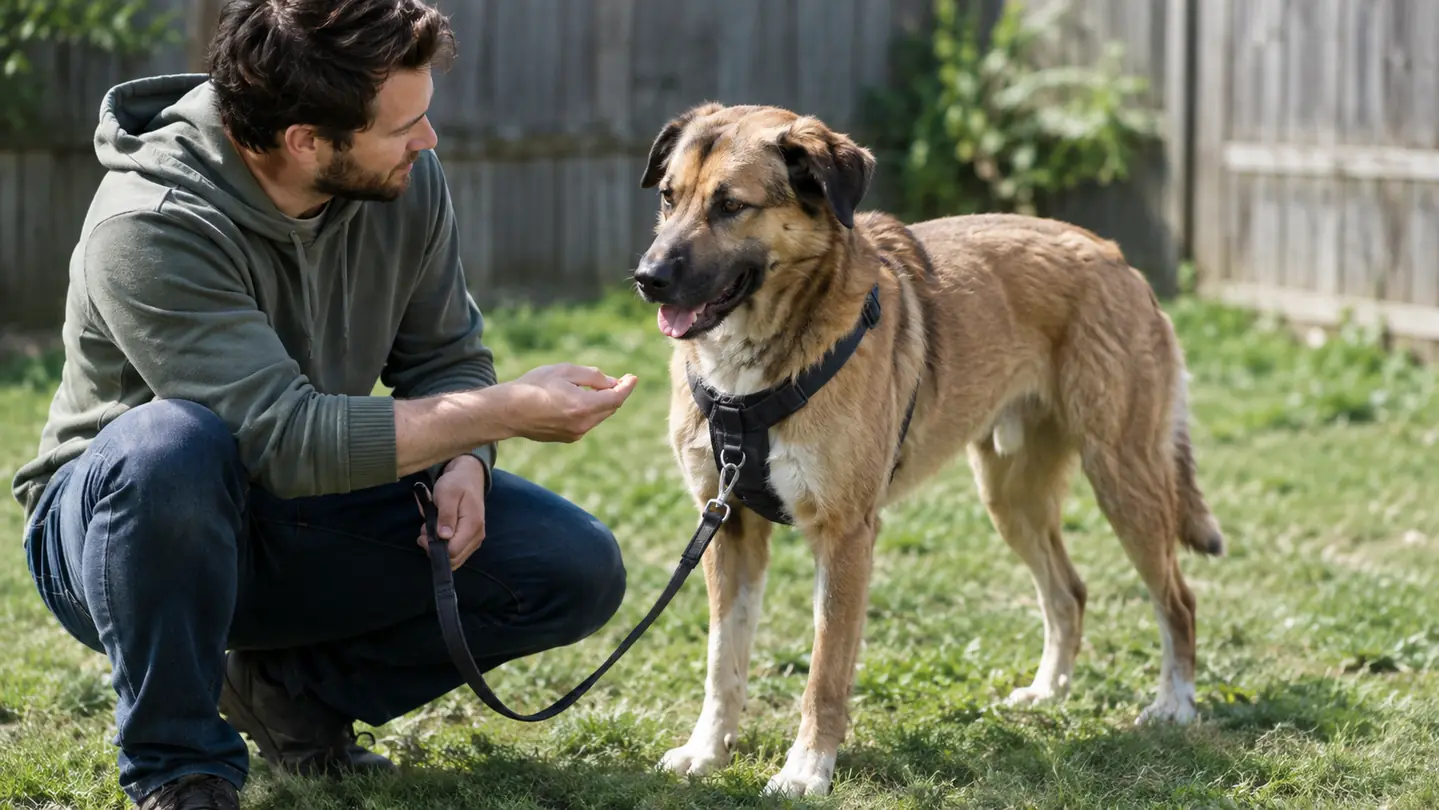
Who Should Buy Which
Here is how I make the call when I am sitting on someone's floor with their dog. If pulling is the main problem and walks have become miserable, start with the PetSafe Easy Walk. Order it, fit it according to the instructions, and practice putting it on with treats a few times before you go outside. Then commit to a short, simple loose leash routine. Every time the leash goes tight, stop moving and stand still. Wait for the dog to turn back toward you, mark that moment with a word like yes, and then feed him a small treat at your side. Repeat that for five minutes. It is boring, but it works, and the front clip makes the stopping and waiting actually possible.
If your dog is already polite on a loose leash, keep your money in your pocket. A front-clip harness is not a badge of being a serious dog owner. It is a piece of equipment for a specific problem. If there is no pulling problem, you are buying a problem you do not have. A well-fitted collar or a simple back-clip harness is all you need.
The dog who should skip the Easy Walk is the one who is anxious, not stubborn. Pulling can be a sign of fear or overarousal. If your dog pulls toward other dogs while barking, or pulls away from loud noises, a front clip is not going to address the underlying emotion. It might even frustrate him more, because he cannot get to whatever is scaring or exciting him. For those dogs, you need a different plan: more distance from triggers, management on walks, and sometimes guidance from a veterinary behaviorist or a certified trainer. Do not mistake a behavior problem for a pulling problem.
And if you try the Easy Walk and it is not working, you are not a failure and the harness is not a scam. Check the fit first. Some of the brands sizing charts run big, and a too big front clip will slide and twist and rub. If the fit is right and the dog still pulls through the front clip, that tells you the behavior is strong enough to need in person help. There is no shame in calling a trainer. I have made my whole living helping people who tried three gadgets before they called me.
The honest bottom line is this. The PetSafe Easy Walk is a solid, well made tool that does exactly what it promises when it fits correctly and when the dog's problem is pulling, not fear or frustration. It will not transform a reactive dog into a calm walker overnight. But for an ordinary dog who simply has not learned how to walk on a loose leash, it is one of the most useful products I carry to client visits.
Give the front clip a fair trial before you write it off.
Buy from a place with a good return policy, fit the harness correctly, and use it for a week of short walks. You will know by then whether it helps your dog.
Amazon See the PetSafe Easy Walk on Amazon →