
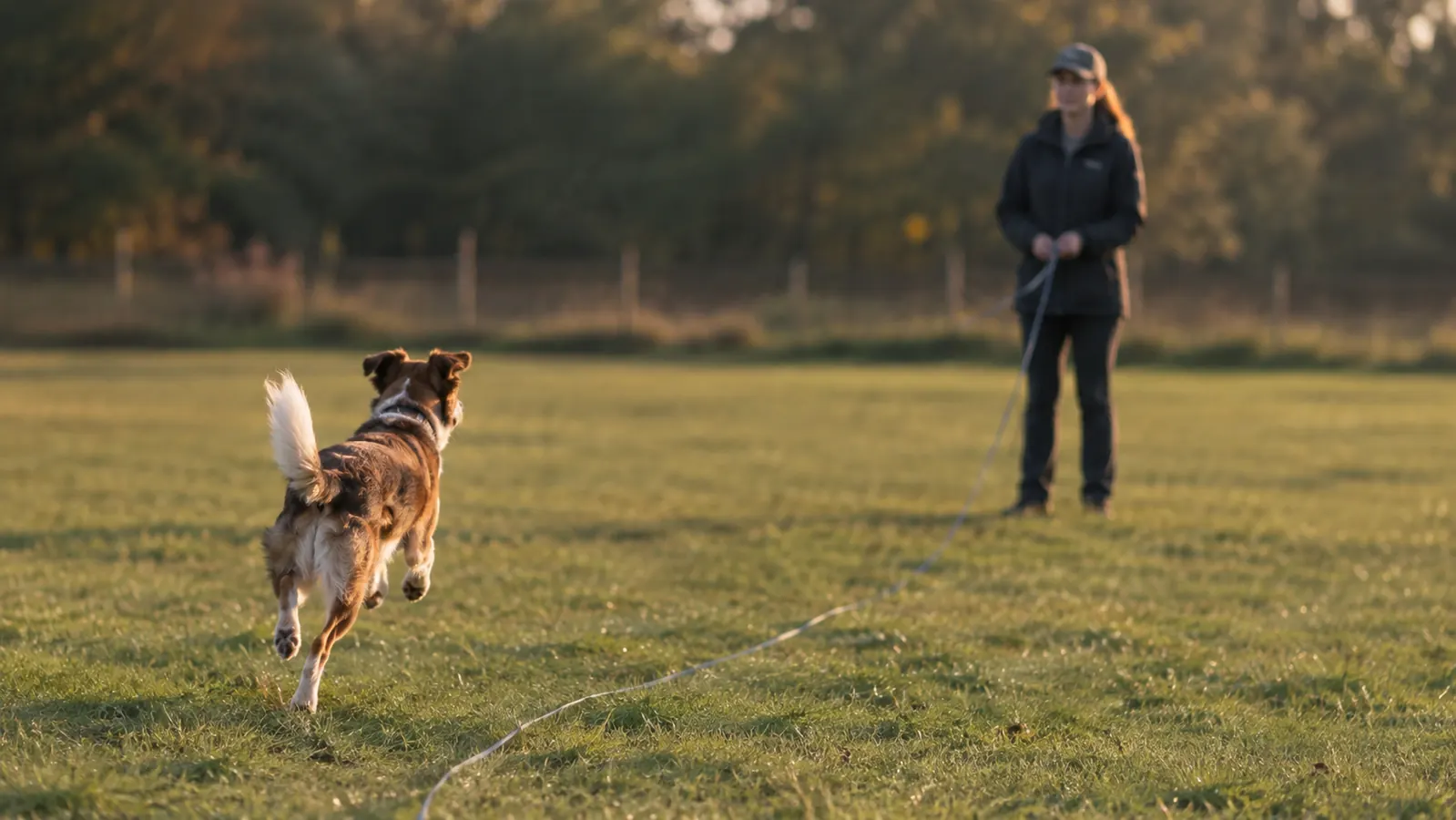
Most recall practice happens at the end of a six foot leash. You say come, the dog trots over, and the whole exercise takes place about two steps away. That is why recall falls apart the first time the leash comes off. A regular leash never lets you practice distance. A long line does. I have been doing in home dog training around Springfield, Missouri, for years. My own dog, June, is a 62 pound shepherd and lab mix who came from a shelter. The simplest upgrade I hand to clients is a 20 foot Hi Kiss training line. It is light, packs into a pocket, and behaves more like a normal leash than any retractable contraption I have used.
This is not about leaving a line dragging all day. It is about using the length to create real space between you and the dog while you teach recall. Used well, that short practice at the end of twenty feet makes real off leash time safer later.
Distance Is the One Thing a Regular Leash Can't Give You
A reliable recall has to be rehearsed where the dog can actually blow you off. Hold a Hi Kiss 20 foot line, make the dog come from further away, and the next time you are in a wide open space, you will have already practiced the hard version.
Amazon Check Today's Price on Amazon →It Creates a Testing Distance on the First Day
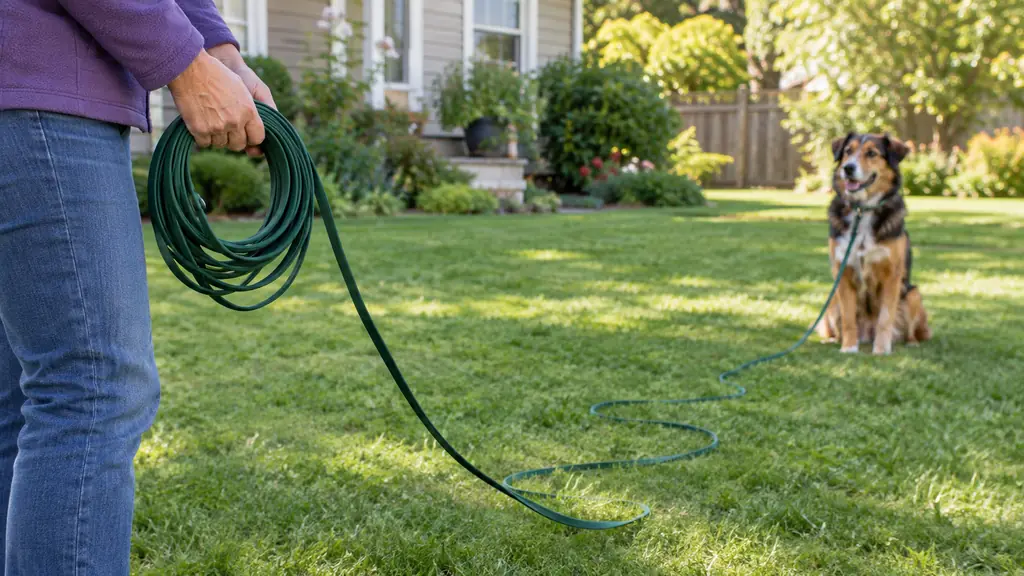
With a six foot leash you are always two steps away. With 20 feet of line, I can send June to the far end of my yard, let the slack touch the grass, then call her. If she comes, excellent. If she does not, nothing dangerous happens because the line stays where I set it. That immediate distance is the main reason a long line improves recall faster. You practice the hard version of the skill from day one instead of waiting until you feel brave enough to unclip the leash.
It Removes Your Body From the Cue
Dogs read our posture. When you call from close range, you probably lean in, tilt your head, maybe bend your knees. That posture becomes part of the command. With a long line you call from a still position, and your body stays out of the conversation. June has to turn because of my voice, not because of the universal I am about to pat my knees signal. That is why a dog that is perfect on a six foot leash looks deaf when the leash comes off. The long line exposes that gap gently.
It Lets the Dog Nearly Fail in a Safe Bubble
Recall is not learned when every response is perfect. It is learned in the moment the dog almost chooses something else and then chooses you. With a long line you can allow that almost. The dog veers toward a smell, you call, the dog hesitates, and the line catches them before they leave. You gather the line softly, deliver the treat, and go again. The dog just rehearsed coming back at the exact second they wanted to bolt. No short leash can set up that teaching moment without turning into a game of chase.
It Teaches the Dog to Come All the Way to You
Plenty of dogs will turn toward you, take three steps, and stop. Owners call that a recall. I call it a partial credit. On a 20 foot line, you can keep your feet still and reel in just enough to encourage the dog to close the whole gap. As they improve, you move your feet backward a step or two as they arrive. The Hi Kiss line teaches June that coming means finishing at my side, even if I am moving around. Small difference, huge payoff later.
It Builds Distraction Skills Without Losing the Backup
The kitchen recall is easy. The yard recall is the real test. A regular leash only gives you a few feet, so you rarely practice with a real distraction nearby. A long line lets me place a toy or ask another person to stand at the edge of the field while I call June. If she heads toward the distraction, I have a way to prompt her back without repeating my cue twenty times. That quiet prompt, delivered through the line, is what lets the dog succeed and therefore learn.
It Gives Solo Trainers the Power of a Helper
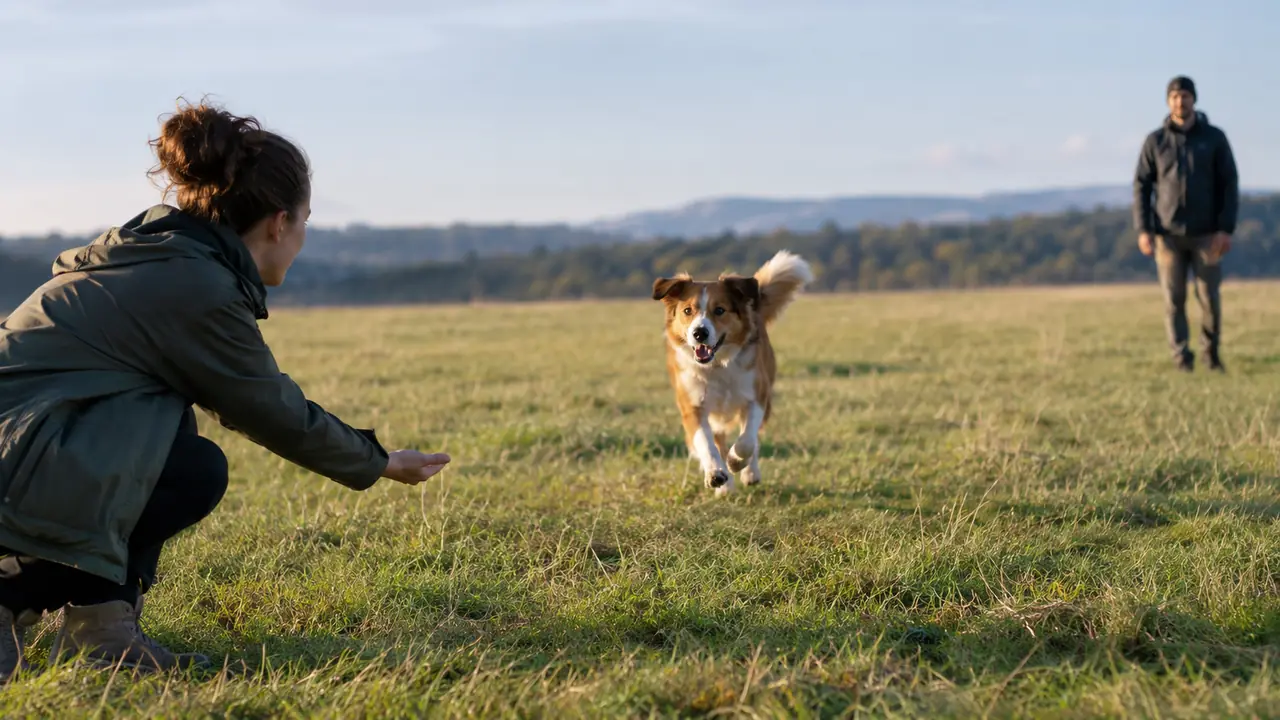
Many recall games take two people. One holds the collar, the other runs away and calls. My clients often train alone, and I do too. The long line is the one tool that builds distance with just one person. I ask June to stay, walk to the end of the line, call her to me, reward, repeat. The line does the job of the second set of hands. When she improves, I walk a little further out or use a longer patch of yard. Same setup, better result.
It Turns an Ordinary Walk Into a Two Minute Lesson
You do not need to schedule field time. Keep the Hi Kiss line in your car. On a walk through a quiet park, when the path opens up and no one is around, let the line trail and let the dog drift ahead. Call once. If the dog turns, perfect. That brief exchange, repeated on two or three walks a week, does more for recall than a longer practice session every few weeks. Dogs learn on repetition, and the line lets you collect repetitions in small doses.
It Keeps Pressure Off in a Way Retractables Can't
Retractable leads stay tight, so the dog spends the whole walk learning that pushing into tension is normal. A long line lies loose on the ground. The dog can feel it but is not leaning against it. That matters for recall, because the dog learns that coming back to you is what releases pressure. On a retractable, moving away is what releases or adds tension, depending on the button. The physics are different. A long line simulates the feeling of freedom while keeping the safety guarantee.
It Turns Coming Back Into a Game
Training should not feel like a drill. Once June understood basic recalls, I started using the line for a back and forth game. I let her run to the end, say her name, and the moment she turned I would move in the other direction and call again. She learned to keep checking in because checking in meant more running. You can play this game with a long line in most yards. With a six foot leash, you run out of space before the game starts.
It Gives You a Clear Test Before You Trust Off Leash
The rule I give clients is simple. Do not let a dog go truly off leash until the dog comes back twice at the full length of the line in a place with mild distractions. When a dog returns at 20 feet consistently, you have decent proof about what will happen at forty feet. When I finally gave June more freedom on a fenced trail, I was not gambling. I was remembering the twenty clean recalls we had already done at the end of that Hi Kiss line.
What I'd Skip
For all the good this tool does, I would still tell some people to leave it in the cart. If you want a walking leash for a busy city sidewalk, this is not it. Twenty feet of line will wrap around every bench leg you pass. If you cannot keep an eye on the line during practice, you will spend your time untying knots. And if you expect a recall to fix itself without good treats and a clear plan, no equipment will save that.
June went from ignoring me at the far end of the yard to turning around mid-sprint in under three weeks. The only equipment change was the Hi Kiss 20-foot line.
Make Recall Something You Practice, Not Something You Hope For
A 20-foot line does not replace training. It makes the distance part of recall possible, and the distance is exactly the part that falls apart off leash. Keep your Hi Kiss line in the car, use it in short bursts, and you will retire it one day because you no longer need it.
Amazon Check Today's Price on Amazon →