
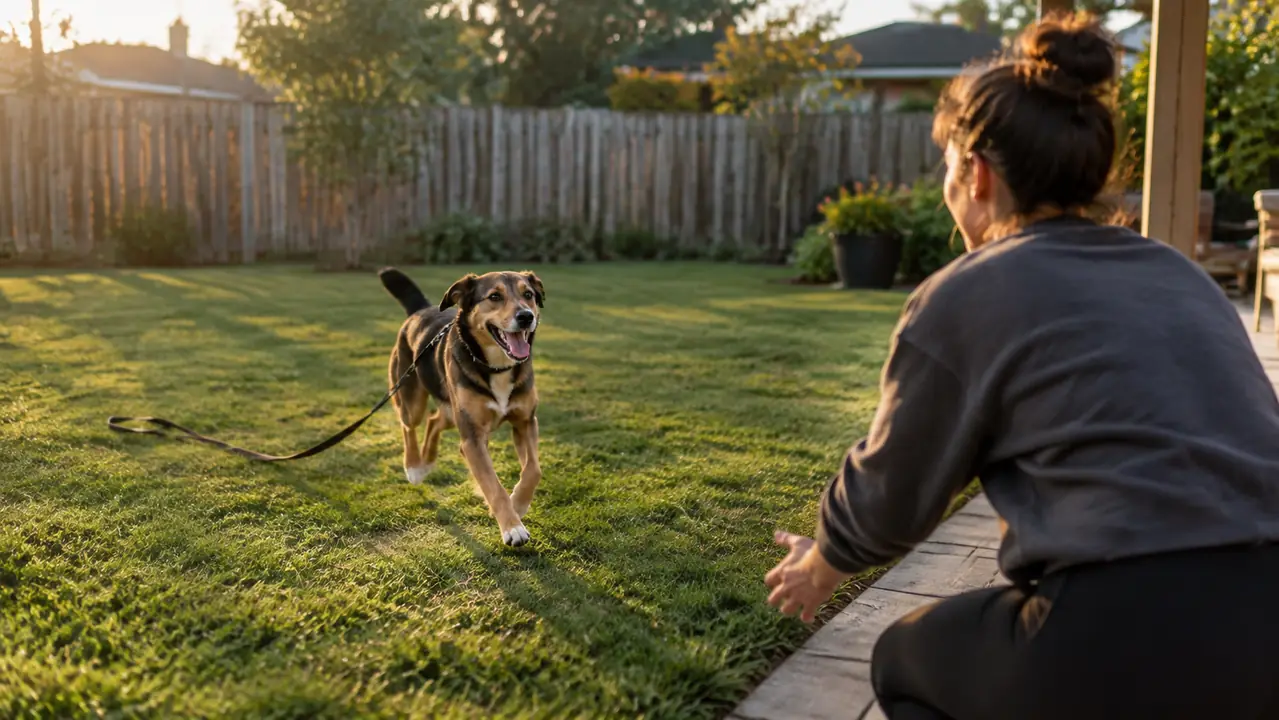
June is not a badly trained dog. She knows sit, down, and wait. She can hold a stay while I walk to the mailbox and back. If I drop her dinner bowl, she does not lunge for it until I say okay. She is the dog I take along on client visits to show what calm looks like. So it never made sense that her recall fell apart at the most useful moments: a neighbor's cat cutting across our backyard, a squirrel under the bird feeder, the front door left open by accident one windy afternoon.
I tried what most owners try. I bought tiny treats, praised her heavily, and called her only when I was fairly sure she would turn around. All of that worked in the kitchen. It worked in an empty field with nothing happening. It did not work in our own yard, where four years of practice had taught June that ignoring me usually led to a better offer. Every time she blew me off, she got better at blowing me off. I was accidentally training the exact behavior I hated.
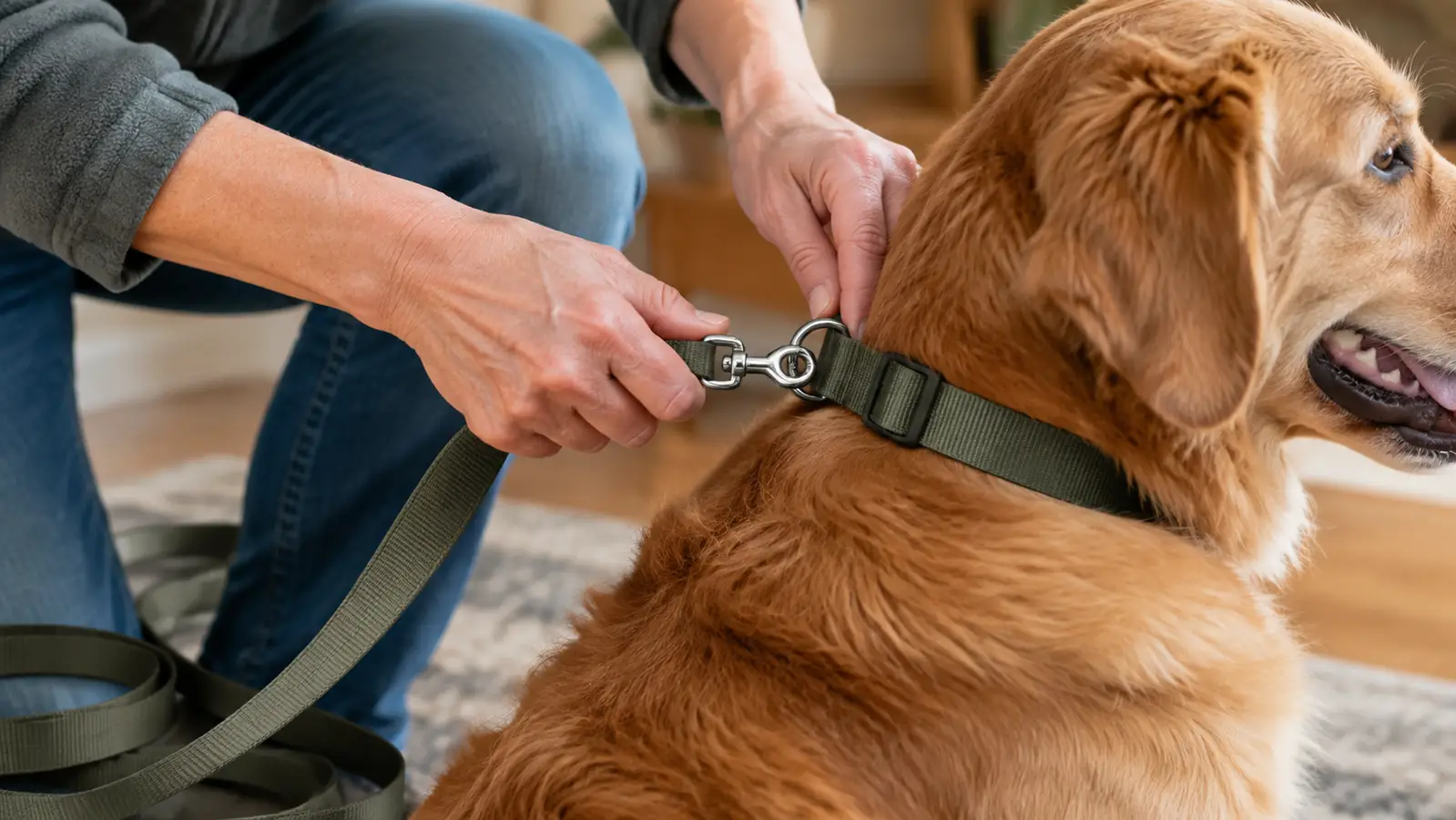
So I bought a Hi Kiss 20 foot lead that same week. A trainer friend had said the obvious thing I had been too stubborn to hear: stop letting June rehearse being off leash in a yard full of rabbits. Put her on a long line and let her learn the rules without running down the street.
I want to be clear about what this lead is and is not. It is not a retractable leash. Retractable leashes give a dog a long line that they control, and the constant tension teaches them to lean into pressure. This is a 20 foot fixed line with a clip on one end. You let the line out, set it down, or hold the loop at the far end. The dog can move away from you, but the rope is right there when you need an answer.
The first time I let June run to the end of it, she spotted a rabbit at the back fence and took off. I did not yell. I did not reel her in like a fish. I stood still and waited until she was good and sure the rabbit was gone. Then I said her name in a happy voice, turned, and walked three steps toward the house. She came, got a piece of chicken, and went out again. It felt too simple to work.
I got more repetitions in one afternoon than I had in a month of hoping she would come. For six weeks, June stayed on the line whenever she was loose in the yard. Some sessions were rusty and some were perfect, but none of them were wasted. She was learning that coming when I called paid better than chasing whatever caught her eye. That is the whole job of a long line. It lets a dog practice being connected to you until the connection becomes the habit.
The long line did not drag June back to me. It gave me the minutes I needed to teach her that coming back was the best offer she was going to get.
20 Feet of Do-Over
A long line gives you time to call, wait, and reward without letting the dog rehearse getting away. The Hi Kiss lead is the one I keep clipped by the back door.
Amazon Check Today's Price on Amazon →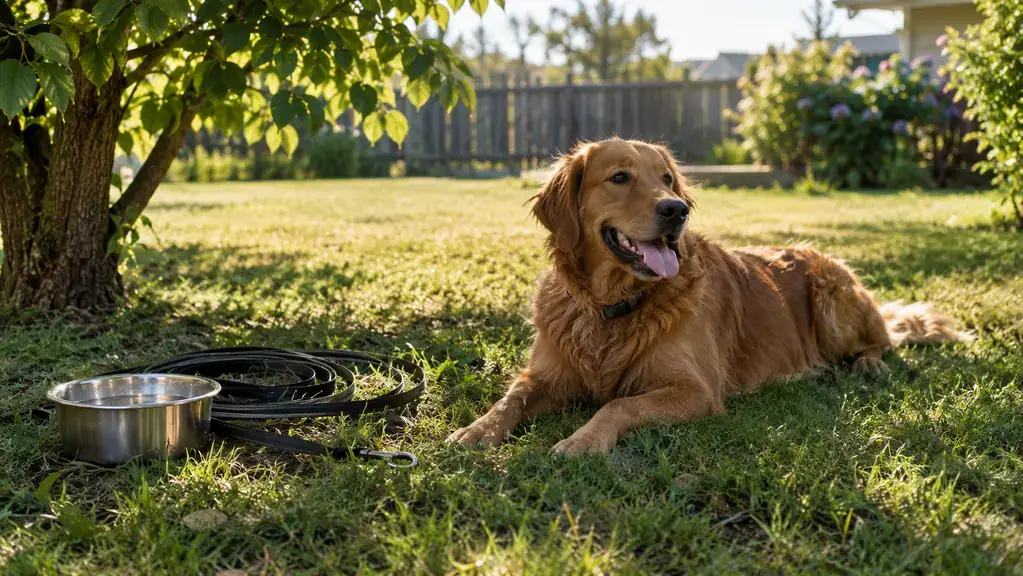
Of course, a long line only works when you treat it like a safety net, not a correction tool. I have seen people buy a 20 foot line and then yank the dog toward them every time they say come. That turns the line into something the dog learns to dread. The trick is to give the line slack, call once, and if the dog does not come, wait. When the dog finally turns, make your voice sound like the best news of the day and pay with something better than whatever she was sniffing.
I cannot tell you the Hi Kiss is the only lead worth owning. I can tell you that this one has sat out in the grass for six weeks and it still works the way a long line should. That matters because a training tool only helps if you reach for it. This one hangs on a hook beside the back door, and I grab it every time June goes outside.
When I bring a long line to a client's house, I usually start with a 20 foot line in the backyard. It is long enough for a real recall at distance and short enough that I can handle it one handed while I carry the treat bag. People are always surprised that the fix for a dog who bolts is not a stronger collar or a taller fence. It is giving the dog a reason to come back and enough line to make that reason feel like a choice.
You might wonder if a 20 foot line is long enough when the whole point is distance. In my experience it is more than enough. At twenty feet, June is far enough away that she has to make a real choice, but I can still get to her before she reaches the fence. The long line is not meant to replace training. It is meant to hold space for training so you can practice the choice over and over without losing the dog.
What I'd Tell You If We Were Sitting at My Kitchen Table
If I could sit down with you across my kitchen table, I would say this: stop testing your dog's recall in places where she can win. Get a 20 foot line, go somewhere safe and boring, and call your dog back twenty times with good treats every single time. You do not need fancy equipment. You do need a way to make the right answer happen more often than the wrong one. The Hi Kiss lead did that for June, and it can do it for whatever your recall problem is. You still have to do the training, but the line buys you the time and the repetition that make training possible.
Give Your Dog a Reason to Come Back
Twenty feet can turn a backyard into a place where recall actually gets practiced. See today's price for the Hi Kiss lead on Amazon.
Amazon Check Today's Price on Amazon →