
I get asked some version of this question about once a month. A client stands at the end of a session, holds up a perfectly good six foot leash, and asks whether she should add one of those long training lines I keep in the back of my hatchback. She has the same look I had the first time a shelter volunteer handed me a 20 foot line and told me to let the dog drag it around the yard. It felt like extra gear. After more than ten years of working with both, I understand that feeling. But the difference between these two tools is not really about length. It is about what each one teaches.
The short answer is that a six foot leash and a 20 foot recall line teach different skills. A standard leash teaches a dog to stay close because the leash gives them no choice. A recall line teaches a dog to come back from a distance because they get to practice making the right choice. June, my four year old shepherd mix from the local shelter, had almost no recall when she came home. A regular leash never improved it. The Hi Kiss 20 foot training line I bought for her did. If you have a dog who ignores you outside, spend your money on a 20 foot line before you spend it on anything else.
| Hi Kiss 20 foot line | Standard 6 foot leash | |
|---|---|---|
| Distance for recall practice | 20 feet lets the dog get far enough away to make a real choice about coming back | 6 feet keeps the dog close, so recall is never tested at a distance |
| Everyday walks in town | The line drags, tangles around legs, and catches on fences | A short leash stays out of the way and keeps the dog beside you on sidewalks |
| First weeks with a rescue dog | Works like a portable fence for decompression walks, letting a shy dog keep their distance safely | Forces a scared dog to stay close before they trust you, which can slow settling in |
| Carrying and handling | You hold coils in one hand and manage slack on every walk | Coils small, hangs from a wrist, and is easy to grab one handed |
| Teaching a reliable come | The dog can ignore you at 20 feet and still end up with a reward, so the cue stays positive | A dog at the end of six feet never really leaves, so there is no reason to come back |
| Loose leash walking drills | Too much line for sharp turns and indoor practice | A shorter line is the right length for teaching a dog to stay in a heel position |
Where the Hi Kiss Long Line Wins
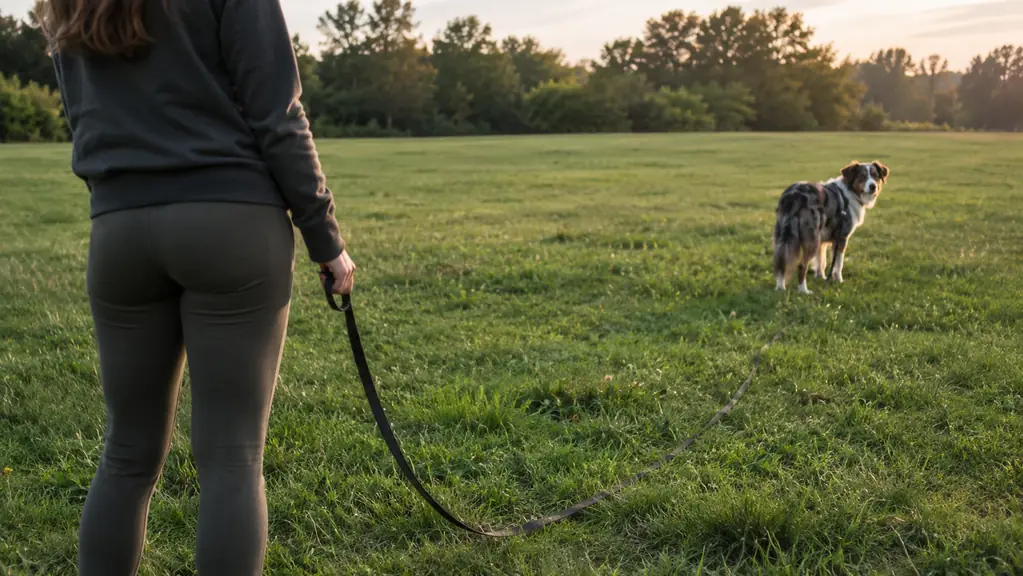
Recall is the one behavior that has to work when the dog is not beside you. Sit, down, and leave it usually happen close enough that a leash can back up the cue. Come has to work across a yard or down a trail, and that means a dog has to practice choosing you from a distance. A six foot leash never lets that happen. June was perfect at coming when called inside the house. She would spin away from her chew toy and trot back the moment she heard her name. The first time I let her get 20 feet away in a field and called her, she glanced at me and went back to sniffing. She knew what the word meant near her food bowl. She had no idea what it meant 20 feet away.
The long line changed that because it gave June room to be wrong and still be safe. I would let her wander to the end of the line, say her name once, and wait a heartbeat. If she did not turn, I picked up the slack and reeled her in, then gave her a bite of chicken at my heel. No yanking and no scolding. The lesson was simply that the end of that line always arrives. Within two weeks she began turning back on her own. Within a month she was coming when called in places that had no fence, and today I trust her off leash only because of those early repetitions on the line. I use the same drill with client dogs because it works. The dog practices a decision instead of practicing how it feels to be corrected at the end of a short leash.
The other job a long line does better than a short leash is decompression. Many of the dogs I meet are rescues that came from a shelter and still startle at sudden noise. A nervous dog cannot relax when every step is pinned to your leg. A 20 foot line lets that dog choose how much distance they need. They can walk in circles, sniff at their own pace, and learn that the world is safe while you stay connected at the other end. That is confidence building, and no amount of six foot leash time can give it to them.
Where the Standard Six-Foot Leash Wins
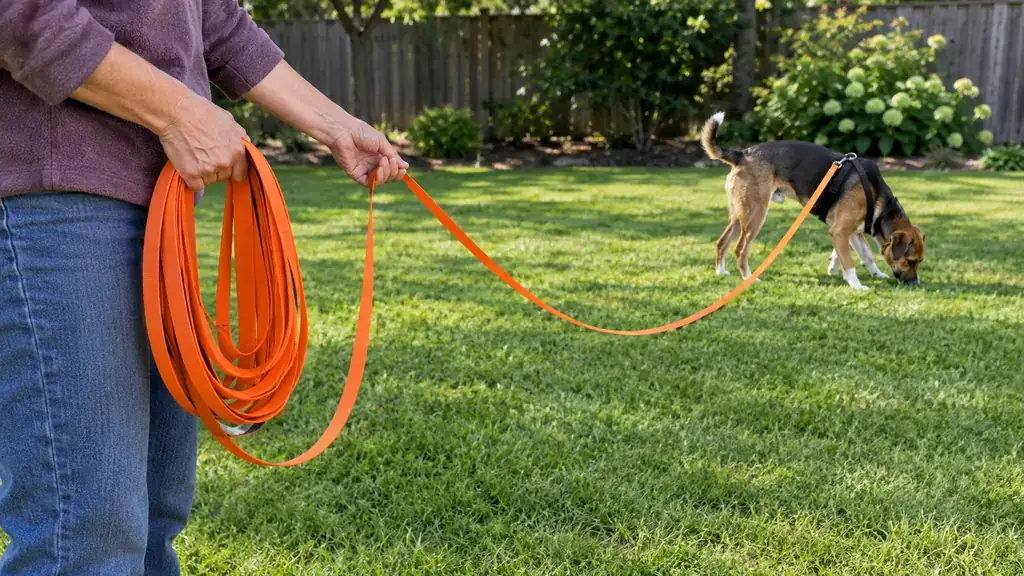
The six foot leash is not a failed long line. It is the right tool for most of the walking most people do on most days. When I meet a client for a neighborhood walk, I bring a six foot leash, not the 20 footer. We practice sitting at curbs, checking in, keeping slack, and turning away before a dog fixates on another dog. That close work needs a short leash. A long line on a sidewalk is a hazard. It drags through puddles, catches on fence posts, and can wrap around legs. Around traffic, 20 feet of slack is not freedom. It is risk.
The short leash also has a management job that has nothing to do with training. When a dog is recovering from surgery, meeting visitors at the front door, or sharing space with a new cat, I want them close. A 20 foot line gives too much freedom at the wrong moments. For the first month with a young puppy, I keep everything short and simple indoors, because a long line dragging behind a puppy can tangle around furniture and scare them. Every home should have a standard leash, and most already do. I think of the long line as the missing tool for one specific job, not as a replacement for the leash you own.
A Few Cautions Before You Buy One
A long line is not a retractable leash, and it is not a tether. It has no button that brings the line back. If your dog runs to the end, you feel it through the line, and when they wander close, you gather the slack by hand. Some people dislike that. If you want a leash that manages itself, a 20 foot line will annoy you, and that is a fair reason not to buy one. I would rather tell you that up front than have you discover it the first time you try to handle a muddy line.
Second, keep the other end in your hand and use it where your dog can still think. Do not drag a 20 foot line behind a dog in a busy park. Do not let a reactive dog rehearse lunging at the end of it. The line gives you a chance to interrupt a bad decision, but only if you are paying attention. For recall practice, start in a quiet place, let the line run loose, call once, and be ready to reel the dog in if they do not come.
A Quick Test to See If Recall Needs Work
Try this at home before you order anything. In a securely fenced yard, ask your dog to sit, walk 20 or 30 feet away, and call them once in a happy voice. If they come every time and sit in front of you, keep doing what you are doing. If they look at you, put their nose down, take two steps in your direction, then wander sideways, you have learned something useful. Your dog hears you and knows what the word means, but coming back is not yet a habit when nothing in it is for them. That makes them a normal dog, not a stubborn one.
A six foot leash hides exactly this problem. The dog never gets far enough to choose, so the habit never develops. They walk beside you because the leash says so, and everyone assumes the recall is fine. That assumption falls apart the first time a front door is left open or a gate swings loose. The long line is the one tool that turns that specific weakness into a daily drill, which is why I recommend one before I recommend another training class. Class teaches the cue. The line gives the dog the distance to practice it.
The Mistake That Keeps Recall From Improving
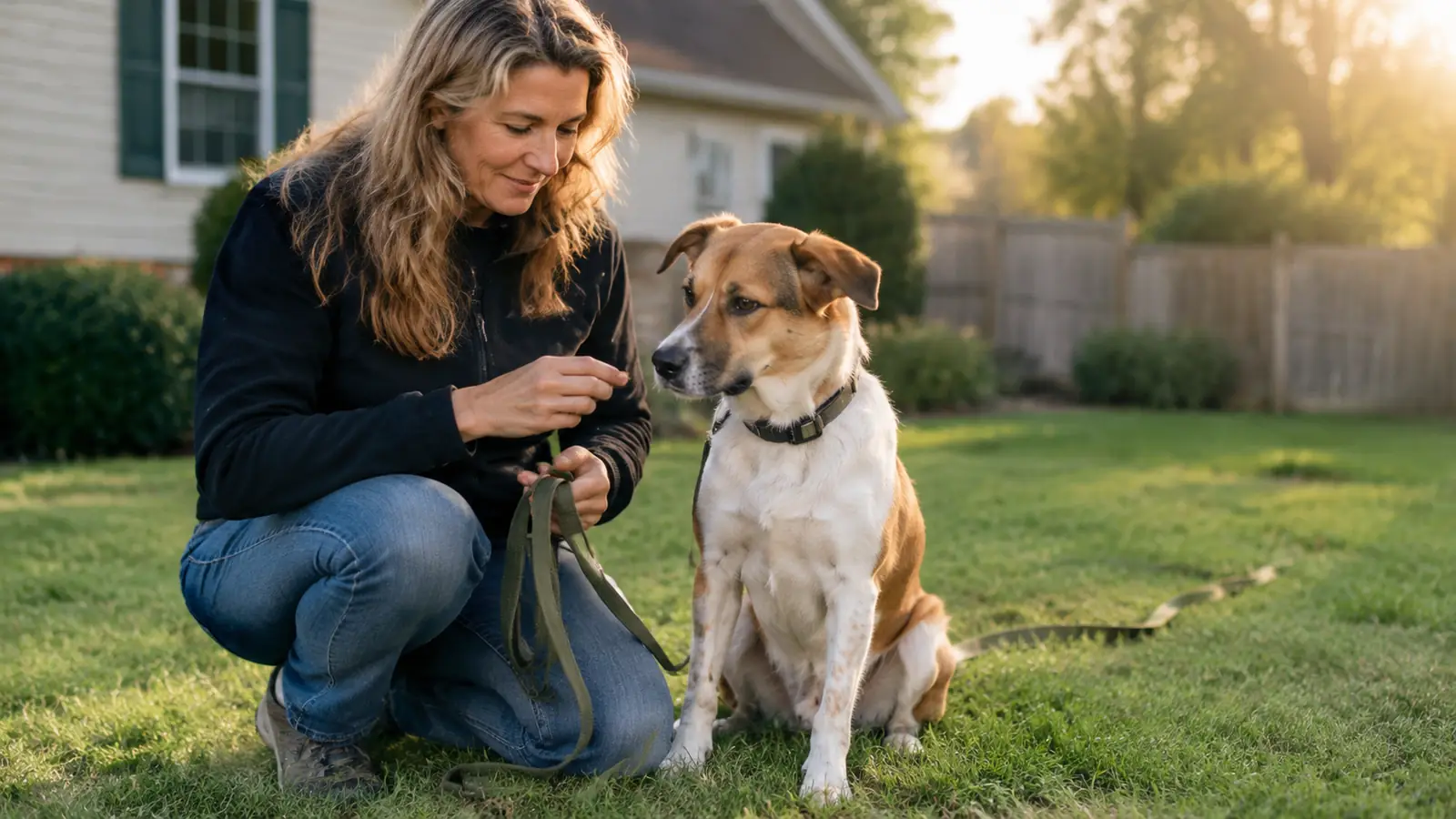
People often tell me their dog knows what come means but chooses not to listen. I try to reframe it. The dog is not being spiteful. They simply are not convinced that coming back is better than what they are doing in the moment. You cannot punish a dog into that belief. You can only give them many repetitions where coming back leads to something wonderful. That takes distance, and distance takes a long line. A six foot leash cannot create the moment the dog needs to practice.
The other mistake is treating the long line as an off switch. I have seen owners attach one and then stop paying attention until the dog hits the end. That teaches a dog nothing except that walks end with a yank. You have to be present, call clearly, and make the return worth the dog's while. Used that way, a 20 footer is one of the only pieces of equipment I recommend without hesitation, because it solves a problem no other leash can.
Why I Carry Both
The honest answer to the original question is that most people need both, just for different moments. The six footer hangs by my front door for neighborhood walks, and the 20 footer lives in my hatchback for trips to open fields. The short leash is what I grab when I need control. The long line is what I grab when I need to teach. They are not competitors, and choosing one does not mean throwing the other away.
What I tell clients is simple. If you only ever own one leash, make it the six footer, because it keeps everyone safe on the sidewalk and in the parking lot. If you are reading this because your dog ignores you the moment they get any space, the long line is the missing half of your setup. You will still use the short leash every day. You will just stop expecting it to do a job it was never built for.
The Tool That Teaches Come From a Distance
A 20 foot training line gives a dog enough room to make a mistake and enough connection for you to fix it. That is how a reliable recall gets built.
Amazon Check Today's Price on Amazon →Who Should Buy Which
Buy the Hi Kiss 20 foot line if your dog walks politely on a leash but forgets you exist beyond ten feet. That dog needs recall practice, not another collar. Buy it if you adopted a rescue that is nervous in open spaces and needs to decompress at their own pace. Buy it if you live near unfenced land and want a way to let your dog run without letting them run off. This is the dog I picture when I recommend a long line.
Skip it if you are happy keeping your dog on a short leash and never plan to let them move beyond the end of it. That is a legitimate choice. A leash is a safety tool, not a moral statement. I have clients who walk only in town and never need a 20 foot line. For everyone else, the honest answer is that you already own the short leash, so the long line is the one piece of equipment that actually changes how recall training works. It is not about buying more stuff. It is about giving a dog distance with a safety net.
Give Recall the Distance It Needs
A standard leash keeps a dog close. A 20 foot line is what teaches them to come back when they are far away, and that is the skill that keeps them safe.
Amazon Check Today's Price on Amazon →