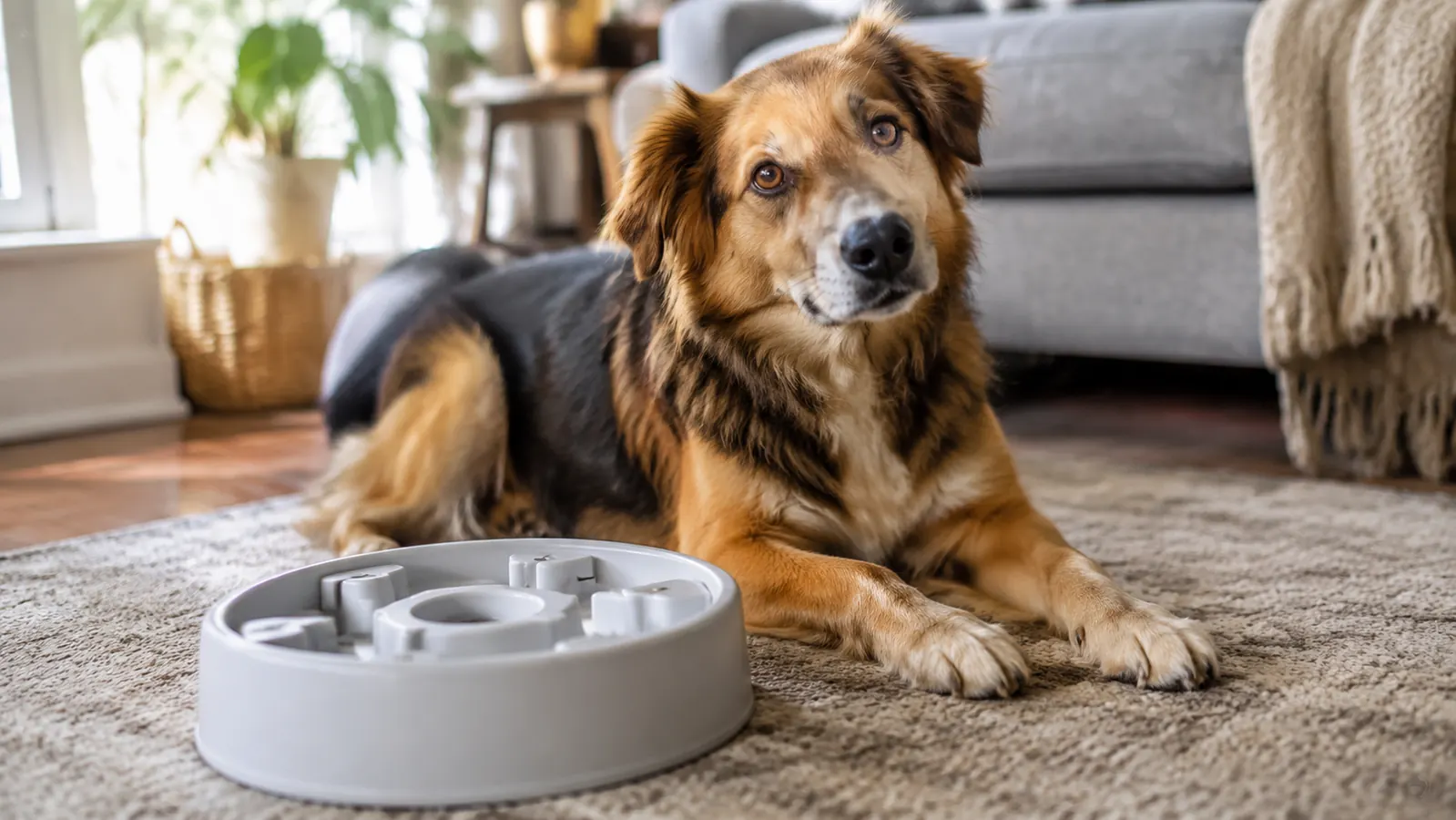
Most restless dogs are not trying to make you miserable. They are trying to use a brain that was built to work. June, my shepherd-Lab mix, was like that when she was younger. A long walk tired her legs but not her head. She would lie down for ten minutes, then be back at my elbow with her ears up, waiting for a job.
I used to answer that by adding more fetch or another lap around the block. It did not stick. What stuck was nose work. When a dog has to sniff, push, slide, and figure out where the food went, that is real work. The KADTC 2-Level Puzzle Toy is the version I now keep on my shelf for clients whose dogs pace, bark at the window, or redecorate the couch while no one is looking. It is not a magic fix. It is a way to give a busy brain a task.
Give your dog a real job at dinner time
A puzzle feeder turns an ordinary meal into twenty minutes of problem solving. For a restless dog, that is often more tiring than a walk. Here are the reasons I keep coming back to the KADTC puzzle toy instead of fancier toys.
Amazon Check Today's Price on Amazon →A bowl dinner ends in four minutes. A puzzle dinner lasts twenty
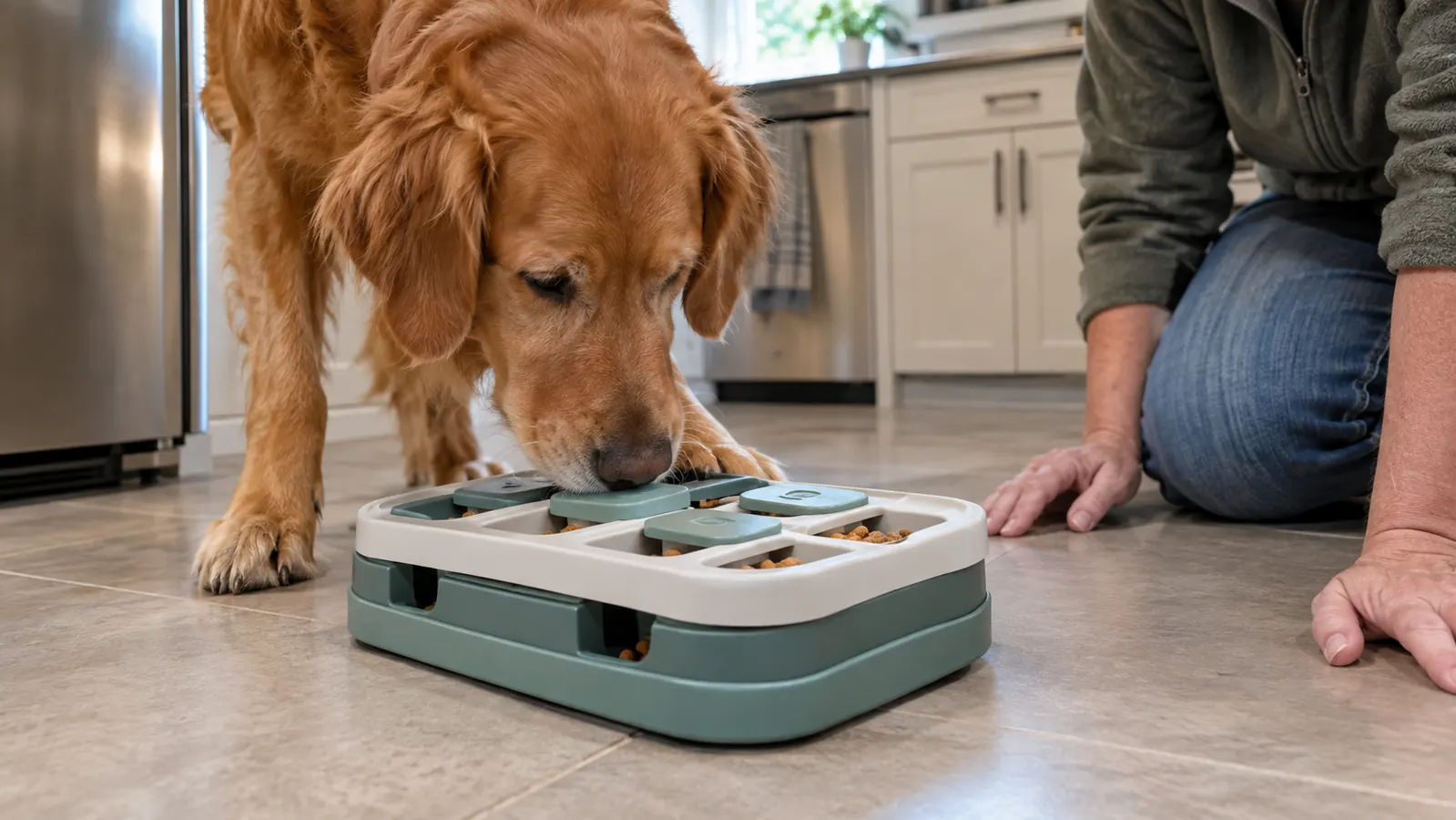
Free-feeding from a flat bowl is over before the dog has used his brain. The same amount of food in the KADTC takes June close to twenty minutes. She has to slide the small drawer, flip the shallow cup, and circle the middle piece to find every last bite. On nights when I use it, I hear the soft slide of plastic instead of the bang of a bowl. That extra time is not delay for its own sake. It is the difference between inhaling dinner and solving a problem.
It stops the after-dinner zoomies before they start
A dog who eats from a bowl in one minute has all that energy and no job to do. The zoomies usually follow. When dinner asks for focus, that focus carries into the evening. June is more likely to walk to her mat and flop down after puzzle feeding than after a bowl meal. Same amount of food, same night, just a different way of earning it.
It gives an older dog a challenge that does not hurt
Not every dog can chase a ball for an hour. I use puzzle feeders with senior client dogs whose hips and knees are done with fetch. Nose work is low impact. A dog can work the whole puzzle lying down. The two levels mean you can start with only the easy drawer for an old dog, and then add the top tier when she wants more. The KADTC is gentle on the body and still hard on the brain.
It slows down the dog who eats like a vacuum
A fast eater can swallow air, vomit, or finish so quickly he forgets to chew. A puzzle forces him to take one piece at a time. A client's beagle last month proved it to me. He used to finish his bowl in under a minute. With this feeder, he stopped between bites, chewed each piece, and looked around as if he were checking that dinner was still there.
It buys you twenty minutes of quiet
Bored dogs save their worst behavior for the moments when you are busy. A puzzle feeder gives a dog a job that does not need you in the room. I use the KADTC in June's crate when I need to make a phone call. She gets half her dinner in the drawers, and I get twenty minutes without the sound of nails clicking on the floor while a dog waits for me to entertain her. I also keep one in my car for client visits, and it has calmed more restless dogs than the treats in my pocket ever did.
It builds confidence in a shy dog
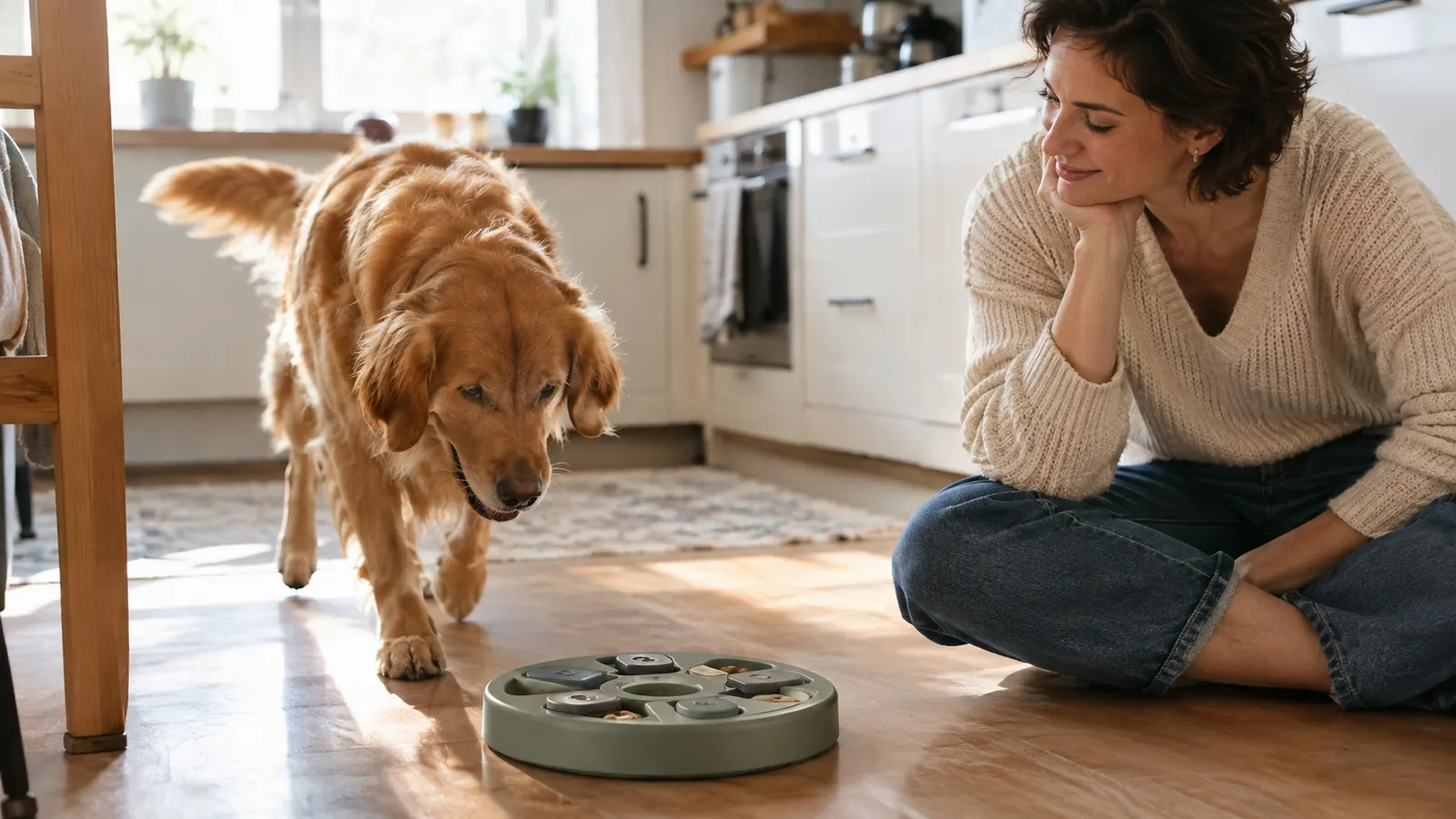
A fearful rescue spends a lot of time waiting for something bad to happen. Solving a puzzle gives him an event he controls. When he slides a lid and finds food, he learns that his own actions made it happen. I have watched a client's nervous rescue dog go from standing two feet away to pushing the KADTC with his nose in a single session. That is more than dinner. It is practice at being brave.
It teaches your dog to think before acting
A dog who has to stop, sniff, and try again on a puzzle is practicing the same pause you want on a walk. The drawer does not open on the first try. June has to shift her nose, change her angle, and wait for the click. That small loop of try, fail, adjust is what makes a dog less reactive when another dog appears across the street. It is problem solving with his feet still.
It washes clean and survives daily use
A puzzle only works if you are willing to use it every day, and that means clean-up cannot be a chore. The KADTC comes apart into flat pieces, so nothing stays hidden in a corner. I put it in the dishwasher once a week, and the pieces have held up for months. It also survives being dropped on a tile floor, which happens more than I would like in this house. June is a determined chewer, but she has not cracked or chipped anything.
It turns dinner into a scent game for food-motivated dogs
Some dogs could not care less about a stuffed toy, but they will work for kibble. The KADTC is perfect for that dog because the food is the point and the puzzle is only the hiding spot. June has never been a big toy chewer, yet she works this puzzle every night. If your dog walks away from a Kong, try a slider-and-drawer puzzle before you decide he cannot be entertained.
It makes mealtime less stressful for a worried dog
Food guarding often gets worse around a bowl. A puzzle feeder changes the whole scene because the food appears in pieces and no one has to hover. I have worked with dogs who would not eat if a person watched them, but who took food from a puzzle on the floor a few feet away. The puzzle takes the pressure off. It is not a cure, but it can make dinner feel like a game rather than a threat.
What I'd Skip
I would skip the KADTC if your dog is a power chewer who destroys toys in an afternoon. No puzzle feeder survives that. I would also skip it if your dog has almost no food drive. The whole point is that food is the reward. And I want to be straight with you about one more thing: if your dog is destructive because he panics when you leave, a puzzle will not fix that. That is separation distress, and it deserves a conversation with your veterinarian. A puzzle is a dinner tool, not a treatment.
By the third week, June was nudging the KADTC with her nose before I had even filled it. She did not want dinner yet. She wanted the job.
Try it with tonight's dinner
You do not need a training session to start. Fill the drawers with part of your dog's dinner and let him work it out in a quiet room the first few times. My one rule is to stay close enough that he does not decide to chew the toy instead of solve it. Start with the easy level tonight.
Amazon Check Today's Price on Amazon →