
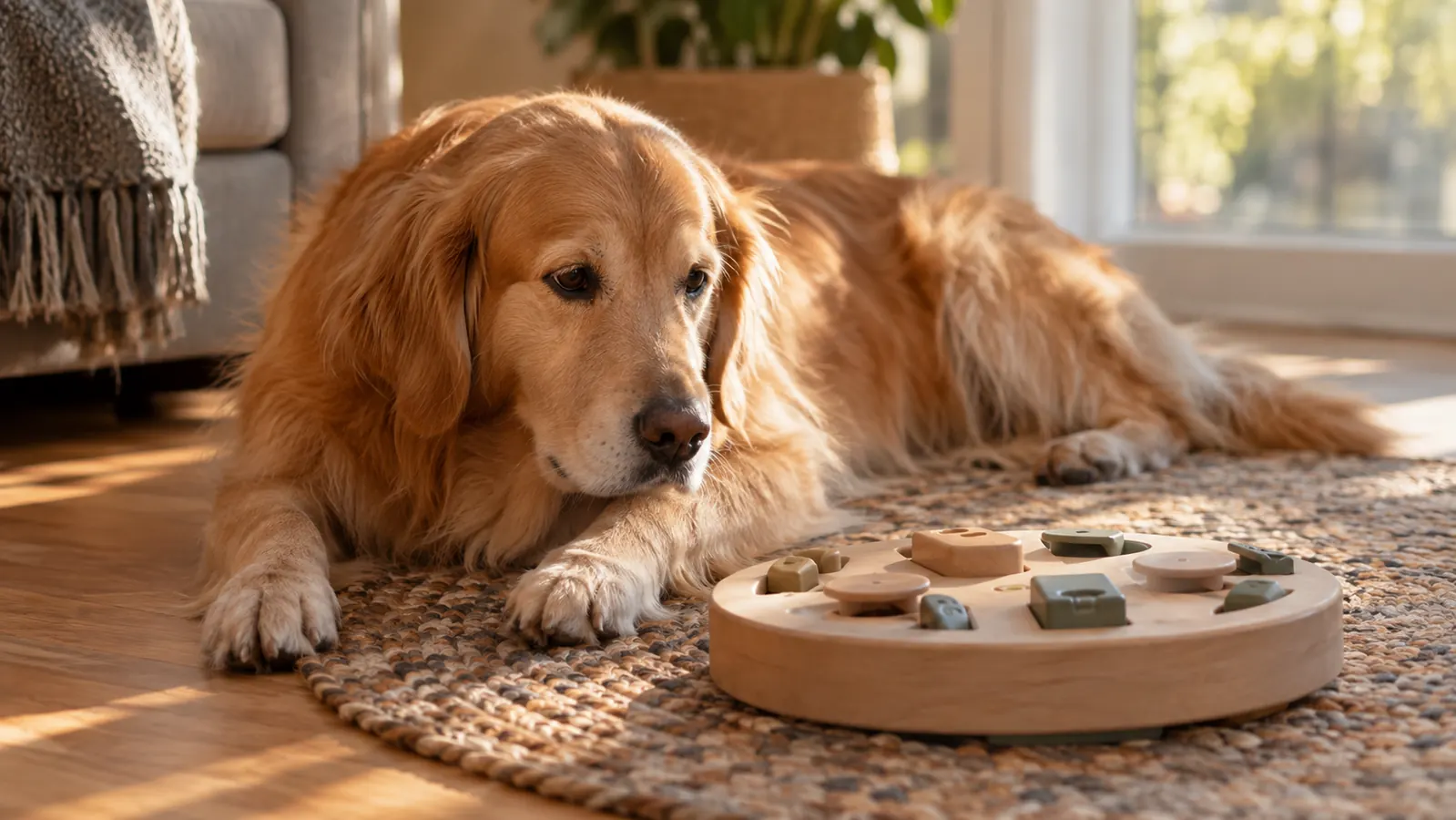
After ten years of teaching pet dogs in people's living rooms, I have seen the life cycle of most puzzle feeders. A new one gets a week of excited sniffing and then slides under the couch or into a cabinet. The KADTC 2-Level Dog Puzzle Toys caught my attention because it has two separate levels, moving pieces, and room for a whole meal of kibble. I did not care how clever it looked on day one. I wanted to know whether it would still be useful on day ninety, after June, my four-year-old shepherd mix, had figured out every spot where food could hide. Four months later I can say it has earned a permanent spot on my floor, with limits. This is the long version of that answer.
The Quick Verdict
Give the KADTC credit for what it is: a durable slow feeder that turns a rushed dinner into ten minutes of quiet problem solving. It will not fix fear or separation distress, but for an ordinary food-motivated dog it does what a good puzzle feeder should. It slows eating and gives the evening an easier rhythm.
Amazon Check Today's Price →Judge It on Day Fourteen, Not Day One
The first night your dog may stare at the KADTC and wait for the food to come to her. That is normal. Two weeks from now, if she still walks to the feeder the minute she hears the box open, this slow feeder has earned a real place in your routine. It has survived four months of daily use in my house.
Amazon Check Today's Price on Amazon →How I've Used It
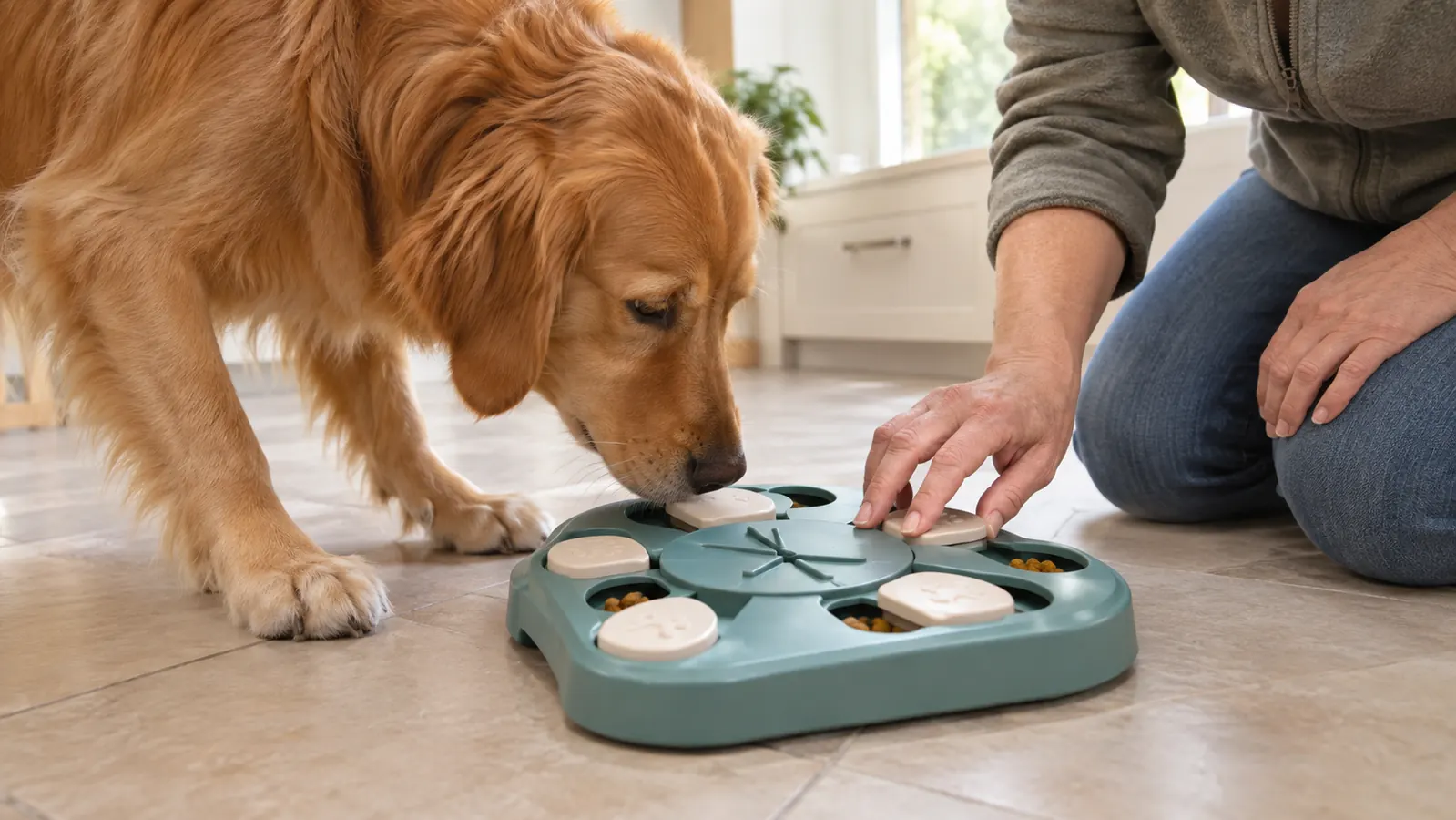
My regular routine is not dramatic. June eats most of her dinners from this KADTC feeder instead of a bowl. I split her normal portion between the two levels, with the everyday kibble on the bottom and a few higher value pieces on top. The moving pieces sit over the food, and she pushes them aside with her nose or her paw to reach what is underneath. A dog who used to finish her bowl in less than a minute now takes ten or eleven minutes to finish the same amount, and that pace has stayed steady for months.
The first week needs supervision. A dog meeting any food puzzle for the first time will often try to flip it, bark at it, or carry it to the living room rug. June tried to pick this one up once. It was heavy enough that she set it back down and never tried that again. I still stay in the room for the first several uses with every dog I introduce to the feeder. The pieces stay connected to the base, so an excited dog is less likely to scatter kibble through the house, but an excited dog can still surprise you.
After the first week, I also found I could use the feeder for more than full meals. A few treats in the upper level keep June busy while I make lunch or fold laundry. That flexibility is a large reason it has not ended up in the cabinet. A puzzle that only works at dinner gets forgotten. A puzzle that can turn a restless five minutes into a focused five minutes earns its floor space.
The change that surprised me is the quiet after the feeder is empty. June used to finish her supper and go straight to the front window to bark at any dog walking by. Now she usually finishes, licks her lips, walks to her rug, and lies down. She is not drugged and she is not exhausted. She has simply done something that required a little thinking, and the repeated routine seems to tell her that the noisy part of the day is over. That quiet is the real reason I reach for it most nights.
What Daily Use Has Shown
After months of near daily use, the biggest change I see is routine. Dogs are creatures of habit. The KADTC is not magical; it simply makes working for dinner a normal part of the day. June now waits at the kitchen entrance while I load the feeder, sits when I put it down, and waits for the release word. That little ceremony has done more for her dinner manners than any bowl ever did, and it costs me about thirty extra seconds.
The first puzzle is the one that fails most often in client homes. Owners expect a dog to understand it immediately, the dog gets frustrated, and the product lands in a donation box. The fix is patient teaching. Sit on the floor, show the dog one treat going under a moving piece, and let her paw or nose it open. Then place another piece near the next section and wait. In two short sessions almost every adult dog learns the game. June understood it in one. The KADTC is forgiving because the pieces move easily, but your dog should not have to guess the whole game on night one.
The two levels matter more than I expected. When I first started using the feeder, I worried June would simply flip the whole thing over and dump out every piece. She has never managed it. The lower tray holds her entire supper, and the upper level needs a different nudge. That difference means that even after she has memorized the bottom, the top still asks her to slow down. For a dog who inhales food from a bowl, that extra step is the difference between swallowing whole kibble and actually chewing it.
Does the mental challenge fade after months? Somewhat. June is faster than she was in week one, and she knows where every piece of food usually sits. But she still has to push each piece away to reach the food, and that small delay is the whole point. The KADTC is not trying to outsmart a dog. It is trying to make a fast eater move with intention. Once I stopped expecting it to impress me and started expecting it to work, I got more out of it.
People sometimes ask whether they need a collection of puzzle feeders. The honest answer is no. One feeder you actually use beats five clever ones that gather dust. I use the KADTC four or five nights a week and give June a stuffed chew on the other nights. That small rotation is enough to keep the feeder from becoming background noise. If she ever stops choosing it, I will know the novelty has worn off, but after months that still has not happened.
The Slow Eating Side
Let me be direct about the slow feeder half of the KADTC's job. Dogs that inhale food can be more likely to gulp air or regurgitate after a meal. I am not a veterinarian, so if your dog has any health issue connected to eating, start there. But for a healthy adult dog, making a meal last ten minutes instead of fifty seconds is plain common sense. The KADTC does that reliably, without any extra effort from me.
The feeder also gives a restless dog a small job. I see a lot of dogs who pace at the back door in the evening because the household is busy and nothing is expected of them. A slow feeder asks them to solve a small problem at their own pace. That little bit of control is valuable for a dog who otherwise spends the whole day waiting. For a dog who is badly anxious, I would not expect this alone to fix her, but for everyday restlessness it helps.
Please do not buy this as your dog's only exercise. Nudging moving pieces uses almost no physical energy. The value is mental engagement and a calmer transition after the meal. A young dog with a full tank still needs a walk, a long sniff session, or a run in a fenced yard. The KADTC complements exercise; it does not replace it.
You can also make the meal a little longer by pairing the feeder with a short training moment. Ask your dog for a sit before the feeder hits the floor, then a wait, then a release. This adds maybe twenty seconds but teaches the dog that calm earns dinner. I already do this with June, and it costs me one extra minute. That minute is where the feeding routine becomes a real training moment.

Where It Falls Short
Now I will name the serious drawbacks, because no review of a slow feeder should pretend they do not exist. First, the feeder is more work to clean than a bowl. Crumbs collect in the seams around the moving pieces. If you use soft treats, an oily film builds up along the edges. I rinse it under hot water every night and give it a quick wipe. That takes about ninety seconds. The extra minute may sound small, but at the end of a long day it is exactly the kind of friction that sends a feeder to the back of a cabinet.
Second, it does not work for a dog who is not interested in food. June works for kibble, play, or attention. Some dogs are not food motivated. If your dog walks away from treats on a walk and eats dinner only when she is truly hungry, she will probably look at this feeder and wait for you to make the food appear. Test the idea before you buy it. Put your dog's dinner in a cardboard box with the flaps folded shut. A dog who pulls the flaps open will likely enjoy the KADTC. A dog who looks to you for help will do better with a different kind of enrichment.
Third, the word puzzle can overpromise for a very experienced dog. A border collie or a dog who has worked through every puzzle in the store may solve the two levels quickly and then ask for something new. If that is your dog, choose a puzzle with locks or multiple sequential steps. For an ordinary pet dog, this level of challenge is close to right.
Finally, it is not a training device. I want to say that plainly. The KADTC will not teach your dog to stop pulling on the leash, stop barking at the window, or settle while you are away. It can make a well managed evening calmer, and it can give a dog a healthy job around dinner. But if you are hoping a feeder will replace a training session, you will be disappointed. Feeding dinner from a puzzle is care, not curriculum.
What I Liked
- Turns a rushed dinner into ten or eleven minutes of slow, focused eating
- Two levels give a dog some variety without letting pieces scatter across the house
- Sturdy enough for daily use by a sixty pound dog
- Easy for a first time puzzle feeder owner to teach
- Can be used for a full meal or as a five minute activity
Where It Falls Short
- Needs a rinse and wipe after most meals
- Will not replace physical exercise
- Not for a dog with little interest in food
- May be too simple for a dog who has solved many puzzles already
The quiet after the feeder is empty is the benefit. June used to finish dinner and hunt for something to bark at. Now she walks to her rug and settles.
Who This Is For
Buy the KADTC for an average adult dog who eats too fast, needs a little more to think about, and already likes food. It is also a good fit for a household where the evening tends to get loud around dinnertime. If you can spend the first two sessions on the floor showing your dog what to do, you will get more value from this feeder than from most other dog products in the same store.
This feeder is also for someone who already has the basics in place. It works best in a home where the dog gets regular walks, has a crate or a quiet spot, and mostly knows how to settle. If your house is still at sixes and sevens because the dog is undertrained and underexercised, add the feeder after you have worked on those pieces. Feeders work best in a house that is already partly calm. They do not create the calm from nothing.
Where the feeder will live matters too. Keep it in a place where you will see it. I keep mine near June's leash so that after our evening walk, the feeder is the next part of the routine. If a tool goes into a drawer, you will forget it. A product you remember to use is worth ten you have to hunt for.
Who Should Skip It
Skip the KADTC if your dog is not food motivated. No puzzle can manufacture appetite. Also skip it if your main goal is physical exercise, because the dog will not burn meaningful energy pushing pieces around. Use a long line, a flirt pole, or a fenced yard for that job.
Do not buy this feeder expecting it to fix separation anxiety, thunder panic, or aggression toward other dogs. Those problems need a training plan and sometimes a veterinary behaviorist. I have seen owners try to busy a reactive dog into feeling better. It does not work that way. The feeder can be a small support inside a larger plan, but ask it to solve a behavior problem and you will both end up frustrated. For a dog with real anxiety, a professional is worth more than any toy in the store.
Give the KADTC Feeder a Real Trial
Try it for two weeks before you decide. Put part of dinner in the lower level and a few higher value pieces on top. If your dog still walks to the feeder on day fourteen without being called, this feeder has earned its floor space. That has been the test at my house, and it keeps passing.
Amazon Check Today's Price on Amazon →