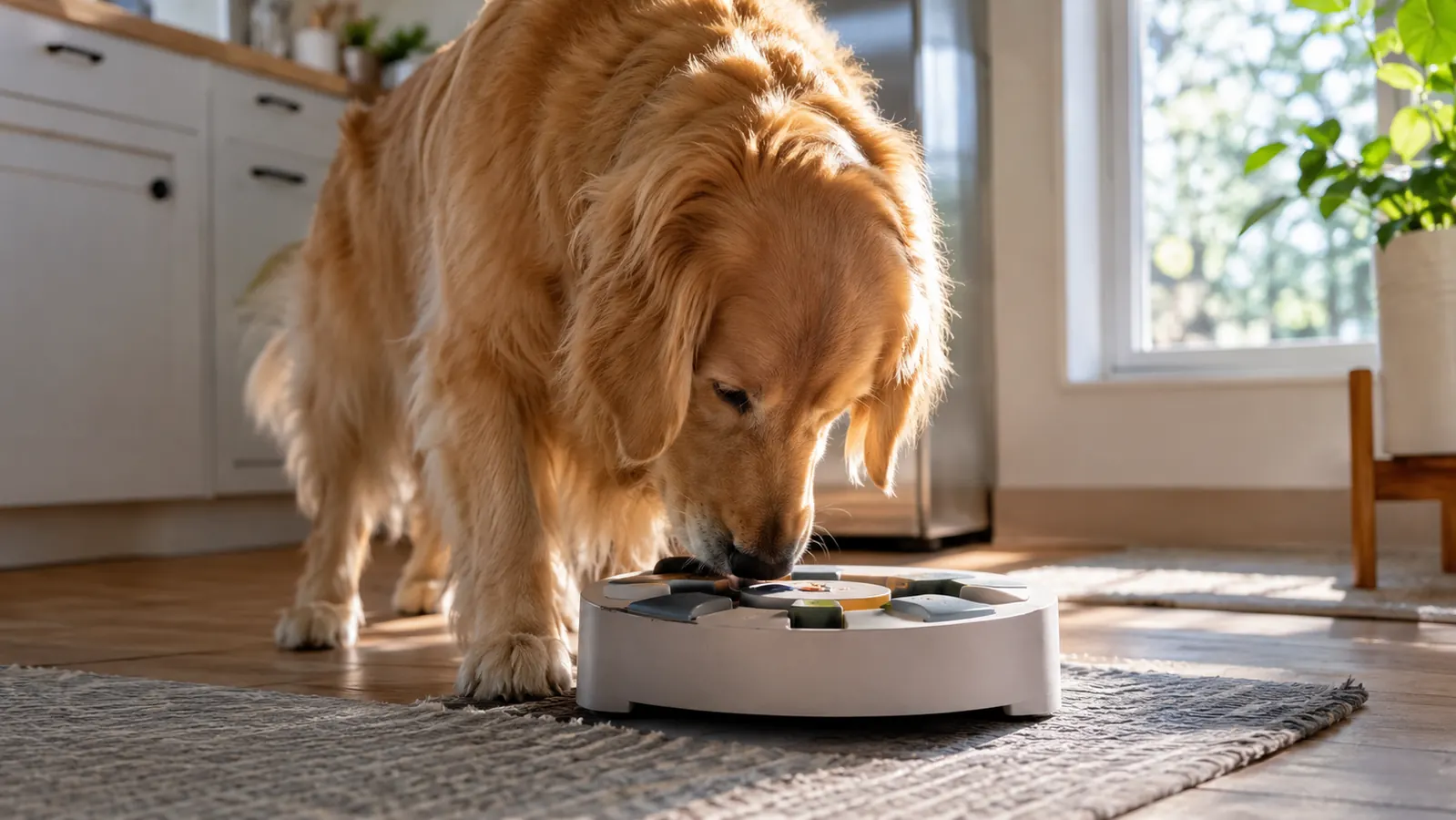
The first time I put June's dinner in the KADTC puzzle feeder, she looked at me like I had taken her bowl away. Then she put her nose down and went to work. It took her eleven minutes to finish what she normally ate in forty seconds, and when she was done, she walked over to her bed and slept for an hour. I have spent years telling owners what their dogs need, and I still nearly missed it in my own kitchen.
Before that, dinner was the part of the day I had stopped dreading exactly because I did not notice it. I would scoop the food, June would vacuum it up, and then she would pace the living room, nudge me, check her empty bowl twice, and settle only when I had taken her out for a second walk I had not planned.
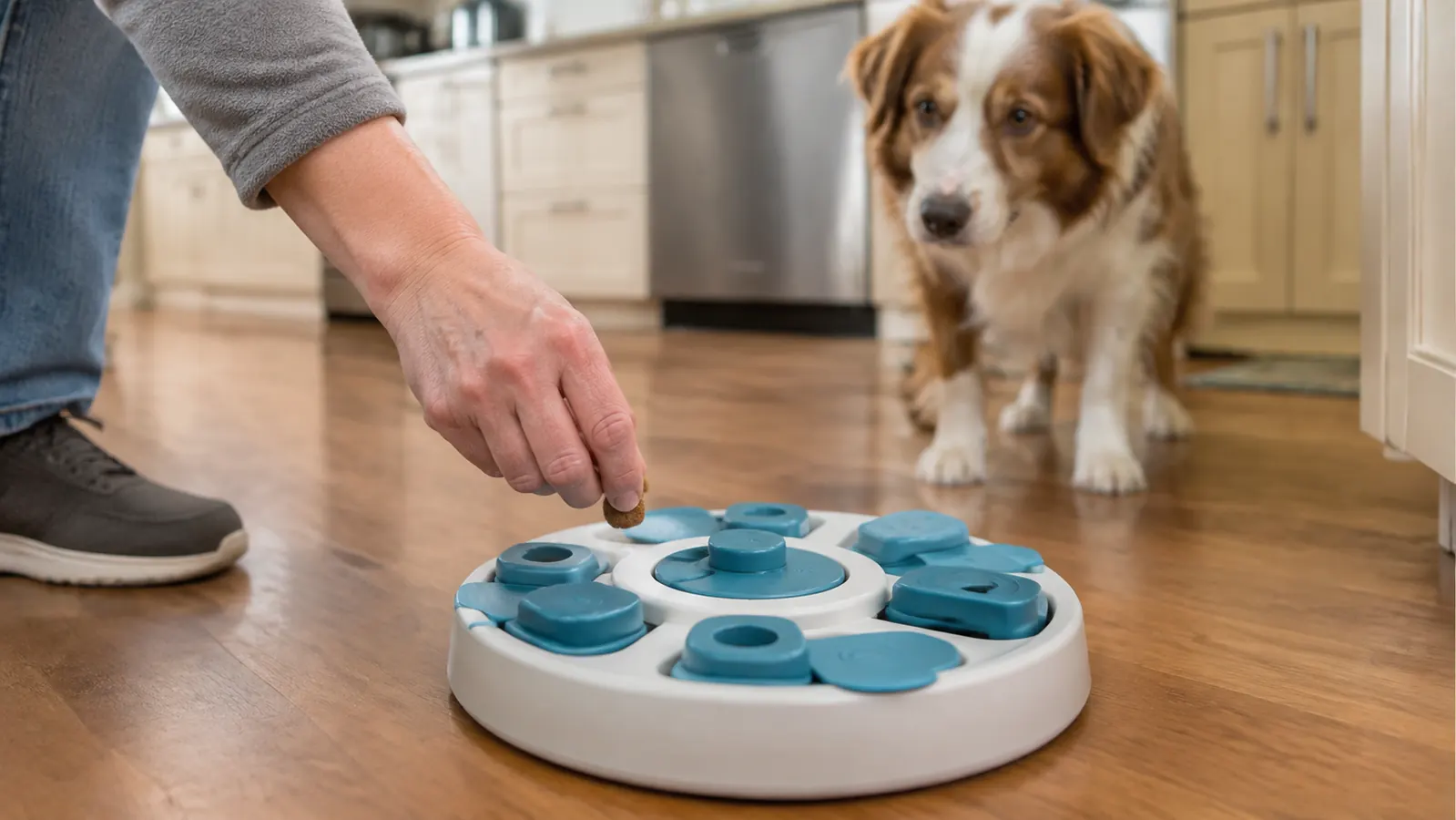
I train dogs for a living, mostly on pulling and door manners, but every third call ends with someone asking why their dog eats like there is no tomorrow. My answer is usually the same: make the dog work for the food. I have recommended puzzle feeders for as long as I have been training, and I have watched clients' dogs settle down after a week of using them.
So why had I not bought one for June? It felt like a toy for a dog who needed more, and June was supposed to be the easy dog. She had never chewed furniture. She was crate trained. I told myself she did not need the extra effort. But she was also the dog who finished dinner in forty seconds, and a client's comment stuck with me: a fast eater is a bored eater, whether it looks that way or not.
The KADTC puzzle feeder sat in my cart for two weeks before I ordered it. I expected something complicated, and instead it came with two levels that I could make easier or harder. It looked too simple to work, and that is exactly what I need to say to anyone who is about to buy one.
Eleven minutes of nose work bought us twenty quiet minutes, and that was enough to change the whole evening.
Want the same quiet dinner hour for your dog?
The KADTC is not magic. It is a simple way to give a fast eater a job. Take it from a trainer who waited too long to try one.
Amazon Check Today's Price on Amazon →Fair warning: the first night did not go perfectly. June pawed at the feeder, tipped it, and gave me a look that said I had broken dinner. I sat on the kitchen floor, slid the top level back, and let her watch me drop three small treats into the spaces. Then I closed it and let her try again. She got those three treats in under a minute, which told me she was learning, not guessing.
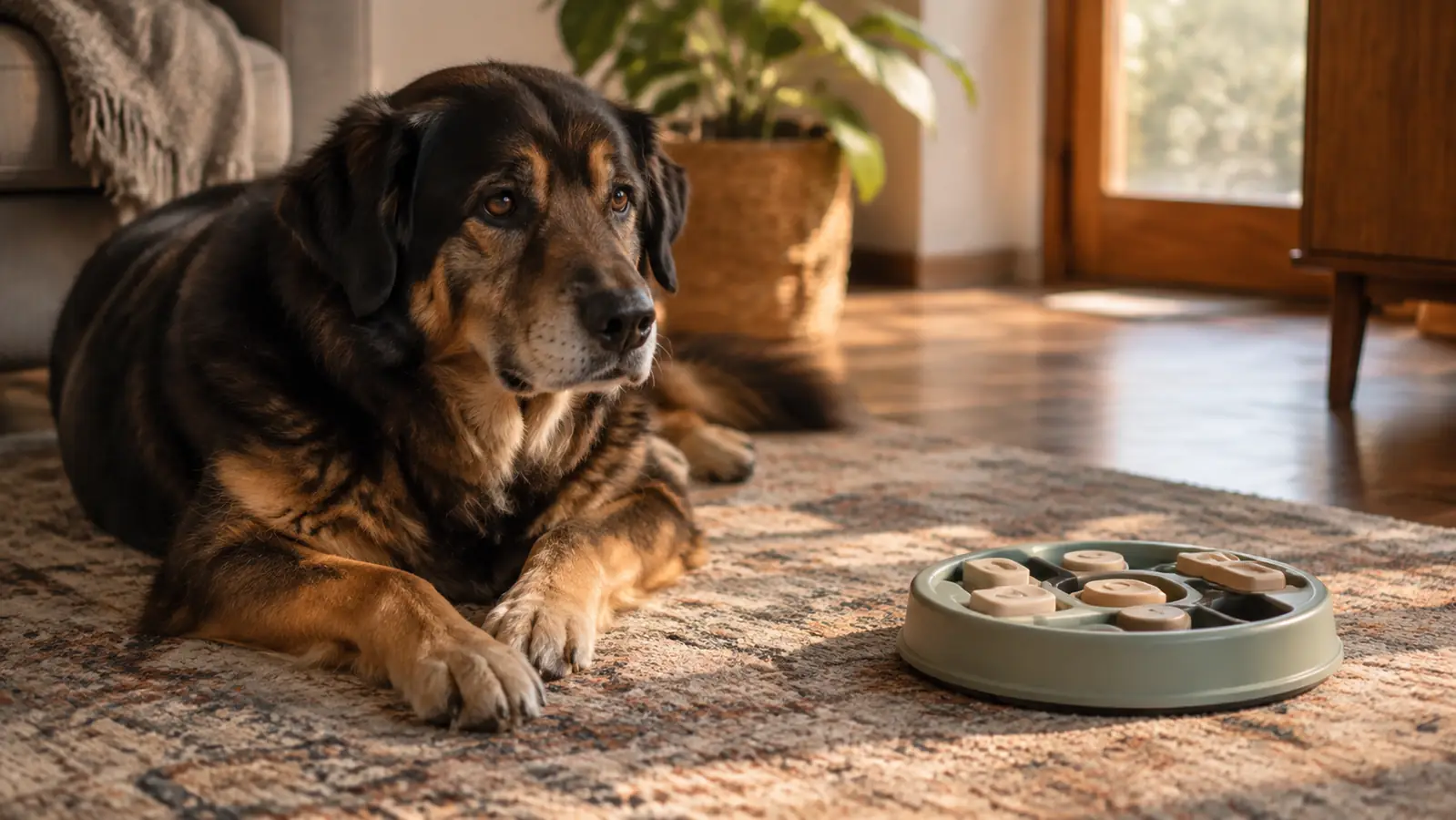
By the end of the first week, I stopped putting the KADTC away between meals. It stayed on the kitchen mat, and at dinnertime June would sit beside it and wait while I loaded each level. The whole meal took her about eleven minutes, closer to fifteen when I packed the lower level with a few larger treats. After she finished, she would lick the feeder twice and walk to her crate on her own. That last part is what convinced me.
I need to be clear about what this feeder is not. It is not a training tool. It will not teach a dog to stop jumping at the door or to ignore another dog across the street. It will not fix separation anxiety, and if your dog cannot be left alone without destroying the house, please talk to your veterinarian. But for a dog whose only crime is eating too fast, it is a simple fix.
I kept it because of what happens after dinner, not during it. Dogs need to work for food. It is the one enrichment that costs nothing extra and never gets old. June does not need me to entertain her all night. She needs a job that ends, and a feeder gives her one that ends with a nap. For June, the feeder bought us twenty quiet minutes every day. That may not sound like much, but when the alternative was a dog who paced for an hour, it was everything.
I used to keep a mental list of clients who needed this and never say anything. Not anymore. A feeder is not the answer for every dog, but it is a fair test. If your dog eats faster than it can chew, or stands by the bowl after finishing and looks at you with nothing to do, borrow a puzzle feeder for a week before you buy anything fancier. And if your dog already eats slowly and settles easily, keep your bowl and skip the gadget. June proved that part to me on the third day. Use it on the days your dog needs it, and leave it out of the routine on the days it does not.
What I'd Tell You If We Were Sitting at My Kitchen Table
If we were sitting at my kitchen table, June would be asleep at your feet, and I would tell you three things. First, a feeder is not a trainer. The dog that bolts out the front door will still need leash work and management. Second, difficulty should build slowly. A dog that fails at a puzzle just learns to tip it over. Third, for a normal dog with a normal appetite, the goal is not to make eating hard. It is to make eating last long enough for the brain to switch on.
Give your dog the same slow, quiet dinner.
June went from forty seconds to eleven minutes at dinner, and the KADTC is the only thing we changed. Start there, keep the sessions easy, and see what your evenings look like in a week.
Amazon Check Today's Price on Amazon →