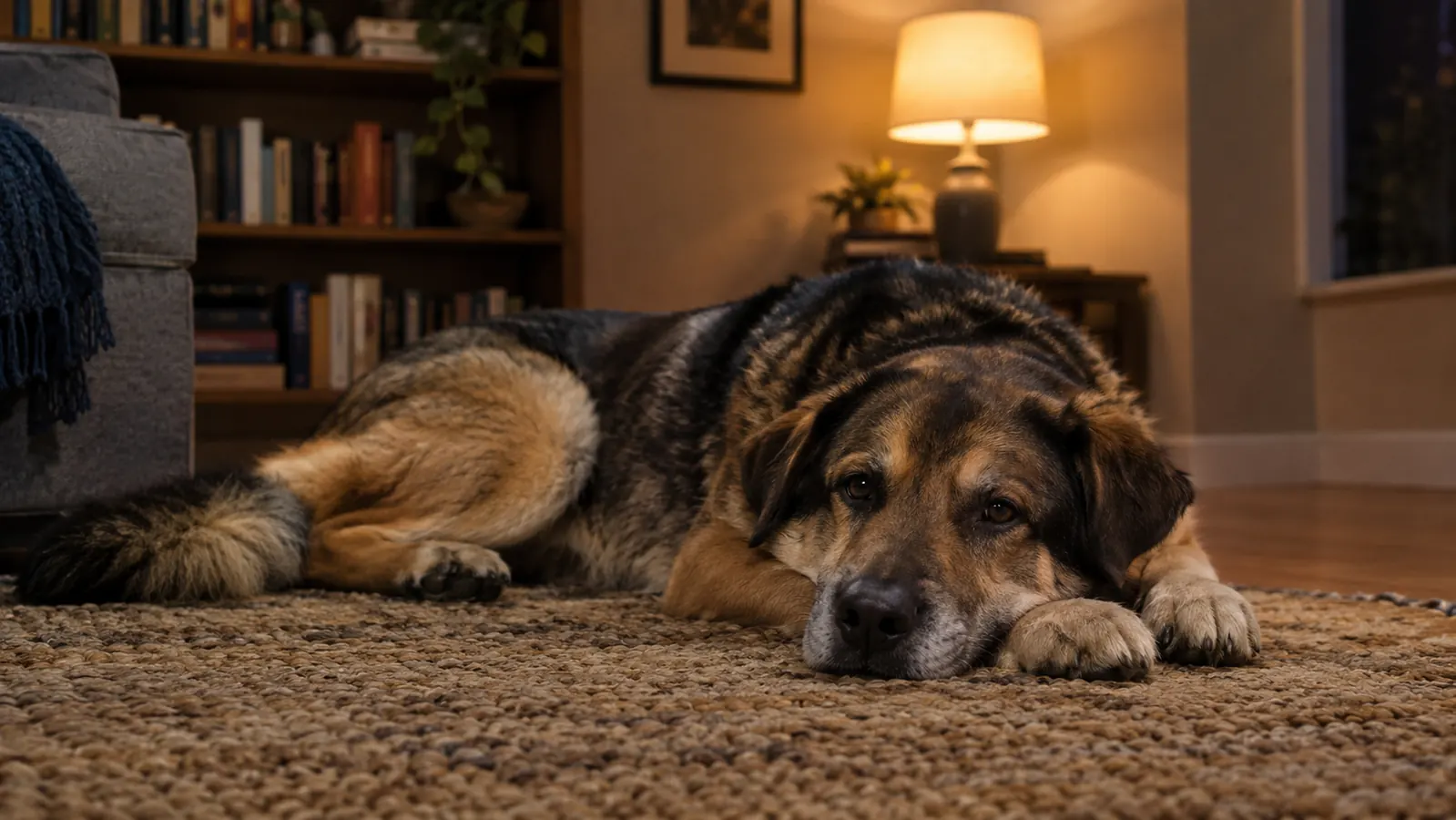
By eight in the evening I have seen every version of a restless dog. The dog who paces from the window to the back door and back again. The dog who picks up a toy, drops it at your feet, and stares at you as though the hallway leads somewhere new. The dog who sighs loudly from the rug to remind you he is still waiting for something. Most owners read that as proof they did not exercise the dog enough. Sometimes that is exactly right. Just as often the dog has had plenty of exercise and an evening brain with nothing to do. A tired body helps. A tired brain is what actually settles a dog, and the fastest way I know to tire a brain indoors is a food puzzle. The one that has lived in my living room longer than any other is the KADTC two-level puzzle feeder.
Every evening I use it, the routine looks the same, because dogs settle on sameness. The last walk ends, June drinks water, and then she lies down for ten quiet minutes while I load the toy. It sounds fussy, but I have seen what happens in houses that skip the quiet part. The puzzle comes out when the dog is already spinning, and it turns into one more thing to sniff and walk away from. I am not going to pretend a feeder fixes a dog that genuinely needs more exercise or a long training walk. What it does well is fill the stretch of evening when the walk is over, dinner is done, and the dog is still hunting for a job. Give that dog a job and the restless ears finally stop swiveling.
The KADTC puzzle feeder that has earned its place in my living room
It has two levels, it slows dinner down, and it gives a restless dog a real twenty minutes of thinking before bed. Not a training tool, not a cure, just honest mental work that fits an ordinary evening.
Amazon Check Today's Price on Amazon →Step 1: Pick the half hour when the house is already slowing down
Start the session before the dog reaches full spin. A puzzle cannot think a dog out of a state where he is already barking at the window or pacing the hallway. The slot that works best in my house is the thirty minutes after the last walk, once the water has been drunk and the dog has stopped panting. That is when the brain is still alert but the body is ready to ease off. If you wait until the dog is inventing his own games, the feeder is just another interesting object in a room that has already gone chaotic.
Put the leash away first. If the puzzle appears right after the collar comes off, the dog hears go, go, go. Wait ten quiet minutes and do your own settling: sit down, lower the lights, close the blinds at the front window so he stops scanning the street. The room does the first half of the calming work for you. I have tested this more times than I can count, and the same feeder that fails at 9:45 after a window barking session works beautifully at 7:30 when the house is already quiet.
Try to use the puzzle at roughly the same point in the evening each night. Dogs are bad at clocks and excellent at sequences. When it is always walk, water, quiet time, puzzle, chew, your dog will begin to relax at the first step of that chain, sometimes before the toy is even off the shelf. The routine is the real training. The feeder is just the part of the routine that gives his brain a job to do. Pick a slot you can keep most nights, because a puzzle used three nights in a row will do more than one used perfectly once a week.
Step 2: Fill it with food that is worth working for
The only thing that ruins a food puzzle faster than a dog that is too wound up is a reward that is not worth the effort. Dry kibble straight from the bag will not make most dogs think. I pull a portion of June's dinner aside and mix in a few pieces that smell interesting: small cubes of cheddar, shreds of roast chicken, or soft training treats broken into bits. The food has to make the dog want to keep investigating even after the first easy piece is gone. If he swallows one treat and looks at you, the bait is not pulling its weight.
Watch the total amount. If the puzzle replaces a meal, take the same amount out of the bowl so the day's calories do not balloon. If it is a treat session on top of a full dinner, keep it to ten or twelve pea sized pieces. The point is to end the evening relaxed, not to hand out a buffet an hour before bed. A dog that eats too much right before settling may be up again with an upset stomach, and then nobody sleeps well. Measure with your hand, not your heart.
Some dogs would rather work for a single piece of roast chicken than a full bowl of kibble. Match the food to the dog. A picky eater gets better bait. A dog with a sensitive stomach gets only his usual dinner with no extras. A dog who is not food motivated at all may need a different kind of evening occupation, like a long chew or a short sniffy walk. But most restless dogs are also hungry dogs, and once the bait is right, the feeder does the rest.
Step 3: Start easy and let the dog win for the first few nights
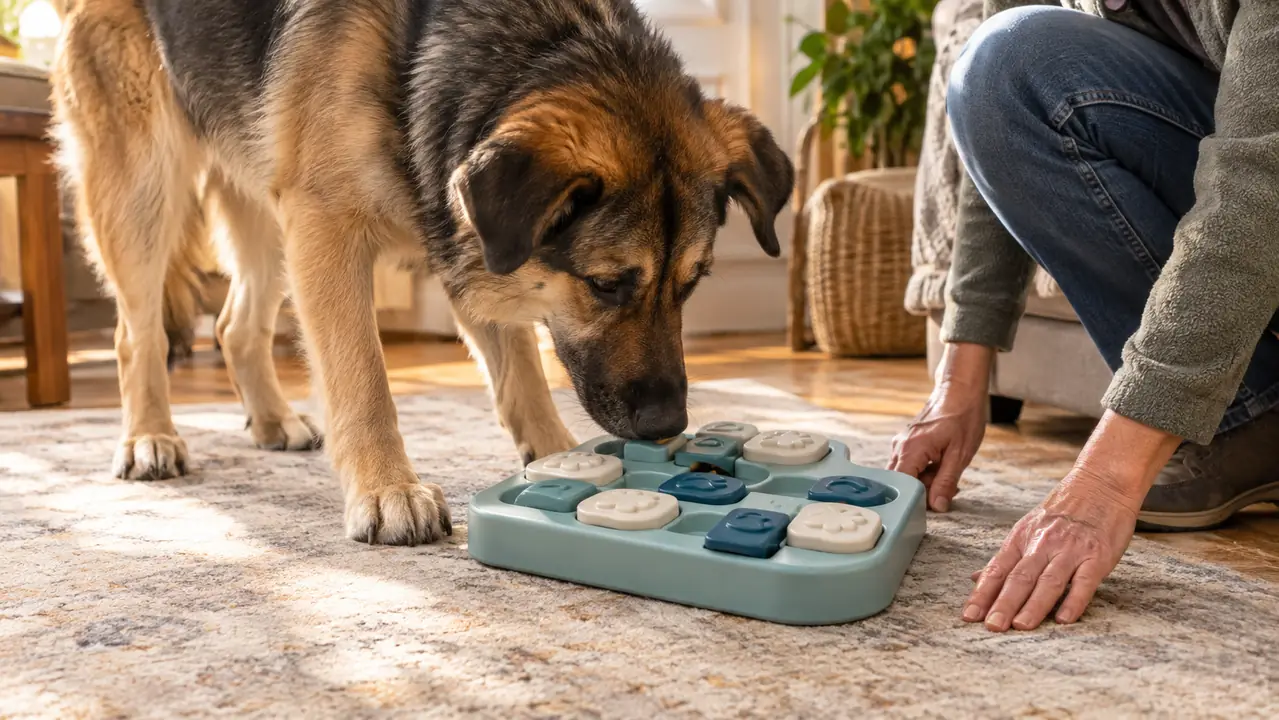
On the first night the goal is not to challenge the dog, it is to show him the game. Load the KADTC lightly. Put a couple of treats where he can see them and hide a few more under the pieces that slide. Dogs learn cause and effect quickly when the payoff is close to the surface. One easy win teaches more than twenty minutes of frustrated poking. I have seen a nervous rescue dog go from sniffing the feeder once and walking away to shoving it across the floor with his nose in under three minutes, but only because the first treats were almost visible.
The KADTC has two levels, which gives you a natural place to build difficulty. Start with the easier level only. Once the dog empties that in a few minutes, add the second level and load the treats a little deeper. You want the dog to finish the puzzle feeling clever, not defeated, so take three or four sessions to ramp up. The dogs that learn to love the game are the ones who are allowed to be successful at it early. Hard mode is a reward for skill, not a first date.
If your dog loses interest midway, do not assume the toy is a failure. Look at what changed: bait too boring, dog too tired, session too long, or the room too busy. End on a small success and try again tomorrow. A puzzle that is fun on night five is worth more than one that is hard on night one and never touched again. And if the dog solves it too fast at first, that is not a problem. Speed means he has learned the game, and speed is exactly what you want before you add the harder level.
Step 4: Stay close, but let the dog solve it alone
Sit on the floor nearby, but do not hover over the toy. When people watch too closely they start talking, pointing, and moving pieces for the dog, and the dog learns to wait for the human to play the game. The settling comes from thinking, so give the dog room to be wrong for a few seconds. I know it is tempting to help, especially when the dog looks up at you with that waiting face. If you solve every hard part, the dog gets the snack and you get the workout, and neither of you is calmer for it.
You can usually tell the difference between thinking and giving up. A thinking dog sniffs a piece, nudges it, moves to the next one, then comes back. A dog that is done walks away and does not return. If he walks away, simply pick the puzzle up and try again later. Do not coax, do not chase him with the toy, and do not hold the feeder against his mouth. The feeder has to be his idea. The dog who chooses to return to the puzzle is the dog who is actually settling into the work.
If he gets stuck with his nose wedged against one spot, slide that single piece a half inch open and let his own nudge finish the job. Then stay out of it. The first few sessions may take fifteen minutes or more, and that is fine. Slow solving is exactly what an evening wind-down needs. I time almost nothing in my work, but I have watched enough restless dogs to know that the yawns start around the moment the last treat disappears, not before. Let the session run as long as the dog is still engaged.
Step 5: Finish with quiet, not with a game
When the last treat is found, say all done in a calm, quiet voice and take the toy away. What you do in the next five minutes decides whether the evening stays calm. If you start wrestling or throw a ball, the dog learns that the puzzle leads to rowdy play and the heart rate climbs right back up. The feeder is the end of the active day, not the beginning of a second one. I keep my voice low, I move slowly, and I do not make eye contact that says let's go.
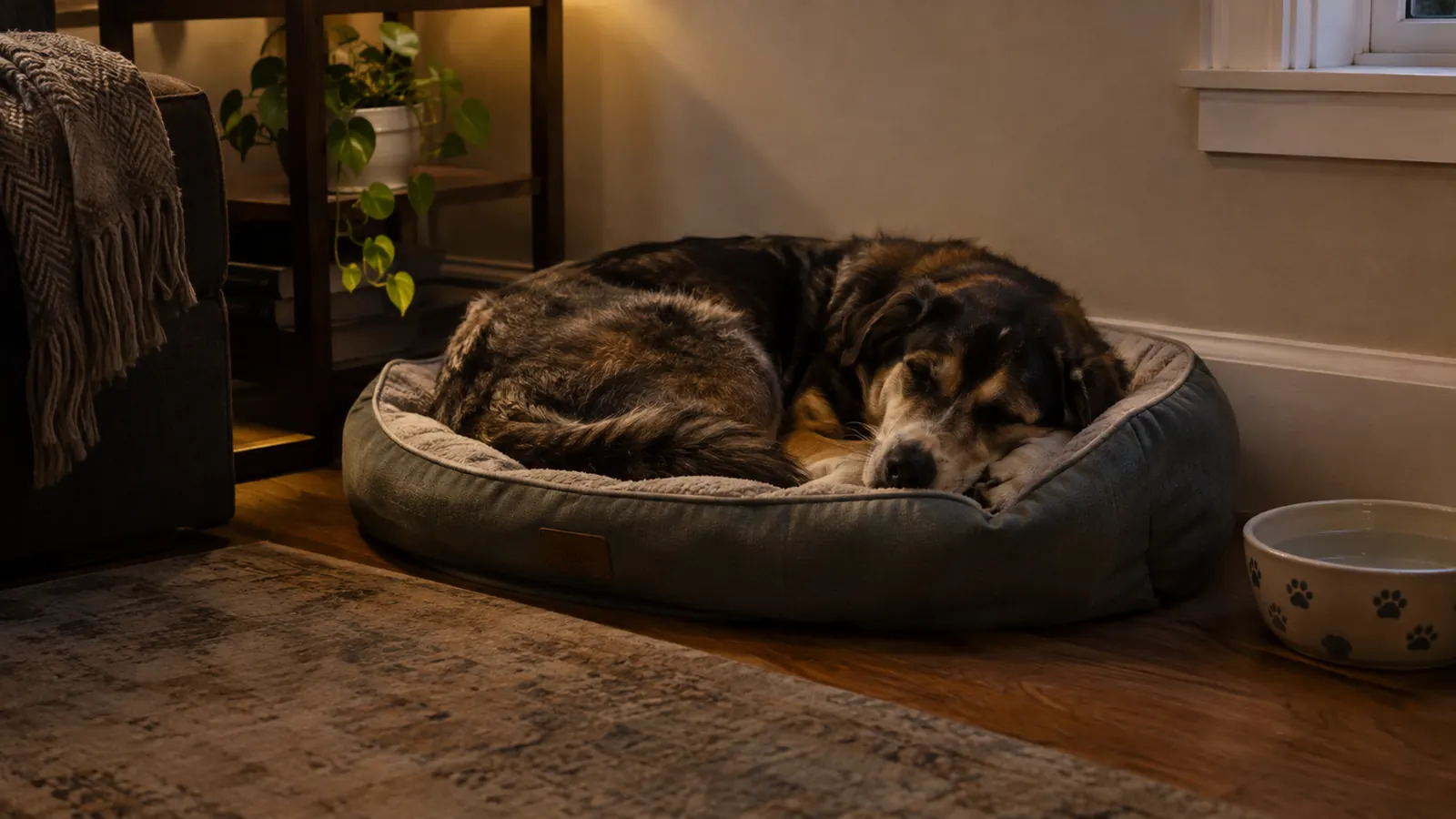
Point the dog to his bed or mat and offer something low key: a plain chew, a few minutes of gentle brushing, or simply your hand resting on his side. Most dogs yawn and stretch within a few minutes of finishing a good puzzle. Let that yawn happen. Do not fill the silence with conversation or another command. If you keep talking, the dog keeps paying attention, and paying attention is work. The goal is to let his brain coast down to nothing, the way it does when you are reading a book and forget what is on the page.
Some nights the dog will settle instantly, and some nights he will still pace a little. That is normal, especially in the first week. Keep the routine the same and give it three weeks. The evenings that go best are the ones where I do the settling too, because the dog is always watching what I do next. If I am scrolling on my phone with the television blaring, I cannot expect the dog to be the calm one in the room. Make the ending of the day quiet for both of you.
What Else Helps an Evening Wind-Down
A food puzzle is one tool in a working wind-down, not a substitute for everything else. It earns its keep when the dog has already had real exercise earlier in the day, because a dog with an empty tank settles faster than one with a full tank of stored energy. Keep the walk at a sensible time, before the restless hour, not right at it. A late night sprint around the yard can backfire and leave the dog buzzing for another hour instead of sleeping.
Pair the puzzle with something the dog can chew afterward. A long-lasting chew keeps the mouth busy for the twenty minutes after the puzzle and stretches the quiet period even further. It also gives you a reason to stay seated, which is half the battle when you are trying to teach a dog that nothing interesting happens after dinner. Chewing is naturally calming for dogs, the same way a warm drink signals the end of the day for a person.
The other piece is your own behavior. Do not answer the door, do not start a game of fetch at nine, and do not yell at the dog for being restless. Move slowly, talk less, and give the restless behavior no audience. Dogs mirror the energy in the room more reliably than they follow any command. If the dog learns that the evening is boring in the best way, he will stop looking for something to do and start looking for a place to sleep.
Once a restless dog learns the game, I have watched him yawn before the last piece is even pushed open. That is what settling looks like.
The feeder I reach for when a dog cannot switch off at night
The KADTC two-level puzzle feeder is a feeder, not a fix-all. Use it at the right moment, with the right bait, and it gives a restless dog fifteen to twenty minutes of honest problem solving before bed. That is often all the evening needed.
Amazon Check Today's Price on Amazon →