
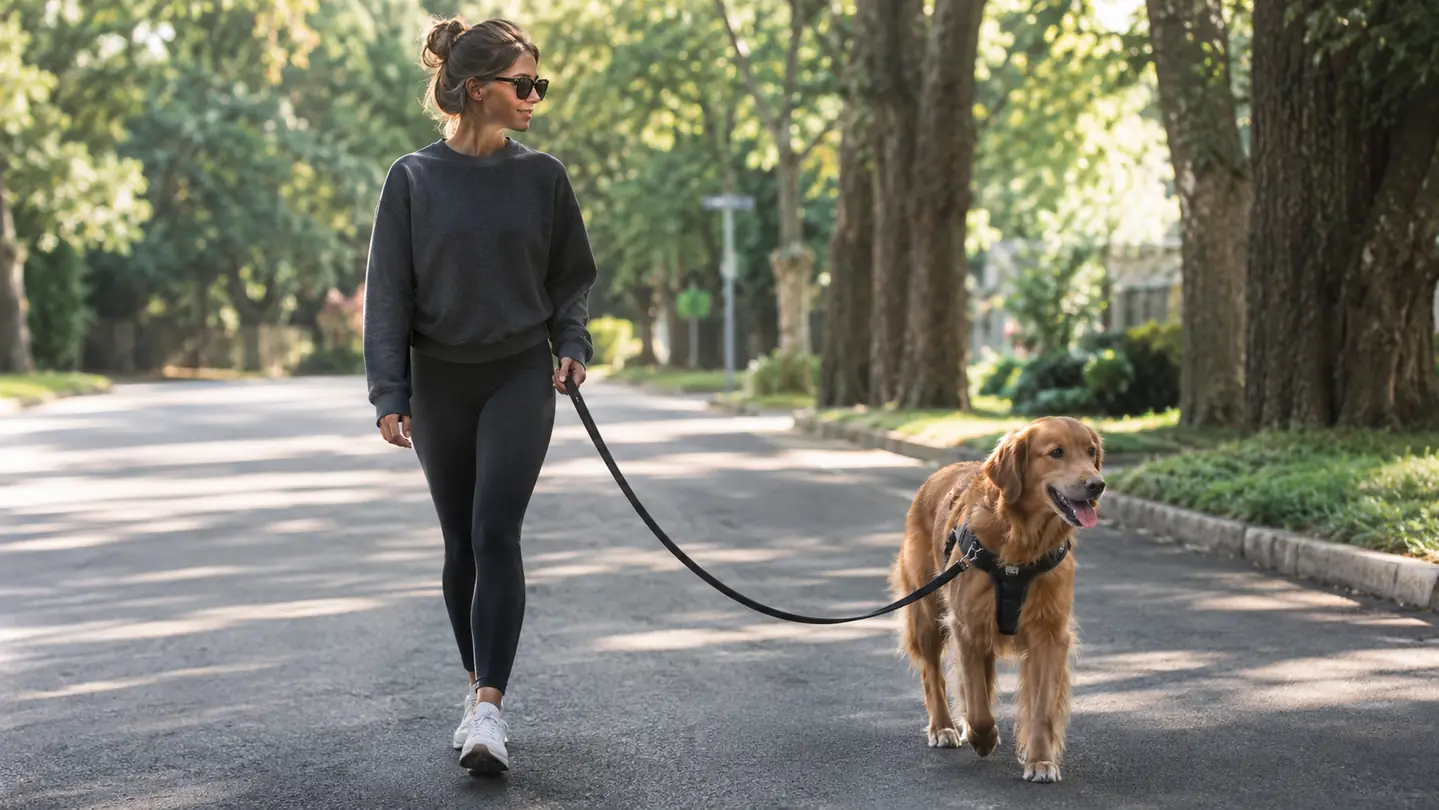
Most leash pulling is not a strength problem. I know that sounds strange when your dog has already towed you halfway down the block, but strength is rarely what changes a walk. What changes it is leverage and information. The dog pulls because pulling works and because the harness he is wearing lets him pull without any awkwardness. I have trained dogs for a living for years, mostly in ordinary living rooms, and the fastest progress I see comes when owners switch to a front-clip harness and then practice with small rewards. The PetSafe Easy Walk No Pull Dog Harness is the one I start most dogs on because it makes correct walking easier to learn. Here is the full method I use.
Before you spend money or change a single habit, I want you to understand the real fix. Some trainers say ignore pulling. Others say give one sharp correction. Both leave out the most important piece: the dog needs to know what position earns the walk. If every step forward happens only while the leash is loose, your dog will start offering loose leash on his own. A no-pull harness simply makes the world more consistent while you teach that.
Put a front-clip harness on before you teach the first step
The PetSafe Easy Walk No Pull Dog Harness turns pulling into a small turn, and that gives you enough calm seconds to reward loose leash. It is not a shortcut. It is a fair start.
Amazon Check Today's Price on Amazon →Why a Front Clip Works When a Back Clip Does Not
Think about sled dogs. They pull from behind, and they are built to lean into it. Most harnesses sold for everyday walks have a D-ring on the dog's back because that is convenient for us. It clips easily and nothing touches the dog's legs. The problem is that a back clip lets a determined dog use his whole body to pull you. If your dog weighs close to half of what you weigh, or more, you are in a tug of war you will lose.
The PetSafe Easy Walk carries the leash attachment at the front of the chest. When the leash tightens, the front of the harness catches the shoulders and turns the dog gently to the side. He has to stop and redirect his body before he can keep going. It is not a punishment and it does not hurt. It simply switches the physical result of pulling from forward motion to a turn back toward you. That switch happens dozens of times on a single walk, which is exactly what teaches a new pattern.
Step 1: Make the harness good news
Do not meet your dog at the front door with the harness in your hand. That is the place where eager dogs wiggle and worried dogs back into a corner. Instead, put the harness on in the living room after meals or playtime, when the dog is already calm. Give a few treats as you fasten it, then let him wear it for a few minutes and wander around. The goal is to make the harness feel like neutral equipment, the same way a pair of socks feels to you.
If your dog is unsure about equipment, spend two or three days on this step. Put the harness on for five minutes in the morning and five minutes in the evening. Attach the leash while you sit together on the floor, then take it off before either of you gets tense. I know this feels too slow, but it saves you from the walk where the dog is already triggered before his feet touch the sidewalk.
The same is true for the leash. Clip it to the front ring and let the dog drag it around the kitchen while you do dishes, so it becomes background noise. The goal is a dog who is neither excited nor worried the moment he sees the harness. That calm comes before any real training can start.
Step 2: Fit the harness so it stays in place
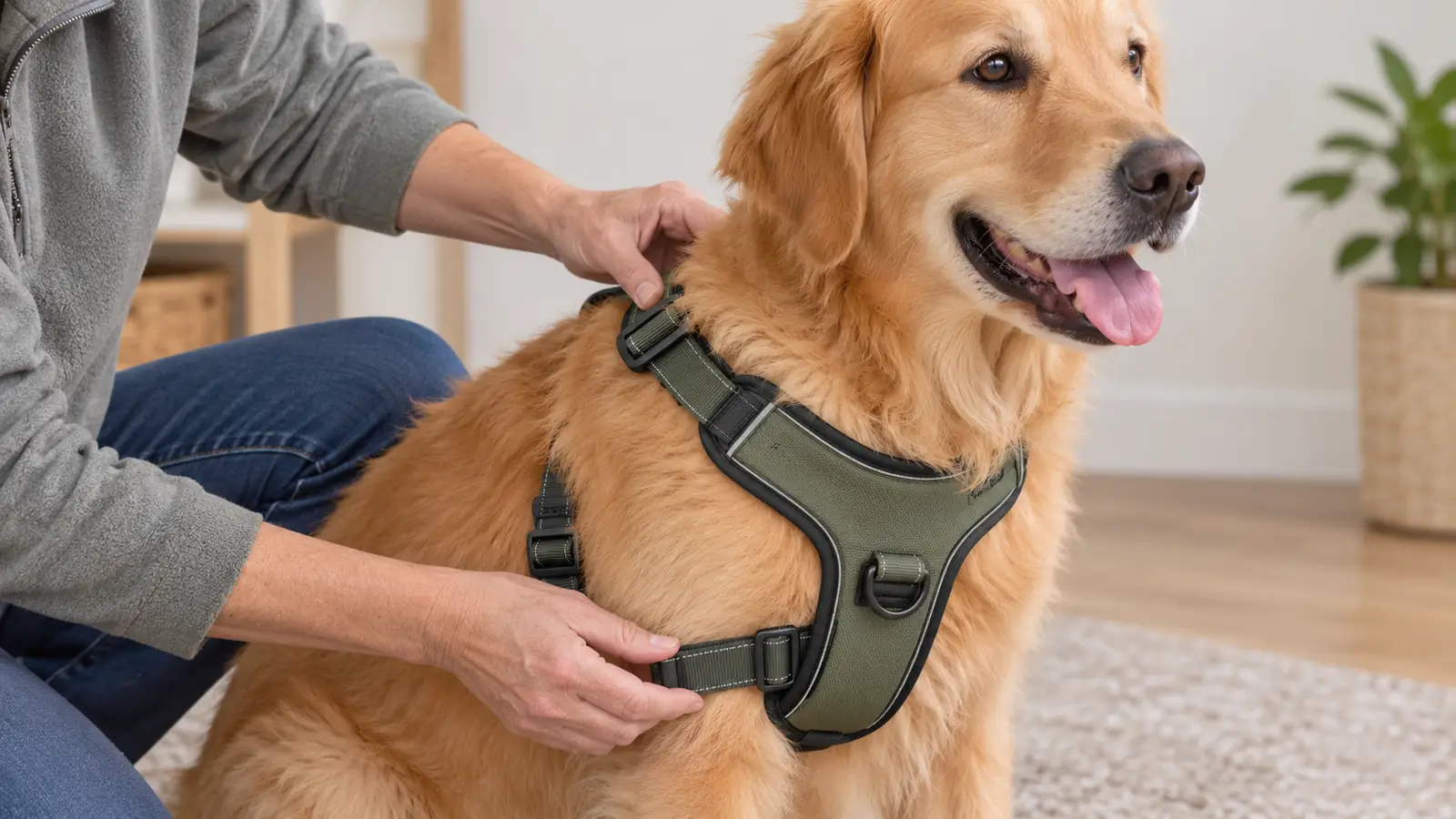
The front clip only works if the harness does not rotate. A harness that moves around turns a front clip into a side clip. My rule for the PetSafe Easy Walk is simple: snug enough that it stays put, loose enough that you can slide two fingers under any strap. Adjust one strap at a time and recheck after the first few minutes of wear.
Do not go straight out the door after you fit it. Let the dog wear the harness inside and move around in a circle. If a strap twists or slides, the fit is not right yet. The ring should stay in the center of his chest while he walks and while he sits. A front clip that has moved around to the side is doing nothing for you. Spend the extra minutes now so the harness is boring and reliable later.
Step 3: Practice loose leash before you go outside
Once the harness fits, practice loose leash inside before trying the street. Clip a standard six foot leash to the front ring and hold it with a little slack. Use treats small enough that your dog can swallow them quickly. Stand still until the dog is calm, then mark the calm moment with a word like yes and give him a treat.
Now take two small steps. If the dog stays beside you and the leash stays loose, stop after two steps and give a treat. If the dog surges ahead and hits the end of the leash, plant your feet and wait. Do not yank. The second there is slack, praise and step forward again. This little beginning teaches the dog that loose leash moves forward and tight leash does not.
Repeat this ten times, and stop while the dog is still interested. The whole lesson should last about as long as it takes to load the dishwasher. If the dog loses focus, the training is too long, so put the leash away and try again later.
Step 4: Stop the walk when the leash tightens
When you go out the front door, accept that the first few walks are practice and not transportation. Walk at the pace your dog can manage without pulling. The instant the leash becomes straight and tight, stop. Do not reel him in. Keep your hands relaxed. The message is simple: forward movement only happens with a loose leash.
Some walkers feel they are stopping every few seconds at first. You are. That is the point. Your dog has spent months or years learning that pulling makes the world move closer. It will take more than one walk to overwrite that. Give the process a full week before you decide the harness does not work.
If your dog is pulling because he is excited to see another dog or person, do not wait for perfect control at that moment. Turn and walk the other way, then reward him the instant he is able to look back without straining. You are not giving up. You are preventing the pull from becoming a habit that gets practiced.
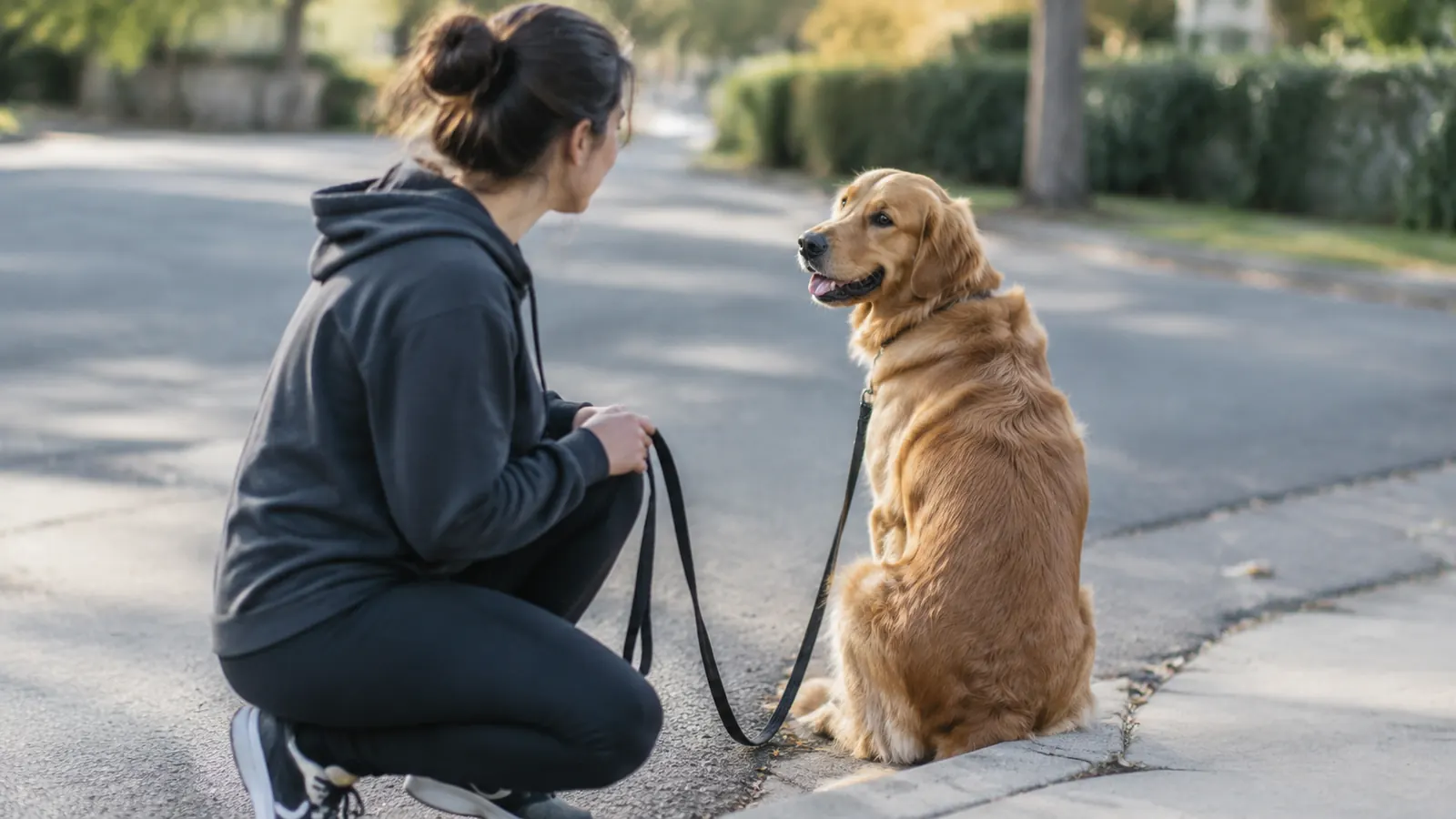
Once the dog realizes a tight leash stops the walk, he will start to look back at you. That look is the beginning of a new behavior. Reward him the instant the leash has slack, and you are showing him what to do instead of pulling.
Step 5: Reward check-ins and end while you are ahead
Once your dog is moving with slack in the leash, start rewarding the moments he checks in with you. The check-in is a tiny flick of his head in your direction. Say yes, then give him a treat right at your knee. After a few walks he will start offering that behavior more often because it earns the next step.
Do not let a good first session become a long, draining walk. End on the highest note you can find. If the dog walks calmly for fifteen minutes, you can stop there and play in the yard. If he struggles most of the way, shorten the route and build back up slowly. Walks that finish with calmness are worth more than walks that finish with frustration.
During training, leave the retractable leash in a drawer. A retractable leash never gives the dog a clear boundary because he controls the length and can keep moving forward while the leash lets out. A standard six foot leash gives you a consistent edge. That consistency is what makes the lesson easy to learn.
Three Mistakes I See After the First Week
One mistake is switching tools every few days. A back-clip harness one day, a flat collar the next, a front-clip harness the day after that. The dog never learns the rule because the consequences keep changing. Pick the PetSafe Easy Walk for every walk and stick with it for two weeks before you decide what needs to change.
A second mistake is waiting until the dog is exhausted before you practice. A tired dog may not pull, but he has not learned anything. The most useful training happens in the first five minutes of a walk, when the dog is fresh and still able to make choices. If he is already wild, use the backyard to burn energy first.
A third mistake is talking too much while the dog is pulling. Asking him to stop over and over at the end of a tight leash adds noise but no information. Stand still, wait for slack, then mark with your normal good word and walk on. Quiet consistency beats loud repetition every time.
How Long Before It Starts to Work
Some dogs look better on the second walk. Most need about two weeks. Count the stops, not the perfect moments: eight stops one day and five the next is progress, even when it does not feel that way. Progress compounds faster than you expect once the pulling stops being rewarded.
Also watch for the moment your dog turns back before the leash tightens. In the beginning he only stops because he hits the end. Later he makes a choice. That choice is what the front clip is training. It is the difference between a dog who is held back and a dog who walks with you.
What Else Helps
Beyond the harness, I would add three supports: a standard six foot leash, treats cut into pea-sized pieces, and a walk schedule. A consistent route helps because your dog can practice under familiar conditions before you add distractions. I also suggest walking after exercise, never after a long nap, because a dog with an empty tank is easier to teach. If you can, go at the same time each day.
If your dog suddenly starts pulling hard when he never did, or yelps when the harness touches him, stop and have a veterinarian look at his neck or shoulders. Pain changes behavior faster than any training plan. A front-clip harness is management and teaching, not medicine, and it will not fix an injury.
If pulling has been going on for years, expect a slower curve. You may need a full month, not one week. Write down how many times the dog pulls on each walk and watch the number trend down. When the number drops, even slowly, you know the method is working.
A dog is changed by repetition, so keep the routine boring. Short walks every day beat long walks every few days. The harness can only help when it is on, and the behavior only changes when the rule is the same walk after walk.
A harness gives you leverage. It does not do the teaching. The teaching happens during the many moments you wait for the leash to loosen.
Give the front-clip harness a full week before you judge it
One week of consistent front-clip walks is enough to show you whether the system is working. The PetSafe Easy Walk No Pull Dog Harness gives the dog a clear physical reason to stay beside you, but the lesson only sticks with repetition. Give it the week, give the walks a quiet route, and check today's price on Amazon before you overthink it.
Amazon Check Today's Price on Amazon →