
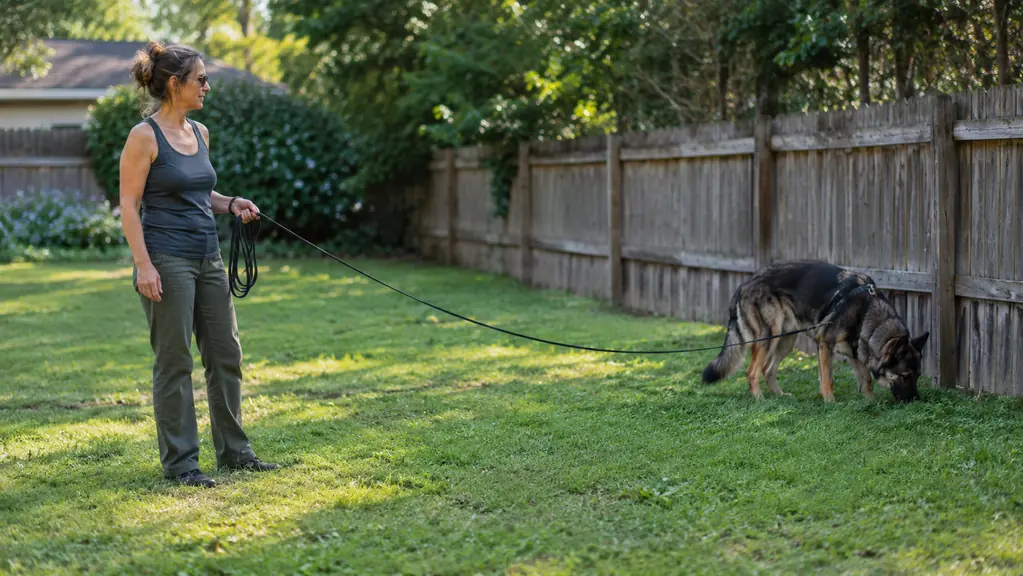
Most recall failures are not stubbornness. They are timing. You call your dog from the porch while she is deep in a scent on the other side of the yard. When she does not come, you call again, louder, and your voice gets tighter. After enough repetitions your dog learns that being called means the fun is about to stop. The distance between you grows every week, and soon you stop calling her at all. I trained dogs in shelters for years before I started working in people's living rooms, and this is the most common problem I see. The fix is not a stronger command. It is a controlled distance, and the Hi Kiss 20-foot training lead gives you exactly that.
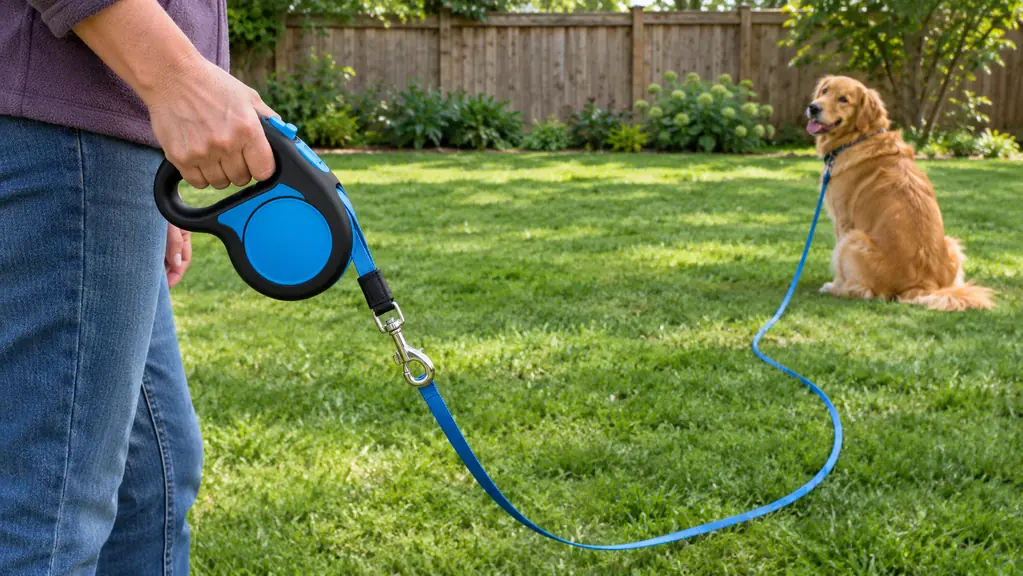
A long line is not a retractable leash. I say that up front because they look related and they are nothing alike. A retractable leash has a thin cord, a spring, and a handle that locks and unlocks. A long training line is simply a straight piece of line, usually 15 to 30 feet long, that clips to the collar or harness. You let it lie on the grass while your dog wanders. If your dog ignores come, you do not reel her in. You walk toward her, gently gather up the slack, and show her what you want. There is no yanking and no panic. That is what makes it a teaching tool instead of a control tool.
Start with the Line That Makes Distance Safe
The Hi Kiss 20-foot training lead gives you the same lesson space as a large field in an ordinary backyard. Use it for recall practice, leave it clipped on while your dog drags it, or hold it during focused training sessions.
Amazon Check Today's Price on Amazon →Why This Works
The principle is simple: a dog who is physically connected to you can still feel free. She can trot to the end of the line, stop, and sniff. You are not hovering. But if she forgets you exist, you can shorten the distance without ever raising your voice. The lesson she learns is not that she is trapped. It is that coming back to her person makes good things happen, and nothing scary follows. That single association is the foundation of every reliable recall I have trained.
Calling a dog who cannot come is the fastest way to weaken the cue. Think about how often you have tried to call your dog away from something interesting at the far end of a yard. If there is no fence between you and the street, the first mistake usually happens before the dog even hears the word. The long line changes that calculation. You only call when you know you can keep your dog safe, and every successful response makes the next one more likely.
I reach for the Hi Kiss line in almost every first recall lesson. At 20 feet it fits a standard backyard, and the clip is simple enough for a dog owner to attach without fumbling. More importantly, the line stays visible when it is lying on grass, so you always know where the working space ends. You do not need a complicated setup to start.
Step 1: Teach the Word in a Boring Room Before You Add the Line
In a quiet room, say your dog's name once, then use your recall word, whether that is come or here. The instant she turns toward you, mark it with the word yes or the sound of a clicker, and give her a treat. Do this five or six times. Then stand across the room and do it again. The goal is not distance. The goal is to build a new mental connection between the word and a small piece of chicken or cheese.
Notice something important here. You are not waiting for your dog to disobey. You are setting her up to succeed ten times in a row. If she is more interested in a toy or the window, you picked too hard a setting. Move closer, lower your expectations, and do another repetition. This step can feel too easy. It is supposed to be easy. You are teaching a word that should become a reflex, and reflexes are built by repetition, not by pressure.
At this stage you do not need the long line at all. I am including it here because many owners buy a long line and expect it to do the training. It will not. The line only makes practice safe at a distance. The first behaviors happen in a boring room with no distractions and rewards worth eating.
Step 2: Move to the Yard and Practice on a Slack Line
Move to your fenced yard or another safe space. Clip the long line to your dog's flat collar or harness. I train with the line attached to a harness on younger dogs, but many adult dogs do fine on a flat collar since the long line is a safety net, not a correction tool. At first, keep your dog only a few feet away from you. Let the line hang in a loose loop between you. Say her name, say come, and when she arrives, make it worth her while with a treat. If she looks anywhere else, use a happy tone, not a sharp one, and gently move toward her while gathering the line. When you reach her, treat her. You have just taught her that even when she stalls, coming to you still pays.
What you are practicing here is a recall on a slack line. You want the dog to move toward you because the word means something, not because the line pulled her. If your dog never chooses to come at this distance, you are too far away. Shorten the distance until she chooses correctly almost every time. Then gradually lengthen it over several sessions. Write down the distance if that helps you stay honest. Most dogs need a week of short, happy repetitions before they are ready for real length.
This is also where I use my own fenced half acre with June. She was four when we started doing this seriously, a 62-pound shepherd-Lab mix who would rather sniff fence lines than acknowledge me. I did not start her at the far fence. I started at ten feet, then fifteen, then the full 20-foot length of the Hi Kiss line. It took about three weeks before she would reliably turn and come from the fence line even with a fresh rabbit scent in the air.
Step 3: Prove That Coming When Called Never Ends the Fun
The most common reason a recall falls apart is that the dog learns to translate come as the walk is over or time for a bath. You can prevent that by calling your dog to you many times when nothing is ending. In the middle of a play session, call her, give her a treat, then release her with go play or okay so she can go back to sniffing. If she learns that a recall is followed by freedom, coming to you starts to feel like a good trade.
Practice this pattern in the yard with the line dragging. Let her wander to the end of the 20-foot line, wait until she is briefly not looking at you, then use your cue. Celebrate, treat, and send her away again. You are teaching your dog that her person is the most interesting thing in the yard, not because you demand attention, but because attention from you is a reliable source of chicken.
If she comes to you but does not want to be touched, do not reach for her collar right away. Touching or grabbing can scare a dog who has been grabbed before. Let the first few recalls end with a treat tossed on the ground in front of you. Later you can add a gentle collar hold and an ear scratch. The long line gives you the chance to build trust without ever having to chase.
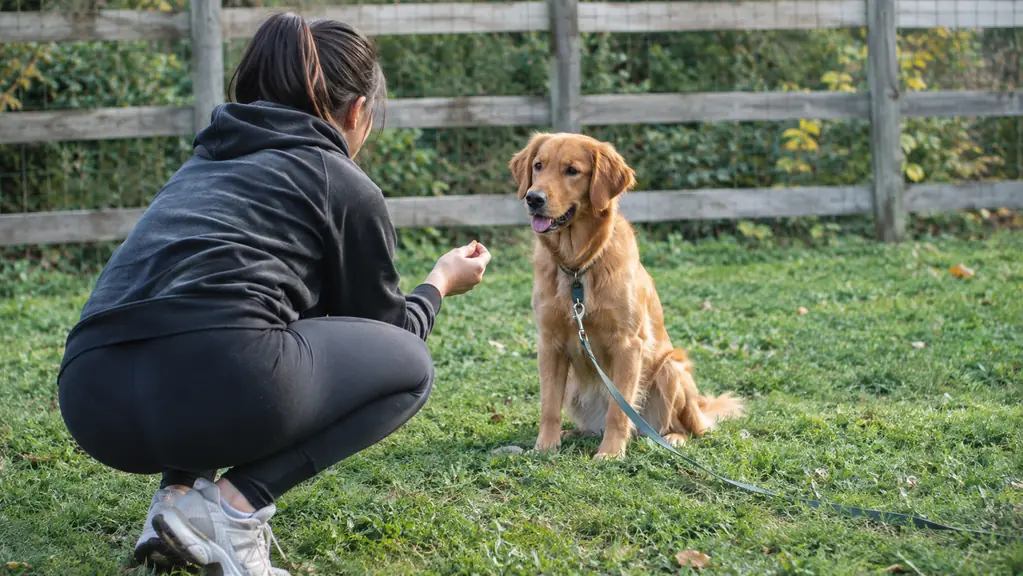
Step 4: Add Mild Distractions While the Line Stays Attached
A real-life recall has to work when a squirrel crosses the yard or a neighbor steps onto their porch. You do not have to go straight from a quiet backyard to a crowded park. You can create controlled distractions and stay in charge. Have a helper stand about 20 feet away and drop a few pieces of kibble on the ground. Wait until your dog notices the kibble, then call her. The line is still attached, so you have a backup. If she heads for the food instead of you, you walk toward her, gather the line, and turn her around. You do not jerk. You just change the distance between you.
The test here is not perfection. It is tiny improvements. If your dog can turn away from three pieces of kibble on the ground and come to you for a piece of hot dog, you have made more progress than most owners ever see. Increase the distraction only when she succeeds several times at the current level. This is the slow, patient part of training, and it is where the Hi Kiss line earns its keep.
At this stage, a working distance of 10 to 15 feet is plenty. You want to keep the dog engaged enough that her decision is visible. Save the full 20 feet for step five. If you set up a session where the distraction is too exciting and the distance too long, your dog will rehearse ignoring you. A long line prevents her from running away, but it cannot prevent her from practicing the wrong behavior inside the line. Keep the odds heavily in your favor.
Step 5: Practice in Real Places, Still on the Line
The final step is to practice in places where the world is genuinely distracting: a quiet schoolyard, a park path at a slow hour, or the edge of an open field where you can see other dogs approaching before they arrive. Clip on the long line and let your dog walk ahead of you. The line is not a constant restraint. It trails along or hangs loosely. Every few minutes, when your dog is not expecting it, say her name and come. Your job is to make sure that every single time she comes, you are worth coming to. Use your highest value treats. Make it the best moment of her walk.
If she does not come when you call, do not repeat the cue. Stand still, count to three, then walk toward her, gathering the line as you go. When you reach her, do not scold. Scolding after a slow recall teaches her that coming back is scary, and next time she will be slower. Just attach your hand near the clip, turn calmly, and walk a few steps with her. Then try again in a less distracting spot. The line is there to keep her safe, not to punish her.
When your dog can come back to you from the full 20 feet in three different real-world locations with mild distractions, you are ready to try off-leash in a safely enclosed area. That is a milestone worth celebrating. Even after that, keep the long line in your car. You will use it whenever you enter a new environment or her teenage brain seems to forget everything.
What Else Helps
The long line is the tool, but the system is what changes behavior. I tell clients to keep a treat pouch near the back door, to practice recall twice a day for two minutes, and to never call a dog who cannot come. That last rule is the one most people resist. It feels natural to shout come when you see a dog heading toward trouble. But if you shout from across the street and she ignores you, you have just taught her that come is optional. Walk over, get her, and save the cue for a moment when you can enforce it with the long line.
What also helps is choosing a reward that is different from the dog's regular food. Tearing up a small piece of rotisserie chicken at the end of a long line will teach a dog more about returning to you than a whole bag of kibble thrown from the porch. The training does not need to be expensive. It needs to be consistent and genuinely rewarding.
In ten years of working with dogs in real homes, I have never once seen a reliable recall built by calling a dog from across a park. I have seen it built on a long line, one easy return at a time.
Set Up Ten Feet in Your Backyard Today
You do not need a fenced acre to start. Clip the Hi Kiss 20-foot line to your dog's collar, stand ten feet away, and keep the first five recalls easy and rewarding. Check the current price on Amazon, then take the first step now.
Amazon Check Today's Price on Amazon →