
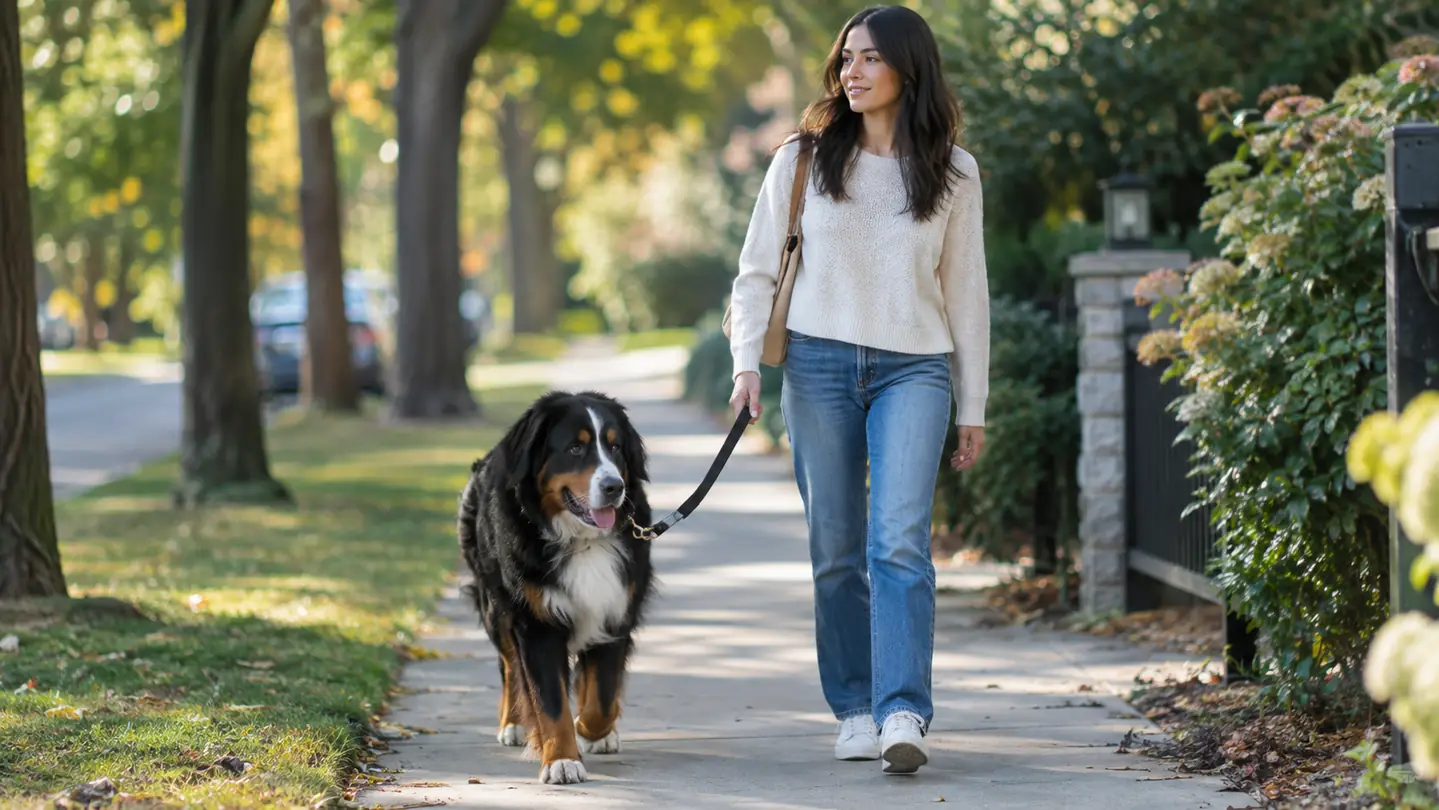
I have been training dogs around Springfield for more than a decade, and I still lose count of how many clients say the same thing at our first meeting. 'She is a good dog, she just loses her mind on the leash.' Usually by then they have tried something: a choke chain, a back clip harness that made it worse, or a front clip harness with the front ring spinning uselessly up onto the dog's shoulder. When they name the harness, it is often a PetSafe Easy Walk, and I always ask them to put it on the dog in front of me. Then I fix the fit. Nine times out of ten the pulling drops by more than half in under a minute. That tells you the difference this product can make, and it also tells you the limits of what it is. This is the honest review I wish I could hand over before the first walk.
Let me establish why my opinion is worth your time. I train dogs for a living now, after ten years of volunteering at the local shelter. My own dog is June, a 62 pound shepherd Lab mix who pulled hard enough as a young dog to make herself cough on a flat collar. I have used the PetSafe Easy Walk on June for years and on client dogs from tiny terriers to a Rhodesian ridgeback that could tow a small car. I have also checked the fit on dozens of Easy Walks in the first five minutes of a session. So when I tell you something about this harness, I am telling you from the side of it that faces the dog, not the side that faces the Amazon listing.
The Quick Verdict
It is the best tool I have found for making a pulling dog walkable today, but it is a management tool, not a teacher. Buy it with that understanding and you will be happy.
Amazon Check Today's Price →If pulling is wearing you out on every walk, this is the starting place.
The Easy Walk is the harness I put on a client's dog first when the dog is dragging the owner around the block. It is not the end of training, it is the beginning of being able to train. You can check the current price and sizing on Amazon.
Amazon Check Today's Price on Amazon →How I've Used It
I have used the Easy Walk in three situations, and they all matter. First, on June, every day for about four months one winter when she was at her most excited about every squirrel in the neighborhood. Second, with clients who still want to walk their big dog while we work on behavior, because no trainer can fix a dog who is busy choking itself. Third, on leash reactive dogs who need to learn that they can still move forward politely even when another dog appears a block away. In all three cases the harness did the same job: it made pulling less rewarding by making it physically awkward. It did not make the dog want to walk nicely. It made walking nicely the easiest option.
What surprised me most when I started recommending it was how tiny design details matter. The leash clips to a ring at the center of the dog's chest. When the dog pulls, the harness pulls the front legs sideways just enough that continuing to pull is uncomfortable and inefficient. That is not cruel, it is not a correction, it is just geometry. The front clip is the whole story. A back clip harness lets the dog lean into the pull like a sled dog and usually makes pulling worse. The Easy Walk puts the leverage where the dog cannot fight it.
What Nobody Tells You: It Only Works When It Fits
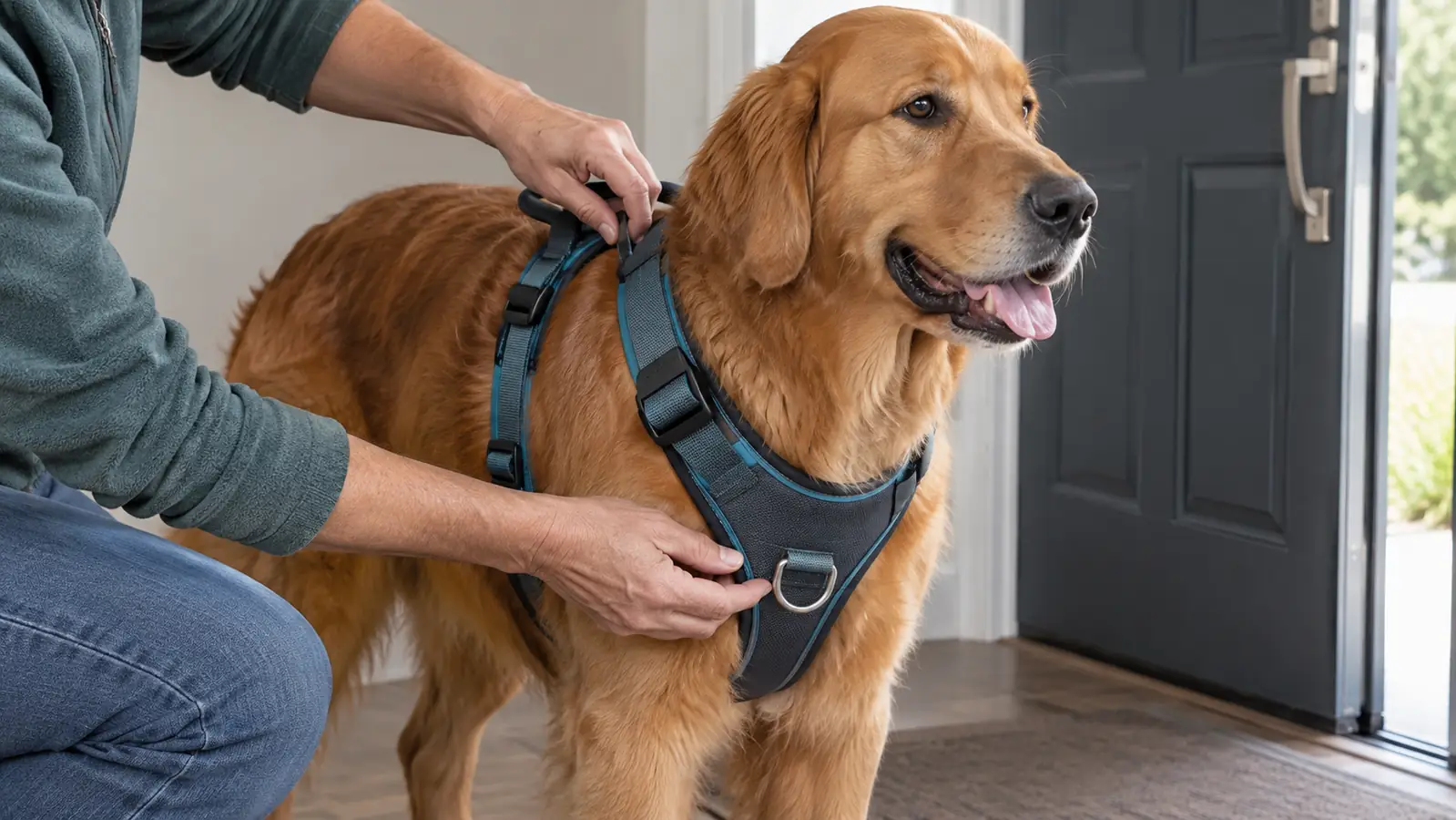
Here is the sentence I want on the box: a front clip harness that does not fit acts like a back clip harness. If the front ring rides up over the dog's neck or spins to the side, the dog pulls just as hard and you conclude the product is junk. In my experience, roughly half the people who tell me the Easy Walk stopped working are simply wearing it wrong. The chest strap needs to sit across the dog's sternum, low and snug, well above the elbows but definitely not resting against the dog's throat. The belly strap should be snug enough that you can slide a flat hand under it, but not a finger with force, because a too loose belly strap is what lets the front ring drift up the dog's shoulder.
I also want to be honest about fit frustrations. The Easy Walk is easier to put on than a step in harness, but it can still catch people out. You thread the dog's front legs through the two sides, which sounds simpler than it is with a dog who expects the whole world to stop while he puts on a costume. The first few times, you will probably be on your knees, and the dog will likely try to sit or roll. That is fine. There is a learning curve for the owner, not the dog. Once it is on, do the one minute check before every walk: run a finger under every strap, make sure no strap is twisted, and confirm the front ring sits in the center of the chest, not the side.
The Truth About Pulling, Six Months In
I want to tell you what happened with June because it is probably what will happen with your dog. During our first week with the Easy Walk, she still pulled when she saw a friend's dog, but she no longer choked herself. The pull was shorter and softer. By month two she was walking with a mostly slack leash on ordinary streets. Month three, a deer ran across the greenbelt and she took off after it, hit the end of the leash, and hung up on herself with a surprised expression. Month four, she was not pulling at all on a harness she knew well. What I cannot honestly tell you is that the harness fixed her brain. The harness bought us time and safety while I reinforced the behavior with food and with frequent changes of direction. Without that training, the same deer would still be winning the argument today. If you put the harness on and simply keep walking the same route you always walked, the pulling will fade only as much as the harness forces it to fade. That is the what nobody tells you part.
On durability, I have less to complain about. The harness held up to daily wear and plenty of rain on June, and it has spent the last two years being buckled and unbuckled on thirty different client dogs. The buckles have not broken, the nylon has not frayed, and the stitching around the chest ring is still tight. I have seen one harness with a fatigued strap after a year on a very strong dog who slept in it, which is something to explain. This is not equipment you take off only for baths. Remove it when the dog comes inside and it will last a long time. Leave it on all day and you will eventually wear out any harness.
Where the Easy Walk Falls Short
No piece of equipment is right for every dog, so let me talk about the gaps. For a dog that pulls occasionally because of excitement, the Easy Walk is nearly perfect. For a dog that is determined to drag you across four lanes of traffic to greet another dog, this harness gives you a stronger steering wheel, but it is not a locked brake. I have handled a few very large, extremely motivated dogs who simply kept pulling even with the front clip correctly positioned. In those cases, I pair the Easy Walk with a training plan and a time out in the yard, or I step up to a head halter temporarily. The harness is not a machine that overrides a thousand pounds of determination.
The second shortfall is that some dogs find the chest strap annoying, especially dogs with thick necks or dogs with sensitive skin. June never minded hers, but I have seen short haired dogs who rub a sore patch where the strap sits if the fit is not perfect or if the dog pulls against it for long stretches. A chest strap that is too loose can also chafe by sliding back and forth. The answer is to fit it like I described and to check the skin after your first two long walks. For most dogs this will never be an issue. For a handful, it is a genuine reason to look at a different style of harness even though the Easy Walk is a good product.
Alternatives I Actually Recommend (and One I Do Not)
Because I train for a living, people often assume I will say something complicated when a harness comes up. I do not. If the Easy Walk does not fit the dog's body shape, the next thing I reach for is a front clip harness with a similar idea but a different strap layout, because every dog's chest and neck are different. I regularly use a PetSafe Easy Walk and have in my trunk a couple of other front clip models. That is not because the Easy Walk is weak. It is because harness fit is like shoe fit. A comfortable model for one dog may rub another dog's shoulder regardless of how good the product is. If I need a temporary brake for a very strong dog, I use a head halter for the first few walks, but only under close supervision and not on a retractable leash. What I do not reach for is a harness that attaches only to the back clip, because back clip makes pulling easier.
I also talk openly about what is not in the product: training. I say this because I want you to have something that helps, not something that sits in a drawer. The Easy Walk has a reasonable place in your gear bin and can maybe save your shoulder from a lot of strain this year. It will not change a dog's behavior on its own. Pair it with ten minutes of loose leash practice every day, and I think you will be pleasantly surprised.
What I Liked
- Front clip reduces pulling almost immediately when fit correctly
- Does not touch the throat or trigger coughing in dogs
- Simple to put on after a day or two of practice
- Durable nylon and hardware that survive daily use
- Useful for leash reactive dogs when steering matters near a trigger
Where It Falls Short
- It is a control tool, not a training cure, so pulling returns without practice
- Fit is crucial and often gets set up wrong
- Chest strap can chafe short coated dogs if left too loose or worn too long
- Some very determined large dogs can still pull through it
- Not ideal for dogs who slip backward out of gear if the belly strap is loose
The harness bought us time and safety while I reinforced the behavior with food and frequent changes of direction. Without that training, the same deer would still be winning the argument today.
Who This Is For
Buy the Easy Walk if your dog is young and strong, if you have arthritis or a bad back and cannot afford a lunge, if you already have a reactive dog who needs to stay under threshold during training, or if you are simply tired of fighting the leash at the start of every walk. It is a good first harness for a first time dog owner because the fit pieces are visible and you can tell when it is wrong. It will not embarrass you in front of a trainer, because the trainer is the one most likely to own one.
Who Should Skip It
Skip it if your dog already walks politely on a flat collar, in which case you do not need any harness at all. Skip it if you have a dog who fights every kind of body harness and you have already had a professional fitter try the Easy Walk without success. Skip it if your goal is to teach a reliable off leash heeling by giving correction on a collar; use a properly fitted martingale or train with food. Skip it if the dog has a known shoulder or chest injury, because any harness adds pressure around the upper body and a veterinarian should make that call.
The Honest Bottom Line: What I Tell Clients
When I settle in at a kitchen table and the coffee is poured, I usually tell them this: if you need control on the next walk today, get the Easy Walk and learn how to fit it. The front clip gives you back your arm and your patience, and it does it without hurting the dog or making him more reactive. Then schedule two or three sessions or spend two weeks watching quality videos that explain how to reinforce a loose leash. Use the harness as your safety net while you teach. If you expect the harness alone to put an end to pulling, you will be back online in three months searching for something else, because the harness did exactly what it was designed to do and only that. The PetSafe Easy Walk is the harness I reach for first almost every time, and that is the recommendation that matters.
Still on the fence? This is the part where I tell you what I would do.
I keep one Easy Walk in the back of my car every single day, and I reach for it first whenever a client dog cannot stop choking himself. That is the recommendation that matters.
Amazon Check Today's Price on Amazon →